📌 Coconut milk chicken: how Reunion cuisine transforms a simple dish into exotic comfort in 55 minutes
Posted 27 March 2026 by: Admin
The Roots Of A Mixed Heritage Recipe
Reunion cuisine was not built by chance. Born from the forced encounter between continents on a volcanic island in the Indian Ocean, it draws its codes from four distinct culinary traditions: Indian, African, French, and Chinese. Coconut milk chicken perfectly embodies this fusion. Each element of the dish tells a migratory story: the coconut milk from Asia, the spices inherited from Indian trading posts, the French simmering technique, the African aromatics.
This blending is not just a historical accident; it is the genius of Reunion. The balance between the enveloping sweetness of coconut milk and the power of curry creates an immediately recognizable flavor signature. Unlike traditional European dishes where flavors are juxtaposed, here they fuse to form a new identity. The Reunion curry paste itself differs from Indian or Thai versions: it integrates local aromatics and adapts to the island’s products.
This cultural complexity does not prevent simplicity of execution. The dish remains accessible, almost familiar in its structure: brown the meat, build a sauce, let it simmer. No obscure techniques or impossible-to-find ingredients. Just universal culinary gestures put at the service of a particular alchemy. This apparent ease masks an aromatic depth that instantly transports you to Creole kitchens, where time simmers as slowly as the stews.
The Step-By-Step Recipe: 55 Minutes To Travel
This recipe boils down to two numbers: 15 minutes of active preparation, 40 minutes where the heat works alone. Nothing intimidating in this arithmetic, but every step counts to achieve that characteristic velvety texture. The first rule is to sear the chicken thighs in hot oil for 5 to 7 minutes. This initial browning is not optional: it caramelizes the juices, creates a golden crust, and prepares the aromatic ground. A pale chicken will result in a bland dish.
Once the meat is set aside, the same pan hosts the progressive construction of the sauce. The chopped onion becomes translucent, then the garlic and freshly grated ginger release their essential oils in 2 minutes maximum. Next comes the Reunion curry paste – 2 tablespoons are enough – which is sautéed briefly to wake up its spices. The chopped tomatoes then melt for 5 minutes, forming an acidic base that will balance the richness of the coconut milk.
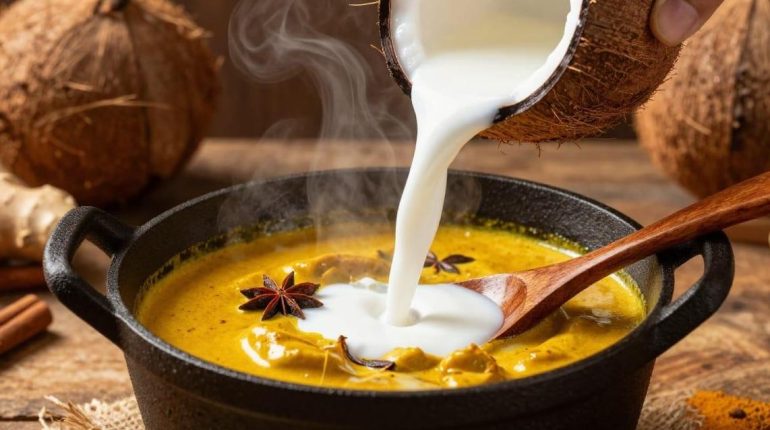
Incorporating the 400 ml of coconut milk marks the turning point. The sauce becomes pearly and smooth. The chicken returns to its bath and begins its 30-minute simmer over low heat, lid closed. It is during this half-hour that the magic happens: the fibers relax, the flavors penetrate the meat, the sauce reduces slightly. Salt and pepper are adjusted at the end, just before the rain of fresh coriander that signs the dish. No step can be rushed without compromising the final balance.
The Secrets Of Perfect Execution
These 30 minutes of simmering hide a rarely formulated truth: the lower the heat remains, the more the meat tenderizes. Patience becomes the invisible ingredient that transforms a basic recipe into an exceptional dish. But even before reaching this phase, the initial browning of the chicken determines 50% of the final result. A sear that is too timid, and the aromas stay on the surface. Too aggressive, and bitterness dominates. The key lies in that golden zone where the skin crackles without blackening.
The second trap lurks when adding the spices. Reunion curry paste contains volatile compounds that oxidize quickly at high temperatures. Heating too strongly transforms their fragrant warmth into metallic acridity. They must be sautéed gently – 60 seconds is enough – just enough for them to exhale their complexity without burning. This technical detail escapes many hurried cooks, who then obtain an unbalanced sauce despite scrupulous respect for proportions.
The final adjustment of spices also deserves special attention. Some palates demand chopped fresh chili, others prefer a reduction of the curry by half. This recipe tolerates personal preferences without losing its soul, provided you taste before serving. Coconut milk naturally softens the power of the aromatics, but each brand has a slightly different fat content. A sauce that is too liquid reveals insufficient simmering or a poorly fitted lid. The characteristic creaminess appears when the steam slowly concentrates the flavors, transforming a liquid into edible velvet.
Variations And Accompaniments To Personalize
This Reunion base tolerates four major transformations without losing its identity. The spicy version simply requires the addition of a chopped bird’s eye chili at the end of cooking – never at the beginning, at the risk of diffusing an aggressive heat rather than a controlled liveliness. Conversely, reducing the curry paste by half creates a milder family variant, where the coconut milk dominates with its natural roundness. For a plant-based adaptation, sliced carrots or diced zucchini join the simmer 15 minutes before the end, absorbing the sauce while retaining their texture. The fish version requires more vigilance: replacing the chicken with tuna or monkfish requires dividing the cooking time by two, as marine flesh falls apart quickly.
Rice remains the obvious accompaniment, but its choice influences the final experience. Basmati brings an aromatic lightness that contrasts with the density of the sauce, while classic white rice plays the card of absorbing neutrality. Some prefer crunchy sautéed vegetables – green beans or peppers – to create a textural counterpoint to the creaminess of the main dish.
Regarding storage, this Reunion curry keeps for 2 to 3 days in the refrigerator in an airtight container. Reheating requires low heat and a few spoonfuls of water to restore the fluidity of the sauce. Freezing also works, although the coconut milk may slightly separate upon thawing – a vigorous whisking resolves this visual inconvenience without altering the taste. With its 450 calories per serving and 30 grams of protein, this dish nourishes without weighing you down, proving that exoticism rarely rhymes with excess.