Who said a lemon cake has to be light to the point of being bland? This one has the softness of a Sunday cake, the bright acidity of lemon curd, and that lemon buttercream that comforts from the first bite.
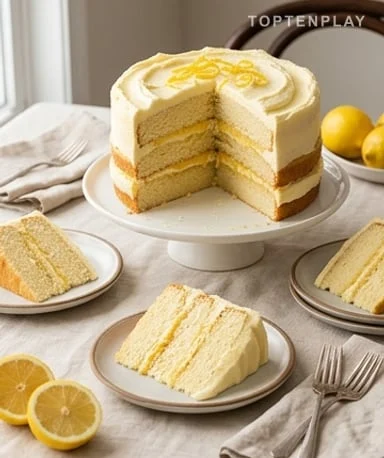
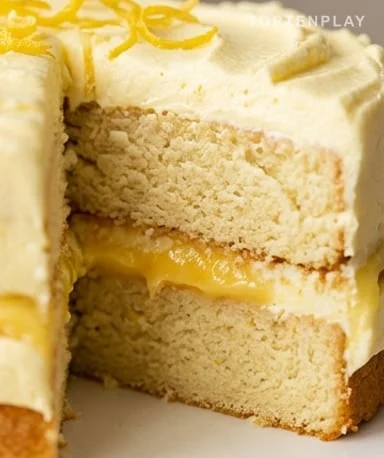
When cut, the blade goes through a pale, tender crumb, then catches a glossy layer of lemon curd. The scent of zest rises immediately, fresh, almost sharp, before the butter and vanilla round it out. This is not a shy dessert: it’s sweet, creamy, tangy, with a very pleasant contrast between the soft cake and the melty filling.
Why you’ll love this recipe
Ingredient Notes
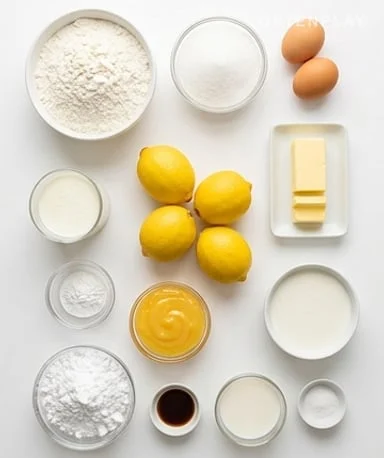
Fresh lemon, butter, eggs, flour, buttermilk, and lemon curd: nothing complicated, but every ingredient counts.
- Fresh lemons : The juice provides acidity, and the zest gives the most direct lemon aroma, the one that really smells like lemon when you grate the skin. Choose untreated lemons if using the zest, and only grate the yellow part to avoid white bitterness.
- Buttermilk : It makes the crumb more tender thanks to its acidity, which works with the baking powder to create a softer cake. If you don’t have any, mix milk with a little lemon juice and let it sit for ten minutes; the milk will thicken slightly.
- Butter : It gives the cake its round flavor and the rich texture of the buttercream. Use it well softened, not melted, otherwise the batter can become heavy and the cream may lose its fluffiness.
- Lemon curd : It serves as a tangy, glossy filling between layers, with a livelier texture than simple jam. A store-bought curd works fine, but choose a thick one to prevent it from running during assembly.
- Powdered sugar : It structures the buttercream while keeping a smooth texture, without grains on the tongue. Sift it if your package has absorbed moisture, otherwise you risk having small white lumps in the frosting.
- Eggs : They give structure to the cake and contribute to that fine crumb that cuts cleanly. Use them at room temperature so they incorporate better into the butter and sugar.
Treat the batter gently
Start by creaming the butter and sugar until lighter, almost fluffy, because that’s where you build part of the cake’s volume. When the eggs go into the mixture, add them one by one to keep a stable, satiny batter, not a curdled mess. The lemon zest should be rubbed or well mixed with the sugar if possible: it releases its fragrant oils and the kitchen instantly smells fresher. By alternating dry ingredients and buttermilk, you avoid overworking the flour, which keeps the crumb tender instead of elastic.
Don’t let baking steal the softness
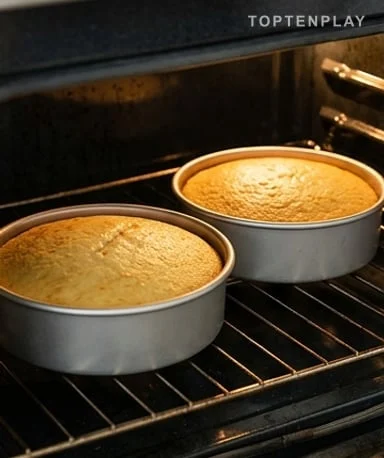
Pour the batter into two same-sized pans and smooth the surface without aiming for perfection, because the oven will handle the rest. During baking, the top should rise gently and take on a very light golden color, with a scent of warm butter and sweet lemon. Don’t overbake: a lemon cake that’s baked too long quickly loses its charm and becomes dry at the edges. When a toothpick comes out with a few moist crumbs, it’s often the right time, and resting in the pan finishes the baking without brutalizing the crumb.
Lemon curd makes all the character
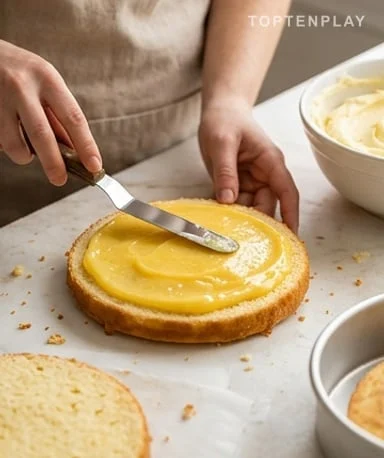
Once the cakes are cooled, cut them with a serrated knife if you want cleaner layers. The lemon curd should be spread in an even, shiny layer, not going all the way to the edge because it will shift slightly when you place the other half on top. This restraint avoids the slippery effect that makes layered cakes annoying to serve. At this point, you already see the contrast: light crumb, intense yellow curd, tangy scent that awakens the very sweet butter side.
Buttercream embraces its indulgence
The lemon buttercream should be beaten long enough to become lighter and more pliable, with a texture that clings to the spatula without being compact. The lemon juice relaxes the mixture and adds depth, but add it gradually to avoid breaking the balance. If the cream seems too firm, a little milk softens it; if too soft, a short chill firms it up. It should envelop the cake like a soft, fragrant layer, not crush it.
Chilling really changes the cut
Once the cake is assembled, the refrigerator isn’t a punishment; it’s what stabilizes the layers. The lemon curd firms up, the buttercream becomes neater, and the blade goes through the cake without pushing everything out to the sides. Take it out about twenty minutes before serving so the cream regains its softness and the lemon aromas come through. A well-tempered slice should be fresh in the nose, soft under the fork, and creamy without feeling greasy.
Tips & Tricks
- Use fresh lemon juice instead of bottled, because the acidity is sharper and the flavor less flat.
- Never frost a still-warm cake, as the buttercream will melt on contact with the crumb and the layers will become unstable.
- Keep the lemon curd slightly away from the edges, because the pressure from the layers will push it outward naturally.
- Refrigerate the cake before slicing, then let it come back to room temperature slightly to regain a creamier texture.
Can I make this lemon cake the day before?
Yes, and it’s even a good idea. Chilling stabilizes the lemon curd and buttercream, resulting in cleaner slices.
What if I don’t have buttermilk?
Mix 240 ml of milk with 1 tablespoon of lemon juice, then let it rest for 10 minutes. The mixture will curdle slightly, which is normal, and it will give a more tender crumb.
Will the lemon curd make the layers slide?
Yes, if you spread it too close to the edges or if the cake is still warm. Spread it leaving a small margin and keep the cake chilled before serving.
Can I use store-bought lemon curd?
Yes, as long as you choose a thick texture. A curd that’s too runny will give less stable assembly and will run more easily when cutting.
How do I avoid a too-heavy buttercream?
Beat it long enough to aerate and add the lemon juice gradually. Also take the cake out 15-20 minutes before serving so the cream regains a softer texture.
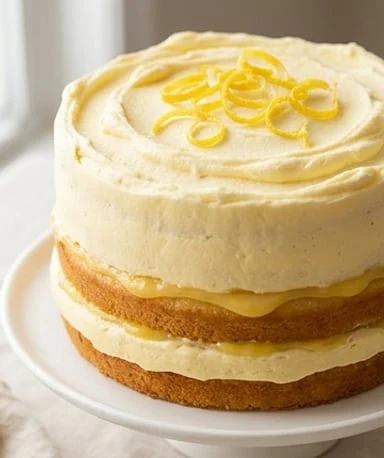
Cloud Lemon Cake with Lemon Curd and Lemon Buttercream
American
Dessert
A tall, soft, and generous lemon cake, filled with tangy lemon curd and covered with lemon buttercream. A truly comforting dessert, fresh in scent, melting in the mouth, and perfect for a festive table.
Ingredients
- 300g all-purpose flour
- 2 teaspoons baking powder
- 1/2 teaspoon fine salt
- 230g unsalted butter, softened
- 300g granulated sugar
- 4 eggs, at room temperature
- 2 tablespoons finely grated lemon zest
- 60ml fresh lemon juice
- 1 teaspoon vanilla extract
- 240ml buttermilk
- 300g thick lemon curd
- 340g unsalted butter, softened (for the cream)
- 520g sifted powdered sugar
- 2 tablespoons fresh lemon juice (for the cream)
- 1 tablespoon lemon zest (for the cream)
- 2 to 4 tablespoons whole milk
Instructions
- 1Preheat the oven to 180°C. Butter and line two 20 cm round pans with parchment paper.
- 2Mix flour, baking powder, and salt in a bowl; set aside.
- 3Beat 230g softened butter with sugar until pale and fluffy.
- 4Add eggs one at a time, beating well after each, then mix in lemon zest, lemon juice, and vanilla.
- 5Add the dry ingredients alternately with the buttermilk, mixing just enough to combine into a smooth batter.
- 6Divide the batter between the two pans, smooth the tops, and bake for 25-30 minutes, until a toothpick comes out with a few moist crumbs.
- 7Let cool in pans for 10 minutes, then turn out onto a wire rack to cool completely.
- 8Beat 340g softened butter until creamy. Gradually add powdered sugar, then lemon juice, zest, and enough milk to achieve a smooth buttercream.
- 9If desired, cut each cooled cake into two layers. Spread lemon curd on the inner layers, leaving a small margin at the edges.
- 10Assemble the cake with a layer of buttercream in the center, then cover the top and sides with the remaining buttercream.
- 11Refrigerate for at least 30 minutes before slicing, then let sit at room temperature for 15-20 minutes before serving.
Notes
• The cake must be completely cool before assembly, otherwise the buttercream will melt and the lemon curd will slide.
• To substitute buttermilk, mix 240ml milk with 1 tablespoon lemon juice and let stand 10 minutes.
• If lemon curd is very runny, chill it in the refrigerator before spreading.
• Nutritional values are estimates per serving based on 12 servings.
Nutrition Facts (per serving, estimated)
| 610 kcalCalories | 6gProtein | 78gCarbs | 32gFat |