The sizzle of bacon in the pan gradually intensifying — that’s the soundtrack of a good morning. The classic American breakfast is that hearty plate you save for when a single slice of toast isn’t enough: crispy, creamy, hot. Not complicated, but deliberate.
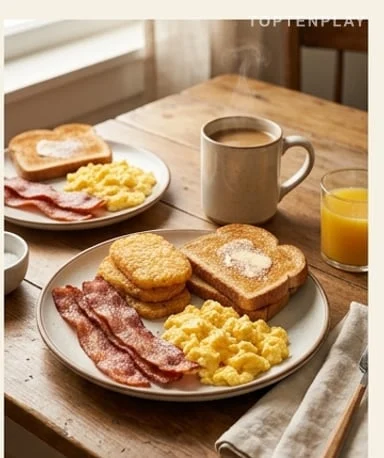
Set the plate on the table and look: the lacquered amber turkey bacon, the scrambled eggs still slightly glossy, the hash browns whose edges have taken on a deep caramel color. The smell is a mix of warm butter and grilled potato. Dense, generous, comforting — that’s exactly what comfort food means.
Why you’ll love this recipe
Ingredient Notes

Everything you need for a real American breakfast — simple ingredients, unbeatable results.
- Turkey bacon : It replaces pork bacon with real effectiveness: it browns well, gets crispy at the edges, and provides that salty, slightly smoky note essential to the plate. Choose thick-cut turkey bacon — not the thin vacuum-packed slices that curl up and burn before they’re cooked. The texture difference is clear.
- Eggs : The heart of breakfast. Fresh eggs make a real difference in scrambled eggs: the yolk is denser, the texture after cooking is creamier. Farm eggs give a visually different result, more golden. Cream or milk remain optional — some prefer plain scrambled eggs, more intense in flavor.
- Russet potatoes : The quintessential floury variety, ideal for hash browns because they contain more starch and less water than waxy varieties. This starch is what allows the patties to form a crispy outer crust without falling apart. As a substitute, Bintje or Mona Lisa work — avoid Charlotte or new potatoes, which are too moist.
- Butter : Present in multiple steps: in scrambled eggs where it brings creaminess and richness, on toast where the heat of the bread melts it instantly, and optionally for cooking the hash browns. Prefer unsalted butter to keep control of seasoning at each stage.
- Bread : Often wrongly treated as a secondary element. A slightly toasted sourdough brings a subtle acidity that cuts through the fat of the rest of the plate. Classic white bread gives a more neutral and softer result. Neither is better than the other — it’s a matter of what you’re looking for in the overall balance.
Turkey bacon deserves a real pan, not a fire alarm
Start with the turkey bacon: it needs time, and it perfumes the whole kitchen as it cooks. Place the slices in a cold pan — not hot, cold — then turn the heat to medium. This cold start allows the natural fat of the bacon to render gradually, preventing the edges from burning before the center is cooked. After three to four minutes, the sizzling intensifies and the slices begin to brown at the edges with a smoky aroma that fills the room. Flip them once. Another two minutes, and you get amber slices, slightly firm at the edges but still tender in the center — that compromise between crispy and soft. Set aside on paper towels; they’ll stay warm while you finish the rest.

Hash browns: a matter of moisture, not technique
Failed hash browns almost always have the same cause: potatoes that are too moist. After grating them, put them in a clean kitchen towel and wring it tight — very tight. The amount of water that comes out is impressive the first time you do it. Once the potatoes are well dried, season with salt, pepper, and a pinch of paprika if you like, then form patties by pressing between your palms. In a pan with a little oil or butter over medium-high heat, place the patties and don’t touch them. Five to six minutes without moving them. The bottom crust should be well browned and come away easily before flipping — if it resists, it’s not ready yet. The other side is quicker: four minutes is enough to get that surface that cracks slightly under the fork, and that tender interior contrasting with the crust.
Slow scrambled eggs: where everyone rushes wrongly
This is the element that separates a good breakfast from a memorable one. Beat the eggs with a pinch of salt — try without milk first to taste the difference. In a pan over low heat with melted butter, pour in the beaten eggs. Now, patience: stir constantly with a silicone spatula, bringing the edges toward the center. The heat must stay low. If the eggs cook too fast, they become rubbery and yellowish — exactly what you want to avoid. What you’re after are eggs that remain slightly glossy, almost shiny when you remove them from the heat, because they continue to cook in the warm plate for the following minute. It takes five to seven minutes over low heat. These minutes make all the difference between scrambled eggs you eat out of habit and scrambled eggs you still talk about.
Assembly: timing logic matters more than technique
The full breakfast is probably the most delicate part — not because of technical difficulty, but because everything must arrive hot at the same time. The logic: start with the bacon, the longest and most forgiving if you let it wait wrapped in paper towels. Then start the hash browns, and during their last two minutes of cooking, do the scrambled eggs and toast in parallel. The toast comes out of the toaster, spread the butter immediately while it’s still hot — it melts on the surface and seeps slightly into the crumb. If you can, warm the plates for a minute in the oven at 80°C or rinse them with very hot water before plating: a cold plate cools everything in thirty seconds, and this detail really changes the final experience.

Tips & Tricks
- Remove scrambled eggs from the heat when they still seem slightly undercooked — the residual heat of the pan and plate finishes the job, avoiding the rubbery texture that ruins a breakfast.
- Really squeeze the grated potatoes in a towel before cooking: residual moisture is the direct enemy of a crispy crust, and one minute of pressing completely changes the result.
- Start the bacon in a cold pan rather than hot — this gradual start distributes cooking evenly and prevents the edges from burning while the center remains soft.
- Respect the cooking order: bacon first, hash browns next, eggs and toast last. Bacon can wait kept warm in foil, scrambled eggs do not tolerate waiting.

Can I prepare the hash browns in advance?
Yes, the potato patties can be formed the day before and stored raw in the refrigerator, well wrapped in plastic wrap. However, avoid cooking them in advance: hash browns lose their crispiness within minutes and never reheat as well as the first cooking.
Why do my scrambled eggs always turn out rubbery?
The cause is almost always too high heat or too long cooking. Scrambled eggs must cook slowly over low heat, stirring constantly, and be removed from the heat while they still seem slightly undercooked. The residual heat of the pan finishes the job — this step is intentional, not a mistake.
Can I use another variety of potato?
Bintje or Mona Lisa work as an alternative to russets. What you must absolutely avoid are waxy varieties like Charlotte or new potatoes: they contain too much water and insufficient starch to form a proper crust. Whatever the variety, drying in a towel remains the decisive step.
How do I keep everything warm at the same time?
The key is the cooking order: bacon first (it can wait wrapped in aluminum foil), hash browns next, and scrambled eggs with toast last. If your kitchen allows, keep the bacon and hash browns in the oven at 80°C while cooking the eggs — two minutes is enough and they stay perfectly hot.
Do I have to put milk in scrambled eggs?
No, it’s entirely optional. Milk or cream add a bit of lightness and slightly slow coagulation, which can help beginners. Purists prefer plain scrambled eggs — the taste is more intense, the texture denser. Both versions are valid, it’s a matter of preference.
Can I add cheese or herbs to scrambled eggs?
Absolutely. A little grated cheese (Emmental, cheddar) added off the heat at the end melts into the eggs without hardening them. Chopped chives, fresh parsley, or a pinch of smoked paprika work very well too. The important thing is to add these elements at the end of cooking so as not to compromise the texture.
Classic American Breakfast
American
Breakfast
Crispy turkey bacon, creamy scrambled eggs, golden hash browns, and buttered toast — the complete morning plate, mastered with method.
Ingredients
- 6 to 8 slices thick-cut turkey bacon
- 6 large eggs
- 2 medium (about 400g) russet potatoes, peeled and grated
- 4 slices bread (sourdough, white, or whole wheat)
- 40g unsalted butter
- 2 tablespoons neutral oil (for hash browns)
- 60ml (optional) milk or cream for eggs
- to taste salt and black pepper
- 1 pinch (optional) paprika, onion powder, or garlic powder
Instructions
- 1Place the turkey bacon slices in a cold pan. Heat to medium and cook for 3 to 4 minutes without touching until the edges are golden. Flip once, cook for another 2 minutes, then set aside on paper towels.
- 2Grate the potatoes, then place them in a clean kitchen towel and wring tightly to extract as much moisture as possible. Season with salt, pepper, and paprika if desired, then form 4 patties by pressing between your palms.
- 3Heat the oil over medium-high heat in a pan. Place the patties and do not touch them for 5 to 6 minutes, until the crust is well browned and comes away easily. Flip and cook for another 4 minutes. Keep warm.
- 4Beat the eggs with salt and, if desired, milk or cream. Melt half the butter in a pan over low heat. Pour in the eggs and stir continuously with a silicone spatula, bringing the edges toward the center, for 5 to 7 minutes. Remove from heat when the eggs are still slightly glossy.
- 5Toast the bread during the final cooking of the eggs. Butter immediately after removing from the toaster.
- 6Assemble the plate: hash browns, turkey bacon, scrambled eggs, and toast. Serve immediately.
Notes
• Recommended timing: start with bacon, then hash browns, and finish with eggs and toast — bacon can wait, scrambled eggs cannot.
• For a warm plate, put empty plates in the oven at 80°C for one minute before plating.
• Drying the potatoes is the most important step for crispy hash browns — do not skip it.
• Scrambled eggs continue to cook in the warm plate after plating. Remove them from the heat while still slightly undercooked.
Nutrition Facts (per serving, estimated)
| 620 kcalCalories | 36gProtein | 52gCarbs | 28gFat |