It’s Saturday. It’s grey outside, you have plenty of time ahead of you, and a non-negotiable craving for chocolate. This mascarpone fondant is exactly the kind of recipe you make on the weekend: without hurrying, with five ingredients sitting on the counter.
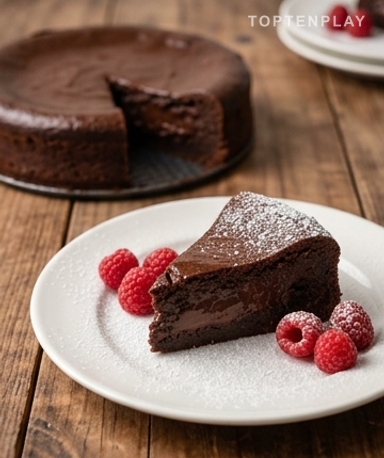
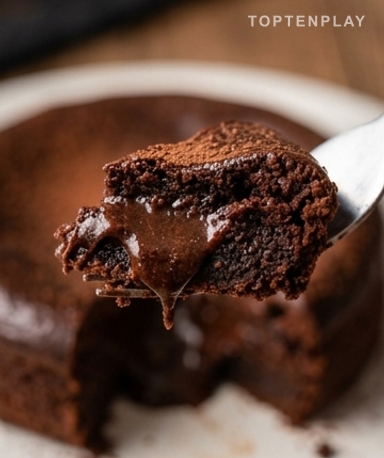
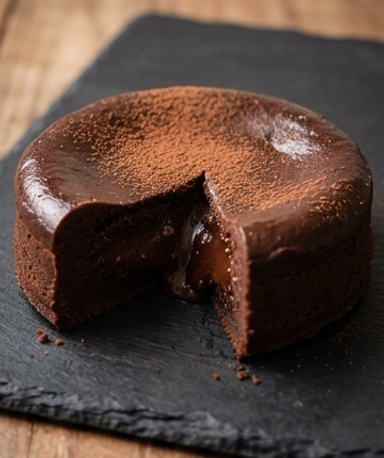
The first thing you notice is the dark, almost lacquered surface, with a slight crackling at the edges that hints the inside is a different story. You dive in with a spoon and it offers no resistance — dense, moist, with a heart that has kept its melt-in-the-mouth texture. The smell of warm cocoa lingers in the kitchen for a good hour after leaving the oven. A chocolate taste that stays on the palate, long and slightly bitter, balanced by the fatty richness of the mascarpone.
Why you’ll love this recipe
Ingredient Notes
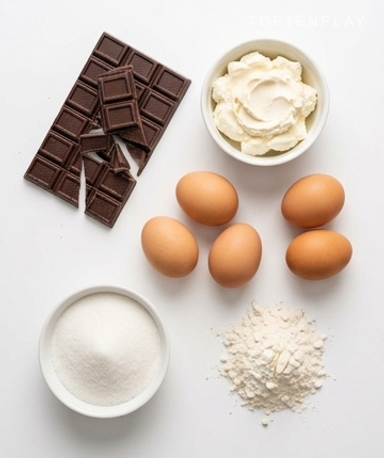
Only five ingredients — and that’s all you need for a cake that will impress everyone.
- Dark chocolate (200 g) : Choose one with at least 60-65% cocoa. Below that, the cake will lack depth and be too sweet. A Lindt Excellence 70%, a Nestlé Dessert dark, or whatever you have in stock — the important thing is real dark chocolate, not low-end cooking chocolate that smells like sugar and nothing else.
- Mascarpone (250 g) : This is what does the work. It provides a rich, creamy texture that completely changes the game compared to a classic fondant. No need for a specific brand — generic supermarket mascarpone works great. Just make sure it’s at room temperature before mixing it with the chocolate.
- Eggs (4) : Whole, at room temperature. Take them out of the fridge an hour before if you think of it. Cold eggs can slightly seize the melted chocolate — nothing catastrophic, but the final texture is less smooth.
- Flour (40 g) : Almost nothing. This is intentional: just enough to give a minimal structure without turning it into a classic sponge cake. If you want a gluten-free version, cornstarch works in the same quantity, without changing the taste or texture.
Starting the batter
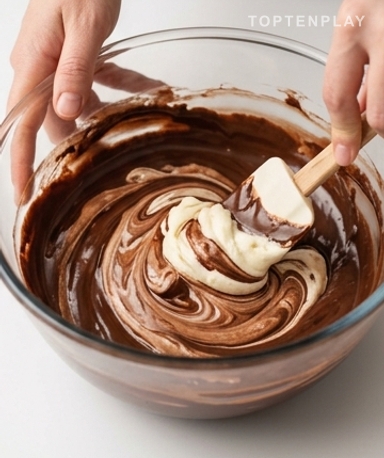
Start by melting the chocolate. Double boiler or microwave — in the microwave, work in 30-second bursts, stirring between each, otherwise you’ll end up with burnt chocolate that smells like plastic. When it’s melted, glossy, and totally smooth, let it cool for two or three minutes. No need for a thermometer: if you can touch the edge of the bowl without pulling your hand away immediately, it’s ready. The mascarpone joins the warm chocolate — mix gently with a spatula. You’ll see the batter change from a mixture streaked with dark brown and white to something homogeneous and almost silky.
The eggs, one by one — don’t rush
This is the part you don’t skimp on. Add one egg, mix well until the batter is smooth. Then the next. Four times. If you add them all at once, the batter can become grainy and lose its regularity. After the eggs, add the sugar, then the sifted flour. Two or three turns with the spatula, no more. Overworking the flour is the beginning of an elastic and uninteresting cake.
The critical moment: taking it out on time
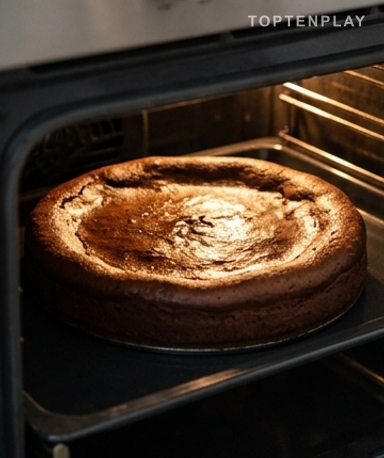
Preheated oven at 180°C, buttered and floured pan of about 20 cm. Pour in the batter — it’s liquid, that’s normal. Bake. At 20 minutes, open the oven and look at the center: it should wobble slightly when you move the pan, like a still-warm crème brûlée. The edges, however, are firm and starting to pull away slightly from the sides. That’s what we’re looking for. If the center is still completely liquid, give it three or four more minutes. But not five. Every oven is different — some run 15°C hotter than their dial suggests.
And now, patience
Take it out of the oven. Let it cool in the pan for at least fifteen minutes before unmolding. It’s tempting to dive right in. Don’t. The cake continues to cook outside the oven and firms up just enough to hold together when unmolded. Flipped onto a plate, it reveals an ebony-colored matte surface, sometimes with small cracks on the sides — a sign that it worked well. Serve it warm, with a scoop of vanilla ice cream or just as it is.
Tips & Tricks
- Never trust the timer alone for a fondant. The wobble in the center is your only reliable indicator. Watch the cake, not the clock.
- Stir half a teaspoon of instant coffee into the batter with the sugar. You won’t taste the coffee in the end result, but it significantly enhances the bitterness of the chocolate — the difference is subtle but real.
- Keep it for a maximum of three days in the fridge in an airtight container. To restore the fondant texture: twenty seconds in the microwave, not one more.
How do I know if the fondant is cooked just right?
The center should wobble slightly when you gently shake the pan — like a still-warm crème brûlée. The edges are firm and starting to pull away from the sides. If everything is set and uniform, it’s overcooked.
Can I replace the mascarpone with heavy cream or fromage blanc?
Technically yes, but the result will be different. Thick heavy cream (minimum 30% fat) gives a lighter but less dense cake. Fromage blanc adds too much moisture and risks making the cake spongy. Mascarpone remains the option that truly gives that truffle-like texture.
Can I prepare this cake in advance?
Yes, and it’s actually a good idea. Prepared the day before and kept in the fridge, it’s often better the next day — the heart firms up just right. Twenty seconds in the microwave before serving to restore the fondant texture.
How long does it keep?
Three days in the refrigerator in an airtight container. It also freezes very well for up to a month in individually wrapped slices. To thaw, put it in the fridge the night before and warm slightly in the microwave.
Can I make a gluten-free version?
Yes, very easily. Replace the flour with the same quantity of cornstarch (40g). The final texture is almost identical, perhaps even a bit more melt-in-the-mouth. No need to change the rest of the recipe.
Chocolate Mascarpone Fondant Cake
French
Dessert
A chocolate fondant with an almost truffle-like texture, made exceptionally creamy thanks to mascarpone. Five ingredients, forty minutes.
Ingredients
- 200 g dark chocolate (minimum 60% cocoa)
- 250 g mascarpone, at room temperature
- 70 g sugar
- 40 g sifted flour
- 4 eggs, at room temperature
Instructions
- 1Preheat the oven to 180°C. Butter and flour a round cake pan of about 20 cm.
- 2Melt the chocolate in a double boiler or microwave in 30-second intervals, stirring between each. Let it cool for 2 to 3 minutes.
- 3Fold the mascarpone into the warm chocolate and mix with a spatula until you have a smooth and homogeneous batter.
- 4Add the eggs one by one, mixing well between each addition.
- 5Add the sugar then the sifted flour. Mix gently with two or three turns of the spatula, no more.
- 6Pour the batter into the prepared pan. Bake for 20 to 25 minutes: the center should remain slightly wobbly, the edges firm.
- 7Let cool in the pan for 15 minutes before unmolding. Serve warm.
Notes
• Storage: 3 days in the refrigerator in an airtight container. Reheat for 20 seconds in the microwave to restore the fondant texture.
• Freezing: freezes very well for up to 1 month in individually wrapped slices.
• Gluten-free variation: replace the flour with 40g of cornstarch without any other adjustments.
Nutrition Facts (per serving, estimated)
| 360 kcalCalories | 7 gProtein | 28 gCarbs | 25 gFat |