Chimichurri is associated with great Argentine churrascarias, with servers in aprons placing a bowl of green sauce next to the meat as if revealing a house secret. We imagine a complex preparation, proportions guarded jealously. In reality, it’s a sauce anyone can put together in ten minutes, with a knife and a few ingredients almost everyone has in the fridge.
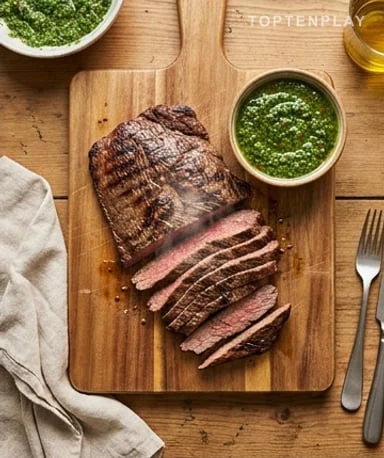
In the bowl, it looks like a dense little forest—the almost electric green of flat-leaf parsley, the bright red specks of Thai chili, all immersed in an oil that catches the light. The smell that rises at the first stir is frank, almost aggressive: raw garlic, sharp vinegar, freshly chopped herbs. Placed on a still-steaming slice of beef from the grill, the sauce changes register—the aromas soften against the residual heat, the acidity balances with the meat’s fat, and each bite becomes more interesting than the last.
Why you’ll love this recipe
Ingredient Notes

Flat-leaf parsley, fresh garlic, Thai chilies, and red wine vinegar—eight simple ingredients for a sauce that transforms any grill.
- Fresh flat-leaf parsley : This is the base of the sauce, giving it its color and herbaceous volume. Flat-leaf parsley is preferable to curly parsley: its flavor is cleaner, less bitter, and its texture after chopping is more distinct. Choose a bunch with firm stems and deep green leaves, without yellow spots. No need to peel each leaf one by one—keep the tender stems near the leaves, they have flavor and can be used without issue.
- Fresh garlic : Garlic gives chimichurri its character—that spicy, slightly pungent note that contrasts with the oil’s smoothness and balances the vinegar’s acidity. Always use fresh garlic, never powder: powder gives a dull, slightly musty taste that immediately betrays the sauce. If the cloves are especially large, reduce the quantity slightly and adjust to taste—better to add more than end up with a sauce that burns the tongue.
- Fresh Thai chili : It brings a clean, straightforward heat, different from dried chili flakes that often leave an unpleasant lingering burn. Two Thai chilies give a spicy but approachable sauce. To tone it down, remove the seeds before adding—that’s where most of the capsaicin is concentrated. Avoid substituting with ground cayenne: the texture disappears and the heat becomes harsh instead of clean.
- Red wine vinegar : This structures the entire sauce. Without this acidity, chimichurri would just be herb oil—pleasant but flat. It’s this acidic touch that cuts through the fat of grilled beef and makes each bite crisp. Do not replace it with lemon juice: the result will be too floral and much less grounded. In a pinch, white wine vinegar works, but with lighter acidity and less depth.
- Extra virgin olive oil : The oil binds all the elements together and softens the whole. A decent quality oil makes a difference here, precisely because it’s not heated—its taste remains intact in the sauce. Always add it last, after mixing the vinegar and herbs. If added too early, it coats the herbs before the vinegar has time to penetrate them, making the sauce harder to balance.
- Dried oregano : This is the only dried ingredient in the recipe, and for good reason. Fresh oregano can dominate with too pronounced a floral bitterness. Dried oregano brings an earthy, almost medicinal note in the best sense, anchoring the sauce without unbalancing it. Use modestly—it’s a subtle background note, not a main perfume.
The Right Tool
The first decision with chimichurri is to leave the food processor in the cupboard. A blender might seem faster and more convenient, but it grinds the herbs rather than cutting them—parsley releases too much water, the sauce becomes pasty, and the color turns an unappealing gray-green. With a sharp knife, you get clean pieces that stay green and keep some texture in the sauce. The sound of the blade on the board is an honest indicator: if the knife seems to crush more than slice, it needs sharpening before you start. Take a few extra minutes on the chopping—it shows in the bowl and you can taste it.

Chopping
Start with garlic. Slice the cloves thinly, then chop until you get very small pieces—not a paste, but close. Garlic in too-large chunks creates pockets of concentrated heat in the sauce, where you want even warmth in every bite. Move on to parsley: remove only the thick, tough lower stems; the tender stems near the leaves can be used without issue. Chop roughly first, then refine until you have lively, bright green small pieces. Finish with the chili, sliced into thin rounds. If you’re removing the seeds, do it now, before they mix with everything else. Everything goes into the bowl as you go—when the chopping is done, so is the bulk of the work.
Assembly in Order
The order of assembly isn’t ritual; it’s practical. Start by mixing the chopped garlic, oregano, salt, and red wine vinegar directly onto the chopped herbs. The vinegar’s acidity immediately begins to slightly tenderize the raw garlic and bring out the parsley’s aromas—the smell that rises from the bowl at this moment is almost pungent, lively, sharp. Let it rest for a minute, then add the chili. Olive oil goes in last, poured in a thin stream while stirring with a fork. It envelops everything without crushing the other flavors. Taste before moving on—salt, vinegar, overall balance. It’s easier to correct now than after resting.
Resting
Twenty minutes at room temperature makes a real difference, and it’s not just about patience. Right after assembly, the sauce is still tentative—you perceive garlic on one side, vinegar on the other, herbs as a separate layer. After resting, everything has melded: the vinegar has softened, the garlic has lost its aggressiveness, the dried oregano has diffused into the oil. The texture remains the same, but the taste is more cohesive, rounder. It’s also during this time that you light the grill—the meat finishes just at the right moment, and the chimichurri is ready without extra effort.
How to Use It
Chimichurri isn’t limited to beef. On grilled chicken, it provides what’s often missing—acidity and freshness that compensate for chicken breast’s tendency to be dry. On grilled vegetables (zucchini, bell pepper, hot eggplant), it works like a warm vinaigrette that awakens the grilled flavors. It even works on scrambled eggs the next morning, with toast. The only rule: don’t heat it. Placed at the last moment on still-smoking meat, the residual heat releases its aromas without degrading the herbs or dulling the color.

Tips & Tricks
- Sharpen the knife before you start. A dull blade mashes parsley instead of slicing it, which bruises the cells, releases too much water, and yields a grayish, unappetizing sauce—the exact opposite of what we’re after.
- Make the sauce before you light the grill. The cooking time for meat roughly matches the ideal 20-minute rest for chimichurri—both are ready together without any special planning.
- Taste before adding the oil. That’s the best time to adjust salt and vinegar, because the oil will then coat the flavors and make corrections harder to evaluate.
- Store leftovers in a sealed jar in the fridge for up to a week. The oil will firm up slightly in the cold—take the jar out ten minutes before serving and stir. The sauce is only better after a night.

Can you prepare chimichurri in advance?
Yes, and it’s even recommended. The sauce improves over time—the flavors meld and the garlic loses its aggressive bite after a few hours. It keeps for up to a week in the fridge in a sealed jar; take it out ten minutes before serving so the oil liquefies again.
Why not use a food processor or blender?
A blender grinds the herbs rather than slicing them, releasing too much water and giving a pasty, gray-green sauce that’s unappealing. Knife cutting preserves the texture and bright color of the parsley, which are key to chimichurri’s visual identity.
Can you replace red wine vinegar?
White wine vinegar works if you don’t have the other, but with lighter acidity and less depth. Avoid lemon juice: it gives a floral profile that doesn’t really go with the herbs and garlic in chimichurri.
How to adjust the spiciness?
Heat comes from the Thai chilies—reduce to one for a mild sauce, or remove the seeds completely before adding to tone it down further. If cooking for children or very spice-sensitive people, replace with a pinch of sweet paprika.
What else can you serve chimichurri with besides beef?
It works great on grilled chicken, roasted vegetables (zucchini, eggplant, bell pepper), or even scrambled eggs in the morning. The only rule: never heat it directly—always add it at the last moment, on something already hot.
Can chimichurri be frozen?
Yes, it freezes well—pour it into ice cube trays for convenient individual portions. The texture changes slightly after thawing (the herbs soften a bit), but the flavor remains very good for accompanying grilled meat.
Chimichurri Sauce
Argentine
Sauce
The Argentine green sauce that transforms any grilled meat. Knife-chopped flat-leaf parsley, fresh garlic, Thai chili, and red wine vinegar—ready in ten minutes, better after twenty.
Ingredients
- 60g fresh flat-leaf parsley (about 1 bunch)
- 4 garlic cloves
- 2 fresh Thai chilies
- 3 tbsp red wine vinegar
- 120ml extra virgin olive oil
- 1 tsp dried oregano
- ½ tsp fine salt
- 1 pinch freshly ground black pepper
Instructions
- 1Peel the garlic cloves and finely chop them with a knife until you get very small pieces—not a paste, but close.
- 2Remove only the thick tough stems from the parsley. Chop the leaves and tender stems with a knife: roughly first, then refine until you have lively, bright green small pieces.
- 3Cut the Thai chilies into very thin rounds. Remove the seeds at this stage if you prefer a milder sauce.
- 4In a medium bowl, combine the chopped parsley, garlic, chili, dried oregano, salt, and red wine vinegar. Mix so the vinegar begins to penetrate the herbs.
- 5Pour the olive oil in a thin stream while stirring with a fork, until everything is combined. Taste and adjust salt or vinegar if needed.
- 6Let rest for 20 minutes at room temperature before serving, uncovered. The sauce is ready when the flavors have melded and the garlic has lost its initial bite.
Notes
• Always chop by hand—a blender gives a pasty, grayish sauce.
• The sauce keeps for up to a week in a sealed jar in the fridge. Take it out 10 minutes before serving to liquefy the oil.
• To freeze: pour into ice cube trays, then transfer the cubes to a freezer bag. Keeps for 3 months.
• Also excellent on grilled chicken, roasted vegetables, or scrambled eggs.
Nutrition Facts (per serving, estimated)
| 135 kcalCalories | 0.5gProtein | 1gCarbs | 14gFat |