Colombo is the dish that nine out of ten people have never cooked at home — and that’s a mistake. A blend of spices, coconut milk, and simmering chicken: that’s all you need to bring the Caribbean to your plate. No special technique required, just don’t rush things.
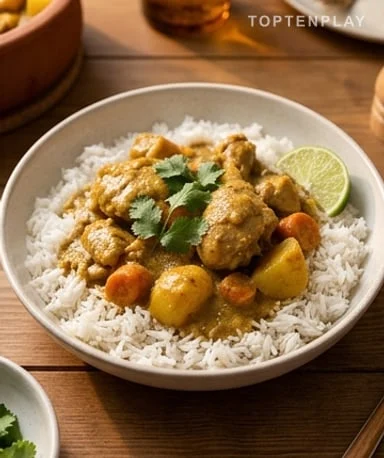
What strikes first is the color: a deep golden hue, almost turmeric-like, coating the chicken and vegetables in a creamy, fragrant sauce. Then the smell arrives — cilantro, cumin, a hint of mild chili — and it fills the entire kitchen long before the dish reaches the plate. After 45 minutes on low heat, the meat falls apart effortlessly. The sauce is neither too thin nor too thick: just dense enough to cling to the rice.
Why you’ll love this recipe
Ingredient Notes
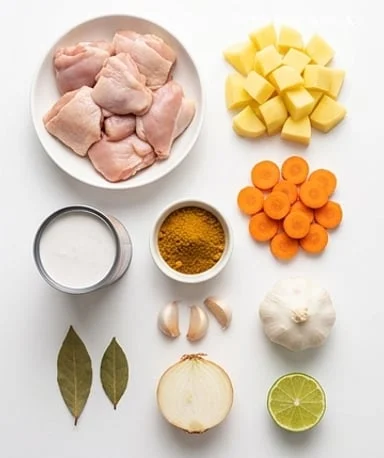
No need for a long list: a few vegetables, coconut milk, and the colombo blend do all the work.
- Colombo spice blend : It’s the soul of the dish — without it, you’re just making chicken stew. Colombo is a Caribbean blend based on cilantro, cumin, turmeric, mild chili, and sometimes fenugreek. You can find it in specialty stores or online. If you can’t find it, a mild curry can work as a substitute, but the result will be more Indian than Caribbean.
- Coconut milk : It serves both as a softener and a binder for the sauce. Choose full-fat coconut milk, not light: the fats are what give the characteristic creamy texture. Too watery milks make the sauce bland and won’t coat properly.
- Chicken thighs : Thighs are by far the best choice here. They stay moist after 45 minutes of cooking, whereas breasts become dry and fibrous. If you prefer breasts, cook for 10 minutes less and watch the texture. In any case, cut into even pieces for uniform cooking.
- Potatoes : They play a double role: absorb spices during simmering and naturally thicken the sauce by releasing starch. Choose firm-fleshed varieties like Charlotte, which hold their shape during cooking. Cut into 2 cm cubes, they soak up flavor without turning into mush.
- Carrots : They bring a slight sweetness that balances the intensity of the spices. In thick rounds, they retain a slight bite after cooking — which is preferable to a melted carrot that disappears into the sauce without adding texture.
- Lemon juice : Optional on paper, essential in practice. A tablespoon at the end of cooking wakes up the whole dish and cuts through the richness of the coconut milk. It’s the same logic as salt in a dessert: you don’t taste it directly, but its absence is immediately felt.
Sear the chicken, really
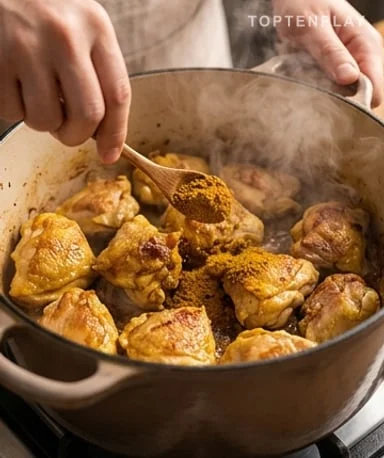
The first step — and the most crucial — is to brown the chicken properly. Heat the oil over high heat in your pot, and place the pieces without moving them for a full two minutes. You hear the sizzle, you see the bottom turn golden and almost caramelized: that’s exactly what you need. This Maillard reaction creates aromatic compounds that will stick to the bottom of the pot, then dissolve into the sauce during simmering to give it depth. If you stir too early or skip this step, you get a pale stew with a flat taste. Turn the pieces once, wait for the other side to brown similarly, then set them aside.
Bloom the spices
Once the onion and garlic have cooked in the pot — translucent, slightly sweet from the heat — add the colombo spice and stir immediately. The dry heat of the pot releases the essential oils of the spices in 60 to 90 seconds: the rising smell is intense, almost pungent, with notes of earth, cilantro, and warm turmeric. This technique, called blooming, multiplies the aromatic intensity of the spices compared to simply adding them to liquid. Don’t let them burn: if the bottom sticks, lower the heat slightly. Then return the chicken pieces to the pot and stir to coat them with this golden spice paste.
Simmering can’t be rushed
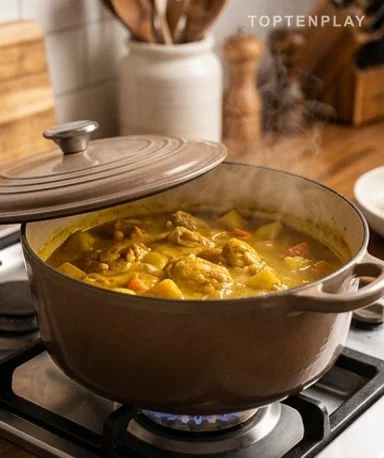
Add the potatoes and carrots, pour in the coconut milk and a glass of water, slip in a bay leaf, salt and pepper. The sauce still seems liquid at this stage — that’s normal; it will reduce and thicken. Bring to a gentle boil, cover, then lower to low heat. The following 40 to 50 minutes are when the dish builds itself without you: the vegetables absorb, the sauce slowly reduces, the spices lose their raw edge and become rounder and deeper. Lift the lid occasionally to stir and check the liquid level. If the sauce seems too liquid at the end, simply remove the lid and let it reduce uncovered for 5 minutes.
Final adjustment
Before serving, taste the sauce and adjust. A little salt if it seems flat. A squeeze of lemon juice for freshness — one tablespoon is enough, the goal is not to make the dish sour but to cut through the richness of the coconut milk and bring out the spice notes that may seem muted by the cream. Add it off the heat: the fresh notes of citrus disappear when cooked. Serve directly from the pot or in shallow bowls, on a bed of white or basmati rice, with some fresh herbs if you have them on hand.
Tips & Tricks
- Cook it the day before: colombo is one of those dishes that improves with rest. The next day, the spices have melded into the sauce, the meat has had time to soak, and everything has a coherence you don’t get straight from the stove.
- Don’t drown the dish in liquid: many add too much water out of caution. The coconut milk and natural juices from the vegetables are enough to create the sauce. Too much liquid dilutes the spices and gives a bland sauce that will never coat the rice properly.
- Toast your spices dry for 60 seconds in a hot pan before adding them to the pot: dry heat releases essential oils much more effectively than cooking in fat. The colombo becomes noticeably more complex, less dusty.
- Add lemon off the heat, not during cooking: citrus loses its aromatic freshness as soon as it heats up. Squeeze directly into the bowl or pot at serving time to preserve its brightness.
Can I substitute chicken breasts for thighs?
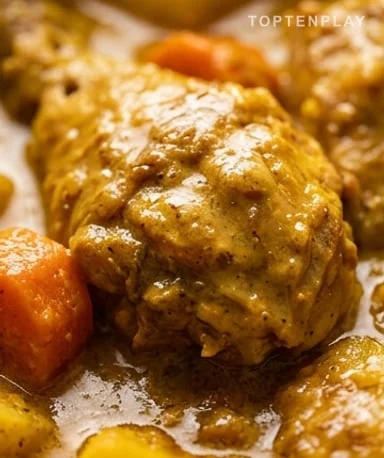
Yes, but with adjusted cooking time. Breasts dry out quickly: simmer for 30 to 35 minutes instead of 45, and check the texture along the way. Thighs remain the best choice because their natural fat content protects them from overcooking and gives them a tenderness that breasts can’t achieve.
Where can I find colombo spice blend?
In Caribbean or African grocery stores, you’ll easily find it, often in bulk, which is much cheaper. Some well-stocked supermarkets also carry it in the exotic spices section. If you’re truly stuck, a mild curry can help, but the flavor profile will be different — more Indian, with less fresh coriander and acidity.
Does chicken colombo freeze well?
Very well. Let it cool completely before portioning into airtight containers, and store for up to two months in the freezer. When defrosting, reheat gently with a little water to loosen the sauce, which will have thickened slightly. The potatoes tend to become a bit mealy, but it’s still perfectly fine.
What’s the difference between colombo and curry?
Both are spice blends from the same Indian influence, but colombo has a distinct Creole identity. It generally contains coriander, cumin, turmeric, mustard, and sometimes ground toasted rice, which gives it a slightly grainier texture and an earthy note absent from classic curries. Colombo is also often less spicy, more aromatic than hot.
What to serve with this dish?
White rice or basmati rice are the most obvious accompaniments — they absorb the sauce without competing. Couscous also works very well. To go further into the Caribbean spirit, serve with fried ripe plantains: their slight sweetness contrasts perfectly with the colombo spices.
How do I prevent the sauce from being too thin?
The main culprit is too much water added during cooking. The coconut milk and vegetable juices are enough to cover the bottom: add only one glass of water at most initially. If despite that the sauce remains too thin at the end, remove the lid for the last 10 minutes — it will reduce naturally without any intervention.
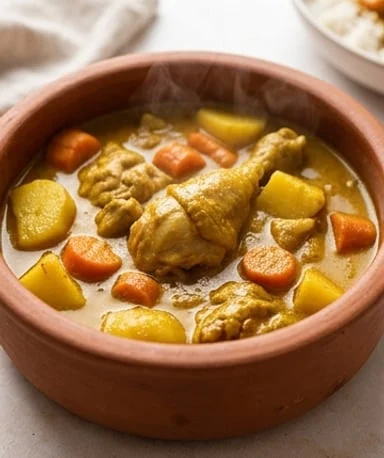
Chicken Colombo with Coconut Milk
Caribbean
Main course
A classic from the French Caribbean: chicken simmered in a creamy coconut milk sauce flavored with colombo spice, with melting potatoes and carrots. Simple to make, even better reheated the next day.
Ingredients
- 600g chicken thighs, cut into pieces
- 200ml full-fat coconut milk
- 400g firm-fleshed potatoes (e.g., Charlotte), peeled and diced
- 3 medium carrots, peeled and cut into thick rounds
- 1 medium onion, thinly sliced
- 2 cloves of garlic, crushed
- 1 tbsp colombo spice blend
- 200ml water
- 1 tbsp neutral oil (sunflower or grapeseed)
- 1 bay leaf
- 1 tbsp fresh lemon juice
- 1 pinch salt and black pepper, to taste
Instructions
- 1Prepare all ingredients: thinly slice the onion, crush the garlic, cut the chicken into even pieces, peel and dice the potatoes into 2 cm cubes, cut the carrots into thick rounds.
- 2Heat the oil over high heat in a heavy pot. Place the chicken pieces without crowding and let them brown for 2 to 3 minutes without stirring. Turn them and brown the other side. Set aside on a plate.
- 3In the same pot over medium heat, sauté the onion and garlic for 3 to 4 minutes until translucent. Add the colombo spice and stir vigorously for 60 seconds to ‘bloom’ them in the dry heat.
- 4Return the chicken to the pot. Add the potatoes and carrots, then pour in the coconut milk and water. Add the bay leaf, salt, and pepper.
- 5Bring to a gentle boil, cover, and reduce to low heat. Simmer for 40 to 50 minutes, stirring occasionally. If the sauce reduces too much, add a little water. If it’s too thin at the end, remove the lid and let it reduce uncovered for 5 minutes.
- 6Off the heat, add the lemon juice. Taste and adjust seasoning. Serve over white or basmati rice.
Notes
• Prepare this dish a day ahead: the flavors develop even more overnight in the fridge. Reheat gently with a little water if the sauce has thickened too much.
• For a spicier version, add half a teaspoon of cayenne pepper along with the colombo spice.
• The dish freezes very well for up to 2 months. Portion after cooling completely.
Nutrition Facts (per serving, estimated)
| 420 kcalCalories | 32gProtein | 28gCarbs | 20gFat |