📌 Ceramic hobs: 6 common errors that destroy your cooking surface
Posted 24 February 2026 by: Admin
Cleaning Errors That Threaten Your Hob
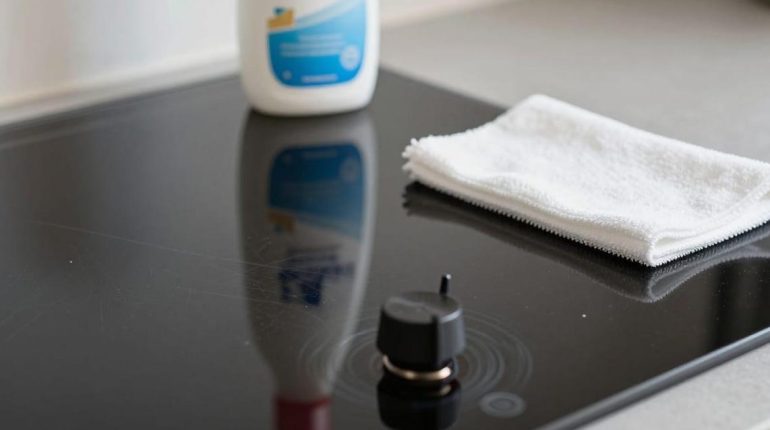
Behind their robust appearance, ceramic hobs hide a vulnerability comparable to that of a smartphone screen. Abrasive cleaners, even when used occasionally, cause irreversible scratches on the glass surface. These micro-lesions, invisible at first glance, accumulate until they permanently dull the hob’s shine.
Unsuitable products progressively deteriorate the glass structure despite its resistant appearance. Worse still: the choice of cloth matters as much as the cleaner itself. Rough fabrics or scouring sponges create damage as significant as aggressive chemical solutions. Only soft cloths preserve the integrity of this capricious surface.
Negligence regarding cooking residues worsens the problem. Splashes and stains left in place become permanently encrusted during subsequent uses, literally baking into the glass under the effect of repeated heat. This phenomenon transforms a simple delayed cleaning into a complex restoration operation.
Manufacturers exclusively recommend specifically formulated cleaners for ceramic surfaces, accompanied by microfiber cloths. This requirement is not a commercial argument: it stems directly from the fragile composition of the material. Ignoring this rule amounts to programming the premature obsolescence of your equipment.
Beyond cleaning, other daily gestures threaten your installation just as much.
The Dangers Of Weight And Friction
This structural fragility manifests even more brutally under the effect of weight. Unlike traditional gas stoves that rest on robust metal grates, ceramic hobs directly support the weight of the utensils. Cast iron pans or full casseroles create concentrated pressure points that crack the glass without prior warning.
Containers with rough or uneven bottoms amplify this risk. Their roughness transforms every contact into a repeated micro-aggression, progressively weakening the surface until it breaks. A simple manufacturing defect under a pot is enough to compromise the integrity of your hob in a few weeks of regular use.
The reflex to slide utensils from one burner to another is the most common error. This harmless gesture generates cumulative micro-scratches that permanently dull the glass surface. Moving a full pan dangerously amplifies this phenomenon: the weight of the contents multiplies the friction against the glass.
The golden rule is therefore imposed with absolute rigor: systematically lift every utensil, even for a movement of a few centimeters. This discipline protects your investment much more effectively than any specialized cleaner. Manufacturers emphasize this point in their manuals, aware that this habit determines the longevity of the equipment.
But the cleanliness of the utensils themselves plays an equally determining role in preserving your hob.
Utensil Hygiene: An Underestimated Factor
Apparent cleanliness is not enough. Microscopic food residues encrusted under pans transform into corrosive agents as soon as they encounter the intense heat of the ceramic hob. This chemical reaction silently attacks the glass, creating areas of weakness invisible to the naked eye.
Dirt accumulated after several uses transfers its grime directly onto the heating surface. These carbonized deposits act like sandpaper during subsequent cooking, progressively scratching the plate with each thermal contact. The phenomenon intensifies with greasy residues which, under the effect of heat, form a particularly destructive adhesive film.
A systematic check is necessary before each use. Turn your pans and pots over to inspect their bottom: the slightest brown or black trace must be eliminated before placing them on the hob. This simple discipline avoids irreversible damage that escapes most users until the day a crack appears without apparent explanation.
Manufacturers recommend cleaning the bottom of utensils as rigorously as the hob itself. This cross-contamination between dirty containers and the ceramic surface explains many premature deteriorations wrongly attributed to manufacturing defects.
But beyond cleanliness, it is temperature management that holds the most dangerous surprises for your equipment.
The Critical Management Of Hot Elements
The gesture seems harmless: placing a burning lid face down on the hob for a few seconds. This common practice, however, triggers a violent thermal shock capable of instantly fracturing the ceramic glass. The temperature difference between the surface and the overheated metal creates internal tensions that the material cannot absorb.
Inverted lids concentrate their heat on a precise point of the plate, creating a localized expansion zone. The glass deforms under this unequal thermal pressure, generating micro-cracks that progressively extend until complete shattering. Manufacturers regularly document these avoidable accidents, often wrongly attributed to design defects.
The residual temperature of a stainless steel lid easily exceeds 200°C after intensive cooking. Placed against a hob at room temperature or slightly warm, it causes a brutal thermal variation that even the most resistant technical glasses cannot withstand. The phenomenon is amplified with cast iron lids, true heat reservoirs.
The solution remains simple: systematically use a trivet or a heat-resistant surface to place your hot lids. This elementary precaution eliminates any risk of thermal shattering and preserves your investment.
Other thermal dangers lurk for your hob, some as unexpected as they are destructive.