📌 Cauliflower and Morbier: the unexpected recipe for a spread with cheesy and Middle Eastern flavors
Posted 5 January 2026 by: Admin
The Fusion Recipe: When Morbier Meets Middle Eastern Flavors
This spread subverts the codes of traditional hummus with a rare boldness: cauliflower replaces chickpeas, creating a unique texture that defies convention. The combination surprises from the very first bite. An AOP cheese from Franche-Comté with powerful aromas dialogues with Middle Eastern spices – zaatar, preserved lemon, sesame paste. The result transcends culinary borders without betraying the identity of its components.
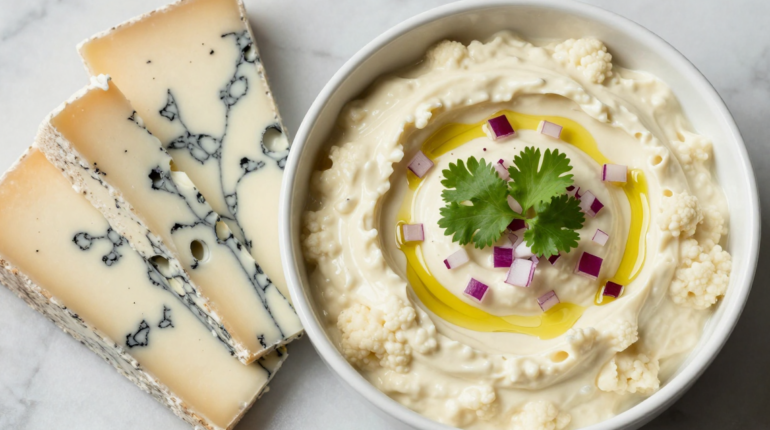
Morbier, recognizable by its iconic black line, finds an unexpected partner here. Its supple paste and fruity taste pair with the vegetable sweetness of cauliflower enriched with tahini. This Franco-Mediterranean encounter works through mastered contrast: the cheese’s assertive character balances the subtlety of the fragrant vegetable base.
The Middle Eastern inspiration isn’t limited to the seasoning. The technique itself borrows its philosophy from hummus: blending until a smooth cream is obtained, adding raw aromatics for final freshness. But cauliflower brings a new dimension – lighter, less dense than legumes, with an aromatic palette that absorbs spices differently.
This creation illustrates a current culinary trend: reinterpreting classics by substituting a key ingredient. The gamble pays off when the flavor balance remains intact despite the transformation. Here, each element justifies its presence in a composition where tradition and innovation coexist seamlessly.
Cauliflower Preparation: Technique And Precision
The success of this spread relies on a technical gesture often overlooked: the thermal shock. The florets plunge into boiling water for exactly ten minutes, then immediately drop into an ice bath. This calculated brutality stops the cooking instantly and sets the vegetable’s ivory color. Without this step, the cauliflower continues to cook through thermal inertia, turning gray and losing its firmness.
Draining requires the same rigor. Pressing the florets between two towels eliminates residual water that would dilute the spread. A waterlogged cauliflower produces a watery cream, unable to hold in the mouth or adhere to the Morbier sticks. This textile compression, simple as it may be, makes the difference between a professional preparation and an amateur result.
The detail of the florets optimizes the final texture. Cut uniformly, they cook evenly and transform into a lump-free puree under the blender blades. The more fibrous cores are kept aside, guaranteeing that creaminess characteristic of Mediterranean spreads.
These preparatory manipulations condition the aromatic assembly. A correctly treated cauliflower absorbs spices and oils without disintegrating, creating a stable emulsion where each ingredient retains its flavor expression. Technical precision then becomes the invisible foundation of a recipe that seems spontaneous.
Aromatic Assembly: A Symphony Of Flavors
In the blender bowl, the ingredients that forge the identity of this spread converge. The cooled cauliflower sits alongside chickpeas, sesame paste, and preserved lemon, while zaatar imposes its Middle Eastern signature. This blend of dried herbs – thyme, sumac, and toasted sesame seeds – deploys a herbaceous complexity that counterbalances the cauliflower’s vegetable sweetness. Each rotation of the blades transforms this juxtaposition into a homogeneous emulsion.
Tahini provides the fatty creaminess that a simple vegetable puree would lack. This whole sesame paste coats the cauliflower particles, creating a velvety texture comparable to that of traditional hummus. The chickpeas, present in reduced quantities, reinforce this creamy sensation without dominating the flavor profile. The preserved lemon acts as an acidic counterpoint, waking up the whole with its salty and lemony notes characteristic of North African cuisine.
Blending continues until a perfectly smooth texture is achieved. No lumps should remain to allow the Morbier sticks to slide through the preparation. This mastered fluidity ensures that each dip coats the cheese uniformly, marrying its melting paste to the fragrant vegetable cream. The flavor balance is played out in these precise proportions where no ingredient masks another, setting the stage for a tasting that celebrates the cheese as much as its aromatic setting.
Plating And Tasting: Staging The Morbier
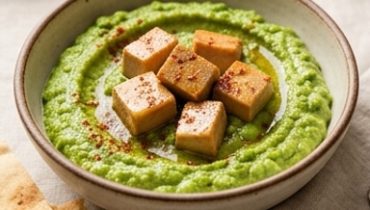
The shallow bowl welcomes the smoothed spread, forming a setting that reveals its velvety texture. On this vegetable base, final garnishes are added: finely diced red onion, a drizzle of extra virgin olive oil drawing golden arabesques, and fresh cilantro sprigs that visually punctuate the composition. These raw touches contrast with the blended cream, bringing crunch and a herbaceous freshness that heralds the coming flavor complexity.
The Morbier is cut into regular sticks that expose its iconic black line, a vestige of a century-old cheese tradition. This line of vegetable charcoal runs through the creamy ivory paste, creating a visual contrast that naturally guides the dipping gesture. The dimensions of the sticks follow a practical logic: wide enough to support the melting texture of the aged cheese, long enough to dip comfortably into the spread without breaking.
Each dip coats the washed rind of the Morbier in a fragrant layer where zaatar and preserved lemon dialogue with the cheese’s lactic notes. The supple paste partially absorbs the Mediterranean flavors while its own aromatic power asserts itself. The crunchy red onion intercepts the fatty richness of the whole, while the cilantro refreshes the palate between bites. This orchestration transforms a simple spread into a complete sensory experience, where the Franche-Comté cheese becomes the vehicle for an unexpected culinary journey.