The smell arrives before anything else. An hour and a half after closing the pot, something between warm caramel and sweet smoke starts to float through the entire kitchen. Caramelized pulled beef is that dish you prep on a Sunday morning that wows everyone by the evening — without you having moved a finger since.
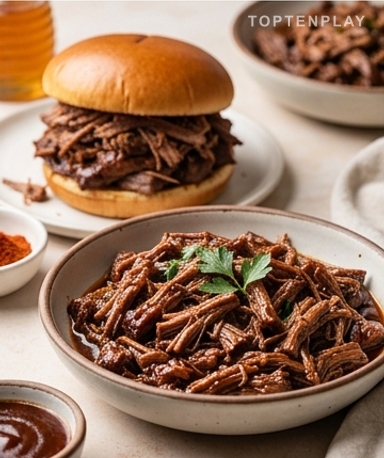
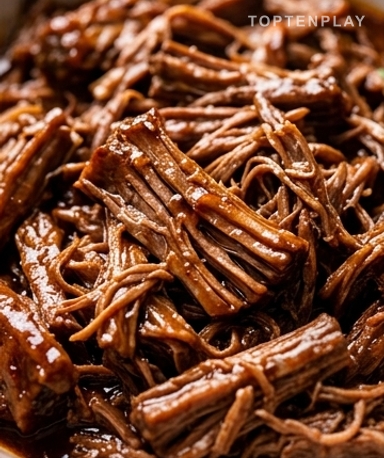
Deep brown, almost glazed strands of meat that fall into thick shreds in a dense, shiny sauce. The color oscillates between light caramel and mahogany. Under the fork, it gives away without any resistance — every fiber soaked in reduced juices, honey, and concentrated barbecue sauce. The aroma mixes sweetness, smoky paprika, and a hint of acidity that keeps everything from becoming cloying.
Why you’ll love this recipe
Ingredient Notes
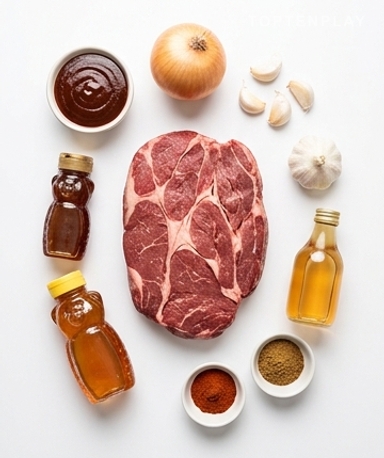
Nothing complicated: a few well-chosen ingredients are enough for an impressive result.
- Beef Chuck : This is the cut to choose, no other. Chuck is a muscle that works hard — meaning it’s full of collagen that melts during slow cooking, giving it that fibrous yet melting texture. You can also use beef cheek or short ribs if your butcher has them.
- Barbecue sauce : It represents 70% of the final taste, so get a decent one — not the cheapest on the shelf. A slightly smoky sauce works very well here. Sweet Baby Ray’s is a solid choice, or an artisanal one if you have it on hand.
- Honey : It does two things: provides mild sweetness and promotes caramelization at the end of cooking. Basic liquid honey is enough. Brown sugar also works if that’s all you have.
- Apple cider vinegar : The ingredient often forgotten but which changes everything. It cuts through the sweetness of the BBQ sauce and honey, bringing a light acidity that wakes up the dish. Without it, it’s too heavy, too one-dimensional.
- Smoked paprika : If you have the choice between classic sweet paprika and smoked paprika, go for smoked. It adds a depth that makes people think the meat was cooked over embers. A subtle detail that changes the perception of the dish.
Searing, fast and well
Take the chuck out of the fridge twenty minutes before starting — meat that is cold to the core won’t brown, it will cook in its own water and stay gray. Heat a drizzle of oil in your pot over high heat until the surface starts to shimmer slightly. Place the meat. The sound should be clear: a loud, continuous sizzle indicating that the crust is really forming. Two to three minutes per side, no more. You want a dark brown crust, almost mahogany — not gray, not blonde. This layer will give depth to the whole sauce during the hours of cooking. Set the meat aside on a plate and let the brown bits (sucs) stick to the bottom of the pot.
Building the sauce
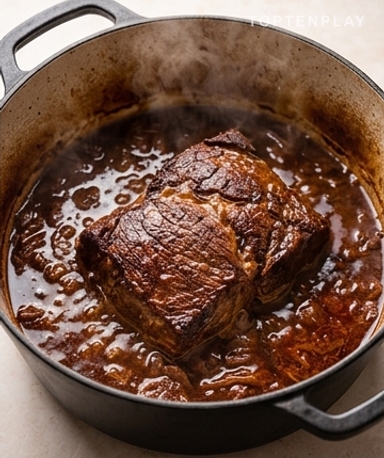
In the same pot, without washing it, sauté the sliced onion over medium heat. It will pick up all those brown bits stuck to the bottom — exactly what we want. When the onion becomes translucent and slightly golden like light caramel, add the minced garlic and cook for one minute. Then pour in the barbecue sauce, honey, vinegar, paprika, cumin, and broth. Mix well. The sauce smells strong and sweet at this stage — that’s normal; it will concentrate and balance out during the cooking hours.
Close the pot and move on
Put the chuck back into the sauce, turn it so it’s well coated on all sides, and cover tightly. Oven at 150°C, fan-assisted if possible. Three hours minimum, three and a half hours is better. Do not open it. Not to check, not to stir — every opening loses temperature and unnecessarily extends the cooking time. The meat cooks in a humid, hot environment: collagen slowly breaks down, and muscle fibers separate from each other effortlessly. Do something else. Completely.
Shredding
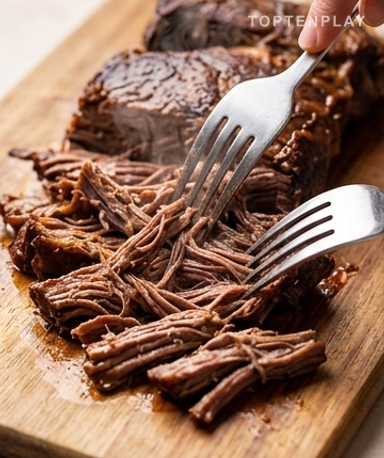
Take out the pot. The meat should fall apart when touched with a spoon — if it still resists, put it back for twenty minutes without hesitation. Place the chuck on a board and use two forks to shred it by pulling in opposite directions. It takes two minutes. The meat strands are long, brown, and soaked in juice. Put everything back into the cooking sauce and mix so every fiber is well coated.
Final caramelization
Let the mixture cook uncovered for ten minutes over medium-high heat. The sauce reduces, thickens, and starts to stick slightly to the bottom of the pot — a sign that the sugars are caramelizing. Stir regularly. The color of the meat darkens even more, and the sauce becomes shiny and coating, almost glazed. This is when the dish takes on its final look. Taste and adjust the salt.
Tips & Tricks
- Prepare it the day before and let it cool in its sauce before refrigerating — reheated the next day over low heat with a splash of water, it’s even better because the sauce has had all night to soak into every fiber.
- If serving in a sandwich, lightly toast the bread: a soft slice with meat this juicy quickly turns into a disaster.
- Chuck loses a lot of weight during cooking — plan for 250 to 300g gross weight per person if it’s the main course, not 200g.
Can pulled beef be prepared in advance?
Yes, and it’s even recommended. Prepared the day before and stored in its sauce in the refrigerator, it’s even better reheated — the sauce has had time to soak into every fiber. Reheat over low heat with a splash of broth to prevent drying out.
My meat is still not tender after 3 hours — what happened?
It simply needs more time. The thickness of the piece and its collagen content vary. Put the pot back in the oven for an extra 30 to 45 minutes and check with a fork: it must give way without resistance before shredding.
Can this recipe be made in a slow cooker?
Absolutely. After searing and preparing the sauce, transfer everything to the slow cooker: 8 to 10 hours on low, or 5 to 6 hours on high. The result is very similar, with even less intervention.
How do I freeze pulled beef?
Let it cool completely, then freeze in portions in airtight bags with a bit of sauce — this protects the meat from drying out. It keeps for up to 3 months. Thaw in the refrigerator overnight and reheat over low heat.
What other cut of beef can replace chuck?
Beef cheek is an excellent alternative, even richer in collagen and even more melting. Boneless short ribs also work very well. Avoid noble cuts like fillet or ribeye — they don’t handle this type of long cooking well.
What to serve with caramelized pulled beef?
In a sandwich on a slightly toasted brioche bun with coleslaw is the great classic. But it also pairs beautifully with basmati rice, homemade fries, or in tacos with some crunchy salad and a dash of hot sauce.
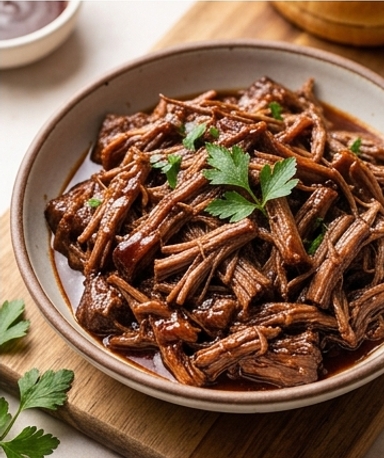
Caramelized Pulled Beef
American
Main Course
Beef chuck cooked slowly in a honey barbecue sauce until it shreds with a fork. Melting, slightly glazed, versatile.
Ingredients
- 1,5 kg beef chuck
- 1 medium onion, finely sliced
- 2 garlic cloves, minced
- 200 ml smoky barbecue sauce
- 2 tbsp (40 g) liquid honey
- 1 tbsp (15 ml) apple cider vinegar
- 1 tsp smoked paprika
- 1 tsp ground cumin
- 100 ml beef broth
- 2 tbsp neutral oil
- Salt and black pepper to taste
Instructions
- 1Take the chuck out of the refrigerator 20 minutes before cooking. Pat dry with paper towels, season generously with salt and pepper on all sides.
- 2Heat oil in a large pot over high heat. Sear the chuck for 2 to 3 minutes per side until a uniform dark brown crust forms. Reserve on a plate.
- 3In the same pot over medium heat, sauté the onion for 5 minutes until translucent and slightly golden. Add the garlic and cook for 1 additional minute.
- 4Pour in the barbecue sauce, honey, cider vinegar, smoked paprika, cumin, and broth. Mix to obtain a smooth sauce.
- 5Return the chuck to the pot and turn to coat well. Cover tightly and bake at 150°C (fan oven) for 3 hours 30 minutes.
- 6Check doneness: the meat should collapse when touched by a fork. If not, extend by 30 minutes.
- 7Remove the chuck and shred it on a board with two forks by pulling in opposite directions. Put the shredded meat back into the sauce and mix.
- 8Cook uncovered over medium-high heat for 10 minutes, stirring regularly until the sauce thickens and becomes shiny. Adjust the seasoning.
Notes
• Make ahead: stays fresh for 4 days in the refrigerator in its sauce. Reheat over low heat with a splash of water or broth. Even better the next day.
• Freezing: in airtight portions with a little sauce, up to 3 months. Thaw in the refrigerator the night before.
• Slow cooker: after searing and sauce prep, cook for 8 to 10 hours on low or 5 to 6 hours on high.
Nutrition Facts (per serving, estimated)
| 545 kcalCalories | 37gProtein | 17gCarbs | 31gFat |