Follow us
8 June 2026

Caramelized Chicken Stir-Fried Noodles

Prep Time
20 minutes
Cook Time
20 minutes
Total Time
40 minutes
Servings
4 servings

The sizzle of chicken hitting the hot wok, the smell of honey starting to blacken on the edges with soy sauce—this dish announces itself even before being served. These caramelized chicken stir-fried noodles are the promise of a 40-minute dinner that doesn’t feel like a 40-minute dinner. A simple recipe, provided you understand a thing or two about heat and patience.
Advertisement
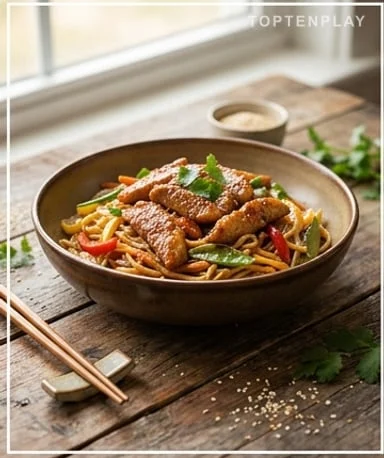
Final result
Caramelized chicken stir-fried noodles: a complete Asian-inspired meal that comes together in 40 minutes flat.

In the bowl, golden noodles intertwine with lacquered chicken strips, shiny like amber caramel. The vegetables keep their bright colors—red bell peppers, vivid orange carrots—with that crunch that resists under the tooth. A slight steam still rises when you plunge the chopsticks in. And that sauce thickened by the heat of the wok coats everything without drowning.

Why you’ll love this recipe

Lacquered chicken, not dry : The soy-honey marinade forms a caramelized crust that locks in the juices. Result: tender meat inside with a bit of bite on the surface.
40 real minutes : 15 minutes of passive marinating where you do nothing, 20 minutes of active cooking. The timing really holds up.
One wok, one wash : The chicken cooks first and leaves its juices in the wok. The vegetables and noodles then cook in those same juices. Less cleanup, more flavor.
Vegetables you have on hand : Zucchini, broccoli, green beans, Chinese cabbage—any vegetable that holds up to high heat can replace or complement the bell peppers and carrots.
No complicated sauce : No cornstarch, no liaison. The cooking caramel and wok fond do all the thickening naturally.

Ingredient Notes

Ingredients

300 g noodles, 500 g chicken, bell peppers, carrots, and a soy-honey-ginger marinade—everything you need for a successful wok.

  • Chicken fillets : Fillets are preferable to thighs here for their firm texture after caramelization—thighs, being fattier, release too much liquid into the wok and prevent the caramel from forming. Cut them into 2 cm wide strips: too thick, they won’t color to the core in quick cooking; too thin, they dry out in 60 seconds.
  • Soy sauce : It anchors the whole dish with its deep umami and salts the meat from the inside during marinating. Prefer a classic Japanese or Chinese soy sauce, neither reduced nor ‘light’. Tamari (gluten-free version) is thicker and gives a slightly richer sauce—good alternative if you have it on hand.
  • Honey : Its role is twofold: soften the bitterness of soy sauce and activate caramelization upon contact with hot metal. A neutral honey like acacia is ideal—a strong honey like buckwheat would overpower the ginger and make the dish too assertive. A tablespoon of maple syrup also works very well.
  • Asian noodles : Wheat noodles (ramen, thin udon, egg noodles) absorb the sauce without falling apart and take on a slight golden color in the hot wok. Rice vermicelli work but need less cooking—add them even later in the assembly. Avoid spaghetti: the smooth surface doesn’t hold the sauce.
  • Sesame oil : It is not used for high-heat cooking—at high temperatures, it burns quickly and loses all its toasted nutty flavor. Use it only in the marinade to flavor the chicken. For cooking vegetables, a neutral vegetable oil (sunflower, peanut) handles the heat of a wok much better.
  • Fresh grated ginger : It brings a fresh, slightly lemony aromatic heat that pepper cannot replicate. Grate it directly into the marinade with a fine grater. Powdered ginger gives a duller, less vibrant result—it can work in a pinch but the difference is clearly noticeable when tasting.

A 15-minute marinade that makes all the difference

Fifteen minutes. That’s all it takes to transform ordinary chicken strips into something much more interesting. The soy sauce starts to salt the flesh from the outside, while the honey and brown sugar coat each piece in a thin shiny film—these will form the caramelized crust in the wok. The grated ginger adds a spicy-citrus note that disappears during cooking but leaves an aromatic foundation perceptible in every bite. No need to marinate for two hours: chicken is naturally tender, and too long a marinade in soy sauce starts to alter the texture of the meat, making it strangely spongy. While the chicken marinates, prepare all your vegetables—julienned carrots, bell pepper strips, sliced onion, minced garlic. Once the wok is hot, cooking goes very fast and there’s no time to cut anything.

A 15-minute marinade that makes all the difference
The chicken marinates for 15 minutes in soy sauce, honey, and brown sugar: this step guarantees perfect caramelization.

Caramelization requires resisting the urge to stir

The wok must be really hot before adding the chicken—a drop of water should evaporate instantly, almost violently, upon contact with the metal. Add the vegetable oil, let it shimmer slightly, then add the chicken strips with all their marinade. The first contact produces a sharp sizzle and a puff of sweet-salty caramelized steam that fills the kitchen. The immediate temptation is to stir: resist. The caramelized crust forms when the meat stays in prolonged contact with the hot metal—if you move everything from the start, you prevent this reaction from completing and end up with gray chicken boiled in its own marinade. Wait 90 seconds to 2 minutes without touching, then flip. Once both sides are golden and slightly lacquered, remove the chicken and set aside on a plate. It will return to the wok at the end.

Crisp vegetables: high heat and no hesitation

In the same wok, without cleaning it—the browned caramel residue at the bottom is precious. Add the second spoonful of oil and sauté the onion first: it needs two minutes on high heat to soften slightly and release its sugars without becoming translucent and limp. The carrots come next, they need more time than the bell peppers to lose their raw hardness while keeping some bite. The bell peppers add their slightly smoky-sweet aroma a few minutes later. Everything must cook on maximum heat, stirring constantly. If you hear a steady sizzle in the wok, that’s good—if it turns into a liquid gurgle, the heat is too low and the vegetables are releasing water instead of roasting. In that case, immediately increase the heat. The garlic goes in last, 30 seconds maximum: it burns faster than any other aromatic and becomes bitter in just a few seconds too long.

The final assembly: the wok does the work

Return the caramelized chicken to the wok with the vegetables, then add the drained and cooled noodles. At this point, the wok is full and the temptation is to lower the heat to mix quietly. Do the opposite: keep the heat high and work quickly with two spatulas. The noodles need to absorb the juices left at the bottom of the wok—that slightly sticky, brown, concentrated fond is where all the accumulated flavors from the beginning reside. In two to three minutes of active tossing, the noodles take on a slight golden color in places and become impregnated with the caramel, soy sauce, and vegetable aromas. Taste before serving and adjust: an extra drizzle of soy sauce if the dish lacks depth, a pinch of sugar if it’s too salty.

The finishing touch matters, even for an everyday dish

Divide the noodles into deep bowls rather than flat plates—they retain heat better and the flavors stay concentrated. Sprinkle with a generous pinch of sesame seeds just before serving: they add a light crunch and a toasted nutty note that pairs perfectly with the chicken caramel. Chopped chives or fresh cilantro adds a touch of green and freshness that balances the richness of the dish. Serve immediately—the noodles absorb the sauce very quickly and lose their distinct texture if they sit for ten minutes in the bowl. This is a dish that doesn’t wait.

The finishing touch matters, even for an everyday dish
Over high heat in the wok, the vegetables keep their crunch while the lacquered chicken releases its juices into the noodles.

Tips & Tricks
  • Don’t overload the wok when cooking the chicken. If pieces overlap, they steam each other and never caramelize—the heat can’t reach the metal. If your wok is small, cook the chicken in two batches rather than one overloaded batch.
  • Rinse the noodles with cold water immediately after draining. Residual heat continues cooking them for a few minutes in the colander, and they arrive in the wok already too soft. Cold water immediately stops cooking and keeps their firm texture until the final assembly.
  • Keep a little soy sauce on hand during assembly. Depending on the noodle brand and the concentration of your marinade, the dish may lack salt or depth once everything is mixed—a tablespoon at the end fixes this in seconds.
  • Prepare all ingredients before turning on the heat. Once the wok is hot, each step lasts two to three minutes and immediately follows the next. If you have to stop to cut a bell pepper while the wok is smoking, you lose the temperature and the whole principle of high-heat cooking goes out the window.
Close-up
The soy-honey glaze forms a slightly crispy crust around the chicken—the contrast with the tender noodles is the secret of the dish.
FAQs

Can I replace the Asian noodles with something else?

Yes, rice vermicelli work very well—simply soak them in hot water instead of cooking, and add them even later in the assembly as they soften quickly. Tagliatelle or linguine also work in a pinch, but their smooth surface holds the sauce less well and the result is less flavorful.

The chicken isn’t caramelizing in my wok—why?

The problem is almost always too low heat or an overloaded wok. If the chicken pieces overlap, they steam each other and release liquid instead of coloring. Cook them in two batches if necessary, and wait until the wok is really smoking before adding anything.

Can I prepare this dish in advance?

The components can be prepared in advance, but the final assembly must be done at the last minute. You can marinate the chicken and cut all the vegetables up to 24 hours ahead—keep them covered in the refrigerator. Cooked noodles also keep for 24 hours with a drizzle of oil to prevent sticking, but they lose a bit of texture.

What vegetables can I use instead of bell peppers and carrots?

Any vegetable that holds up to high heat works: broccoli in small florets, zucchini in batons, green beans, Chinese cabbage, snow peas. Avoid tomatoes and overly ripe zucchini that release too much water and lower the wok temperature. The key is to have pieces of uniform size for even cooking.

How to store leftovers and reheat?

Leftovers keep for 2 days in the refrigerator in a sealed container. To reheat, avoid the microwave which makes noodles soggy and chicken rubbery: put everything back in a wok or large pan over high heat with a tablespoon of water or soy sauce, and toss for 2 minutes. The vegetables will be a bit less crunchy but the overall dish remains very good.

Can I make this dish without a wok?

Yes, a large stainless steel or cast iron pan works well—just make sure the bottom is wide enough so that the chicken and vegetables don’t overlap. Avoid non-stick pans for caramelization: they don’t get hot enough and give a dull color. The important thing is the pan’s ability to maintain very high heat.

Caramelized Chicken Stir-Fried Noodles

Caramelized Chicken Stir-Fried Noodles

Easy
Asian
Main course

Prep Time
20 minutes
Cook Time
20 minutes
Total Time
40 minutes
Servings
4 servings

Chicken strips marinated in soy and honey, caramelized over high heat in the wok, served with Asian noodles and still-crisp vegetables. A complete meal ready in 40 minutes.

Ingredients

  • 500 g chicken fillets
  • 300 g Asian noodles (ramen or thin udon)
  • 1 red bell pepper
  • 1 yellow bell pepper
  • 2 carrots
  • 1 onion
  • 2 garlic cloves
  • 3 tbsp soy sauce
  • 2 tbsp honey
  • 1 tbsp brown sugar
  • 1 tsp freshly grated ginger
  • 2 tbsp neutral vegetable oil
  • 1 tbsp sesame oil (for marinade)
  • 1 tbsp sesame seeds
  • 1 bunch chives or fresh cilantro
  • salt and pepper

Instructions

  1. 1Cut chicken fillets into 2 cm wide strips. In a bowl, mix soy sauce, honey, brown sugar, grated ginger, and sesame oil. Add chicken, mix well, and marinate for 15 minutes at room temperature.
  2. 2During marination, cut bell peppers into thin strips, carrots into julienne, slice onion, and mince garlic. Set garlic aside separately—it goes in at the end of cooking.
  3. 3Bring a large pot of salted water to a boil. Cook noodles according to package instructions. Drain and immediately rinse with cold water to stop cooking. Toss with a few drops of oil to prevent sticking and set aside.
  4. 4Heat a wok over maximum heat. Add 1 tablespoon vegetable oil and let it shimmer. Add chicken with its marinade in a single layer without overcrowding—cook in two batches if necessary. Let cook for 2 minutes without stirring, then flip and cook another 2 minutes until chicken is well browned and lacquered. Remove and set aside on a plate.
  5. 5In the same wok without cleaning, add the second tablespoon of oil. Sauté onion for 2 minutes on high heat, stirring. Add carrots and bell peppers, and stir-fry on maximum heat for 5–6 minutes, stirring regularly—they should remain slightly crunchy. Add minced garlic and sauté for 30 seconds.
  6. 6Return caramelized chicken to the wok. Add drained noodles. Toss over high heat for 2–3 minutes, using two spatulas, until noodles absorb the wok juices. Taste and adjust with a drizzle of soy sauce if needed.
  7. 7Divide into deep bowls. Sprinkle with sesame seeds and chopped chives. Serve immediately.

Notes

• Don’t overload the wok for the chicken: if pieces overlap, they steam instead of caramelizing. Two batches are better than one failed batch.

• Cold water rinse on noodles after cooking is essential—without it, they continue cooking in the colander and arrive too soft in the wok.

• Always keep a little soy sauce on hand during final assembly: depending on the noodle brand, the dish may lack depth and a tablespoon is enough to correct it.

• For a spicier version, add a teaspoon of dried red chili or a few drops of chili oil during final assembly.

Nutrition Facts (per serving, estimated)

575 kcalCalories 38 gProtein 67 gCarbs 14 gFat
Advertisement
Share on Facebook