That sound — that little ‘ssshhh’ the garlic makes when it hits the hot oil — that’s the signal that dinner is on the way. Twenty minutes later, you’re placing a plate of pasta pomodoro on the table and everyone thinks you spent the whole afternoon in the kitchen.
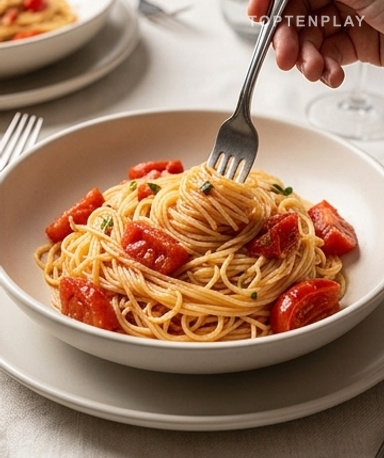
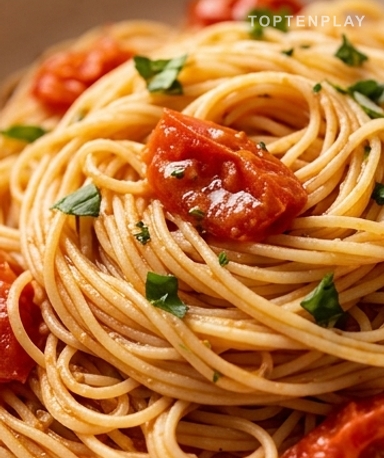
The capellini form little shiny nests under the sauce, each strand coated in an oil slightly pinkened by the tomatoes. The Roma dice are melt-in-your-mouth soft but still present, red-orange, with green flecks of hand-torn basil. It smells of sweet garlic and tangy tomato, with that herbal backbone of fresh parsley. Simple, honest, and it looks like it costs a lot more than it does.
Why you’ll love this recipe
Ingredient Notes
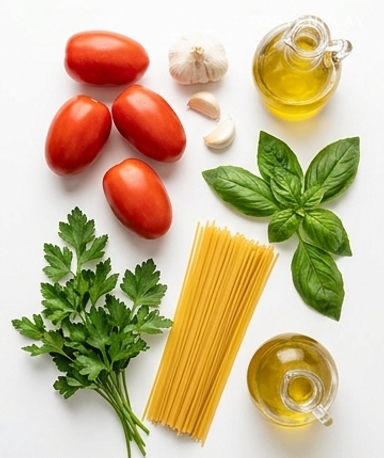
Roma tomatoes, garlic, fresh basil, and olive oil: four ingredients for a perfect sauce.
- Roma tomatoes : They are the choice here, and it’s not arbitrary. Romas have less juice and more flesh than regular round tomatoes — they melt into a sauce without making the whole thing too watery. Avoid tasteless out-of-season supermarket vine tomatoes. In summer, any market tomato will be even better.
- Capellini (angel hair) : Thinner than spaghetti, they cook in exactly 2 minutes — not 3, not 4. Two minutes. After that, they’re overcooked and stick together in a clump. If you can’t find any, thin spaghettini can substitute, but adjust the cooking time. Barilla or De Cecco do the job perfectly.
- Garlic : Five cloves for 500g of pasta is the flavor base here. Slice it thinly with a knife — not a garlic press, which releases too much juice and burns quickly. It should become translucent and smell like lightly toasted hazelnut, not brown and bitter.
- Fresh basil : Only add it off the heat, at the very end. Heat kills its aromatic oils in seconds and you lose the whole point. Tear it roughly by hand rather than using a knife — it preserves the aromas better.
- Olive oil : A quarter cup is more than you’d think, but it’s what gives the sauce body and coats the pasta strands. No need for an overpriced oil, but get a fruity one with taste — not a neutral frying oil.
Get the water boiling before you touch anything else
The classic capellini mistake: the sauce is ready, the tomatoes are melting, the garlic is perfect — and the water isn’t even hot yet. A large pot of water takes time to come to temperature. Fill your largest pot, salt generously — the water should taste like the sea, not timidly — and put it on high heat as soon as you enter the kitchen. While it heats up, you can prep everything else without stress.
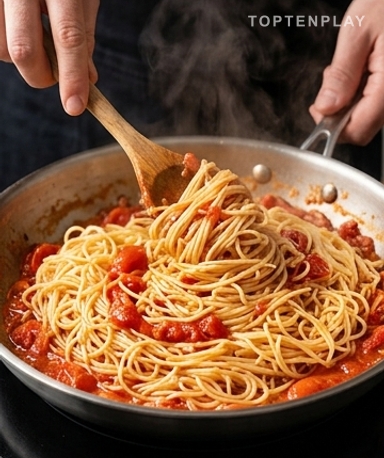
Garlic in oil: watch it like your reputation depends on it
Pour the oil into a large skillet over medium-low heat. When it starts to shimmer slightly — tiny ripples on the surface — add the garlic. It will whisper softly, turn translucent in a minute or two, and the smell will change from pungent to sweet, almost biscuity. This is the exact moment to add the tomatoes. Brown garlic is bitter and can’t be fixed — the rest of the recipe will suffer.
Let the tomatoes handle themselves
Once the Roma dice are in the pan with the hot broth, turn the heat to medium and let it simmer without stirring too much. The tomatoes release their juice, soften, and the sauce turns a bright red-orange. You’ll hear regular little ‘blups’ — that’s exactly what we want. About 5 to 7 minutes is enough. Taste, season, and if it feels a bit acidic, a tiny pinch of sugar fixes it immediately.
Capellini: two minutes, not a second more
When the pasta hits the boiling water, set a timer for 2 minutes. Taste it at one minute forty — they should have a slight resistance in the center, almost imperceptible. They will continue to cook in the sauce. Before draining, reserve a large cup of pasta water — this starchy water is the natural binder that will make your sauce silky rather than oily or greasy.
All together, and fast
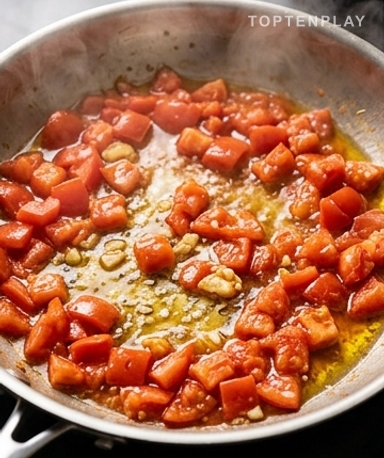
The drained capellini go straight into the pan with the sauce. Add half a cup of pasta water and toss vigorously — not gently, frankly. The strands must be completely coated, the sauce clinging to every capellino. Add the basil and parsley off the heat, one last toss, and serve immediately. Capellini absorb everything in minutes and change texture if you wait too long — this recipe shouldn’t sit around.
Tips & Tricks
- Always keep more pasta water than you think you need — you can always add more, you can’t take it away. For reheating leftovers the next day, it’s also what prevents the pasta from sticking in a compact block.
- If you want to make the dish heartier for hungry guests, shredded roasted chicken or rinsed canned white beans fit perfectly — add them directly with the tomatoes and let them heat up in the sauce.
- Never rinse your pasta under cold water after cooking. You rinse away the starch that allows the sauce to stick, you lower the temperature, and you end up with slimy pasta sliding around the plate. Drain and head straight to the pan.
Can I use spaghetti instead of capellini?
Yes, but the cooking time changes radically. Classic spaghetti takes 8 to 10 minutes compared to 2 minutes for capellini. With spaghetti, the light pomodoro sauce holds less well — it tends to slide off rather than cling. It’s still good, but it’s not quite the same recipe.
Are fresh tomatoes mandatory or can I use canned?
Canned tomatoes work great out of season. An 800g can of crushed tomatoes replaces the fresh Romas — slightly reduce the added cooking water since canned tomatoes release more juice. Add a small pinch of sugar if the sauce seems too acidic.
How do I keep capellini from sticking together after cooking?
Never let them wait in the colander. As soon as they are drained, they go straight into the pan with the sauce. It’s the surface starch that makes them stick upon contact with air — the sauce and pasta water solve this problem immediately. Do not rinse them under cold water.
Can I prepare this recipe ahead for guests?
The pomodoro sauce can be prepared up to two days in advance and kept in the fridge — it even gains flavor. The pasta, however, must be cooked at the last minute. Heat the sauce, cook the capellini for 2 minutes, and assemble right in front of your guests — it takes less than 5 minutes.
How to store and reheat leftovers?
Store in the refrigerator in a closed container for up to 3 days. To reheat, add a tablespoon or two of water to the pan over low heat and stir — the capellini absorb everything overnight and need to be loosened up. The microwave also works with a splash of water, covered.
How can I enrich this dish to make it more filling?
Shredded roasted chicken or rinsed canned white beans fit in perfectly — add them to the sauce with the tomatoes. Sautéed shrimp, cooked for 2 minutes separately and added during the final toss, also work very well with pomodoro.
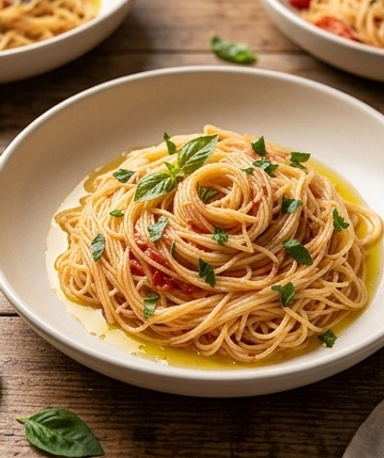
Capellini Pasta Pomodoro
Italian
Main course
Delicate capellini coated in a fresh tomato sauce with garlic and basil. Ready in 20 minutes with everyday ingredients.
Ingredients
- 1 tbsp salt (for the cooking water)
- 450g uncooked capellini (angel hair)
- 5 cloves garlic, finely minced (1 tbsp)
- ½ tsp dried oregano
- 60ml olive oil (¼ cup)
- 680g Roma tomatoes, diced
- 1 tsp vegetable bouillon powder
- 240ml hot water (to dissolve bouillon)
- 120ml pasta cooking water (½ cup)
- 1 tsp salt
- ¼ tsp freshly ground black pepper
- 2 tbsp fresh basil, chopped
- ½ tbsp fresh parsley, chopped
Instructions
- 1Bring a large pot of water to a boil with 1 tbsp of salt. Meanwhile, dice the Roma tomatoes and mince the garlic.
- 2Heat the olive oil in a large skillet over medium-low heat. Add the garlic and sauté for 1 to 2 minutes until translucent and fragrant.
- 3Dissolve the vegetable bouillon in 240ml of hot water. Add the tomatoes, oregano, bouillon, salt, and pepper to the pan.
- 4Simmer over medium heat for 5 to 7 minutes, stirring occasionally, until the tomatoes are soft and the sauce has slightly reduced.
- 5Cook the capellini in boiling water for exactly 2 minutes. Reserve 120ml of cooking water before draining.
- 6Add the drained capellini directly into the pan with the sauce and reserved cooking water. Toss vigorously until the pasta is well coated.
- 7Off the heat, stir in the basil and parsley. Adjust seasoning and serve immediately.
Notes
• Storage: keeps for 3 days in the refrigerator in an airtight container. Reheat over low heat with 2-3 tbsp of water to loosen the pasta.
• Out of season: replace Roma tomatoes with an 800g can of crushed tomatoes. Slightly reduce the added cooking water and add a pinch of sugar if the sauce is too acidic.
• For a heartier dish: add shredded roasted chicken or rinsed canned white beans directly into the sauce with the tomatoes.
Nutrition Facts (per serving, estimated)
| 290 kcalCalories | 8gProtein | 43gCarbs | 9gFat |