📌 Calamarata alla puttanesca: the authentic Campania recipe that transforms anchovies and capers into an irresistible sauce
Posted 11 January 2026 by: Admin
Calamarata, The Little-Known Pasta Revolutionizing The Puttanesca
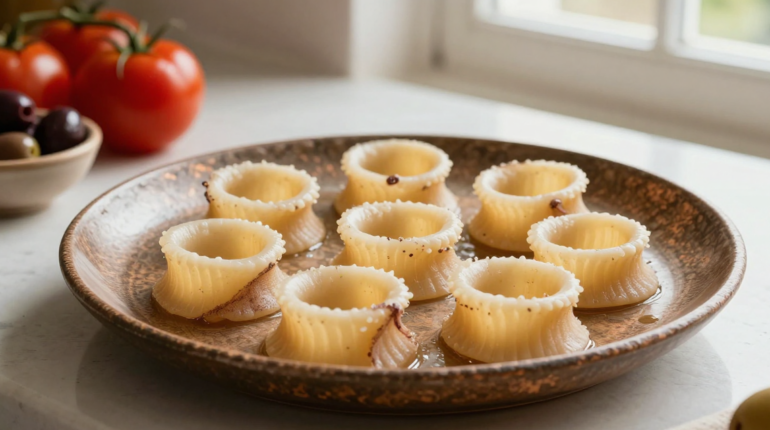
Originating from Campania, calamarata embodies the ingenuity of Neapolitan gastronomy. These pasta rings owe their name to their striking resemblance to squid rings, a maritime nod that speaks volumes about the culinary identity of southern Italy. Their generous shape ideally captures sauces, transforming every bite into a concentrate of flavors.
The pairing with puttanesca sauce is a masterstroke. This recipe for 4 people requires 400g of calamarata, 4 drained anchovy fillets in oil, 400g of crushed peeled tomatoes, 80g of pitted black olives – preferably Gaeta or Taggiasca, harvested at full maturity for their aromatic richness – and 2 tablespoons of desalted capers. Extra virgin olive oil (4 tablespoons) constitutes the essential binder, while 2 cloves of garlic and red chili pepper bring character and depth.
This bold alliance between a regional pasta shape and an iconic Roman sauce illustrates the ability of Italian cuisine to reinvent its classics. Calamarata, often eclipsed by their more famous cousins, nevertheless deserve their place in the pantheon of exceptional pasta. Their firm texture and ability to generously hold the sauce make them the perfect vehicle for the intense flavors about to unfold.
The Secrets Of An Irresistible Aromatic Base
The construction of an authentic puttanesca relies on an ancestral gesture: melting the anchovies in olive oil. In a large skillet heated over low heat, pour a generous drizzle of extra virgin olive oil before adding the minced garlic, the 4 drained anchovy fillets, and red chili pepper according to your tolerance. This is where the magic happens.
Armed with a wooden spoon, patiently crush the anchovies until they completely dissolve into the simmering oil. This technique, passed down through generations in Neapolitan kitchens, releases the saline aromas of the fish which permeate the oil to saturation. The garlic perfumes, the chili subtly stings, but it is the melted anchovies that create the olfactory soul of the dish.
When the fillets have totally disappeared and your kitchen smells like Italy, stir in the 400g of crushed peeled tomatoes. Increase the heat to medium and let simmer for 25 to 30 minutes without rushing. This time allows the water from the tomatoes to gradually evaporate, concentrating the flavors and transforming a liquid preparation into a thick sugo. This imposed patience is not an option: it distinguishes a mediocre dish from a puttanesca worthy of the name, one that will captivate the calamarata in its savory embrace.
Patience, The Invisible Ingredient Of A Successful Sauce
This simmering stage you have just begun is non-negotiable. During these 25 to 30 minutes where the sauce bubbles gently, a chemical transformation occurs: the raw acidity of the tomatoes softens, their natural sugars caramelize slightly upon contact with the pan, and the excess water evaporates to make way for an intense concentrate of flavors.
Resist the temptation to rush the process. A rushed sugo remains watery, its aromas dispersed and superficial. Over medium heat, the crushed tomatoes must reduce until they reach that ideal consistency where the sauce generously coats the spoon without sliding off. It is this velvety body that will then allow each calamarata ring to be coated uniformly.
Stir occasionally to prevent sticking, but not excessively: the sugo needs this quiet cooking to develop its depth. Neapolitan cooks have always known it: la pazienza transforms ordinary ingredients into a memorable dish. When the sauce has reduced by about a third and gives off a concentrated smell of cooked tomato, almost sweet, you have reached the critical point. It is now that the signature elements of the puttanesca will join this perfectly constructed base.
The Final Assembly And Signature Touches
Now the puttanesca reveals its true character. Incorporate the 80 grams of black olives directly into the still-simmering sugo. Favor Gaeta or Taggiasca varieties: their melting flesh and frank, almost vinous taste bring that Mediterranean depth impossible to reproduce with industrial olives.
Next, add the two tablespoons of previously desalted capers. Their bright acidity and almost floral note counterbalance the creaminess of the tomato sauce and the roundness of the olives. Rinse them carefully under cold water: over-salted capers would unbalance the whole.
Let simmer for three more minutes so these elements integrate harmoniously. Meanwhile, bring a large pot of salted water to a boil and cook the calamarata according to package directions, aiming for a firm al dente texture. Drain them, reserving a ladle of cooking water, then pour them directly into the sauce pan.
Mix vigorously off the heat, gradually adding the reserved cooking water if necessary to create a glossy emulsion that coats every ring. A drizzle of raw olive oil and some fresh flat-leaf parsley sprigs complete this composition where every ingredient finds its rightful place.