A smell of caramel and toasted hazelnut escaping from the oven — that’s the signal that something good is happening. Financiers are one of those cakes that seem complex from a pastry shop window, yet they’re made with five ingredients and less than 40 minutes. The brown butter technique changes everything.

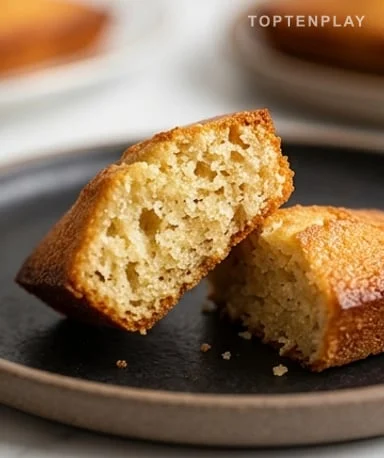
When they come out of the oven, they are golden, slightly domed, with that thin crust that resists under your finger before yielding. The inside is moist, almost melting, with a dense chew that reminds you of macarons without the fragility. The flavor is both sweet and deep — almond in the background, caramelized butter in the foreground. No glaze, no decoration: the financier doesn’t need it.
Why you’ll love this recipe
Ingredient Notes
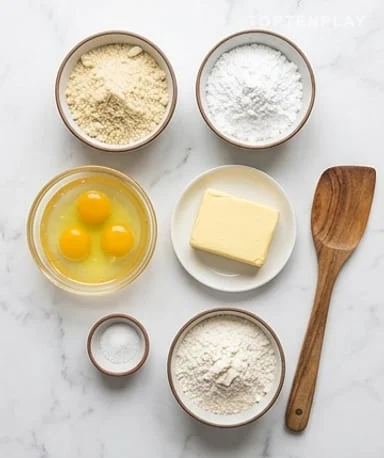
Five simple ingredients — flour, powdered sugar, almond flour, egg whites, and butter — for a pastry chef’s result.
- Butter (115 g) : This is what gives the financier its character. It is not simply melted: it is cooked until the brown butter stage, which develops aromatic compounds absent from regular butter. Use good quality unsalted butter — preferably churned butter, whose fats react better to heat and brown more evenly.
- Almond flour (60 g) : It provides the moist texture and characteristic flavor of the financier. Prefer a fine, white flour — called blanched, without the brown skin — to avoid small dark dots in the batter. A coarse flour makes the financier slightly grainy and changes the chew, not disastrous, but less elegant.
- Powdered sugar (150 g) : Powdered sugar dissolves instantly in unwhipped egg whites and gives a smooth, homogeneous batter without effort. Regular granulated sugar would create a grainier texture on the surface and alter the caramelization during baking — you’d see the difference.
- Egg whites (4 pieces) : They are not whipped, that’s intentional. Incorporating whipped egg whites would inflate the financier excessively and make it lose its characteristic density. What we want is a moist binder, not a foam. Cold or room temperature egg whites work equally well; what matters is not to overmix after adding them.
- Flour (50 g) : A deliberately small amount: it serves as a minimal binder, not the main structure. Too much flour makes it heavy and dry. For an even more melting financier, replace 10 g of flour with cornstarch — the texture then approaches a soft-center cake.
Brown butter first
Before touching the dry ingredients, we take care of the butter. Cut it into pieces and melt it in a light-colored saucepan — the light bottom is important, it allows you to see the color change without mistake. The butter first foams: that’s the water evaporating. A few minutes later, the foam subsides and the butter crackles gently. That’s when you need to stay attentive. The color changes from pale yellow to amber gold in just seconds, and a smell of toasted hazelnut rises very clearly. Remove the pan from the heat immediately at this stage — not after, not ‘another 30 seconds’. The butter continues to cook in the hot pan even after the heat is off. Pour it into a cold bowl to stop the cooking, and let it cool for about ten minutes before incorporating it into the batter.

Mix, don’t knead
In a large bowl, mix the flour, powdered sugar, almond flour, and salt. Add the egg whites directly — not beaten, just poured as they are. Mix with a spatula using broad motions until the batter is homogeneous: it will be dense, slightly sticky, a pale creamy yellow. Then pour the warm brown butter in a stream, continuing to mix gently. The batter will become more supple and slightly shiny from the fat. Stop as soon as everything is incorporated: overworking the batter develops gluten and makes the financiers less tender, sometimes with a slightly rubbery effect. If you have time, cover the bowl and let it rest in the refrigerator for 30 minutes — it’s not mandatory, but it improves the hold during baking and the doming.
Baking, without rushing
Preheat the oven to 180 °C fan-forced — or 190 °C if your oven is static, it heats less evenly. Fill the molds three-quarters full: the financiers will rise slightly and dome on top, that’s exactly what we’re after. During baking, a light matte crust forms on the surface first, then the edges start to turn dark amber. After 12 minutes, insert the tip of a knife into the center: it should come out slightly moist, not dry. An overbaked financier is dry, loses its melting interior, and has no interest. If the edges color too quickly, lower to 170 °C and extend by a minute or two. The golden color on the sides and the slightly domed top are the two reliable signs that it’s done.
Unmolding and the first bite
Let the financiers rest for five minutes in the mold before taking them out — they are still fragile when hot, their crust continues to firm up. Invert the mold onto a wire rack: with a silicone mold, they come out without resistance. With a buttered and floured metal mold, a sharp tap is enough. Eat one while still warm: that’s when the texture is at its best, with that sharp contrast between the still-crunchy crust and the almost melting interior. At room temperature, they remain very good for two to three days in an airtight container — the crust softens slightly, but the flavor remains intact. They also freeze very well, as long as you wrap them individually.

Tips & Tricks
- Use a light-bottomed or stainless steel saucepan to prepare the brown butter: black nonstick pans prevent you from seeing the color change, and you easily go past the desired stage without realizing it.
- Do not whip the egg whites: airy lightness is not what we’re after here. A well-made financier is dense and moist, not puffed. Unwhipped whites give exactly that texture — whipping them would transform the recipe into something else.
- The 30-minute cold rest is not a minor detail: it allows the gluten to relax after mixing, and the butter to begin to set slightly in the batter. The result is a better-formed financier during baking, with more regular doming and a smoother surface.
- To incorporate variations, place them directly at the bottom of the mold before pouring the batter: a raspberry pressed into the raw batter, chopped pistachios, a lemon zest incorporated into the dry mix. These additions do not alter the baking times.
Can I make financiers without a financier mold?
Yes, no problem. A standard muffin tin works very well — you’ll get round financiers instead of rectangular, but the texture will be identical. Adjust the baking time: since muffins are thicker, count 16 to 18 minutes rather than 12 to 14.
Why not whip the egg whites?
The desired texture for a financier is dense and moist, not airy. Whipped whites would incorporate too much air and transform the cake into something closer to a soufflé — with the risk of it collapsing as it cools. Unwhipped whites give that characteristic chew found only in this pastry.
How do I know when the brown butter is ready?
Two simultaneous signals: the butter’s color turns to amber gold — visible only in a light-colored saucepan — and a clear smell of toasted hazelnut emerges. It’s the coincidence of both that confirms you’re at the right stage. Remove from heat immediately, without waiting: the butter continues to brown in the hot pan.
Can I prepare the batter in advance?
Yes, and it’s even recommended. The batter keeps for 24 hours in the refrigerator without issue, covered with plastic wrap. A prolonged rest slightly develops the flavors and improves the doming during baking. Take the batter out 10 minutes before pouring into molds if it has thickened too much from the cold.
Can I freeze the financiers?
Absolutely, they freeze very well. Wrap them individually in plastic wrap once cooled, then place them in a freezer bag. They keep for up to two months. To serve, let them thaw at room temperature for an hour, or pop them in the oven at 150 °C for 5 minutes to regain some crispness.
How can I personalize the recipe without changing everything?
The financier base is very accommodating: place a raspberry or blueberry in the raw batter before baking, add lemon or orange zest directly to the dry ingredients, or replace 20 g of almond flour with pistachio flour. For a chocolate version, fold in some chocolate chips. In all cases, baking times remain unchanged.
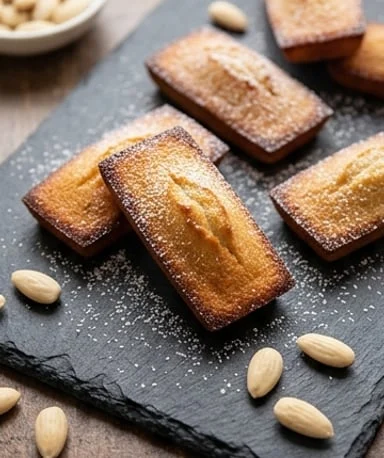
Brown Butter Financiers
French
Pastry
Small French almond cakes whose secret lies in the brown butter: cooked until amber, it develops caramel and toasted hazelnut flavors that completely transform these five simple ingredients. Slightly crispy crust, melting interior.
Ingredients
- 115 g unsalted butter (preferably churned)
- 150 g powdered sugar
- 60 g fine almond flour (blanched)
- 50 g all-purpose flour
- 4 egg whites (about 120 g)
- 1 pinch fine salt
Instructions
- 1Cut the butter into pieces and melt it in a light-colored saucepan over medium heat. Cook, stirring, until it turns an amber gold color and releases a smell of toasted hazelnut. Immediately pour into a cold bowl and let cool for 10 minutes.
- 2In a large bowl, mix the flour, powdered sugar, almond flour, and salt with a spatula until homogeneous.
- 3Add the unwhipped egg whites and mix until the batter is smooth and lump-free.
- 4Pour the warm brown butter in a stream while mixing gently until fully incorporated. Do not overmix the batter.
- 5Optional but recommended: cover the batter with plastic wrap and let rest for 30 minutes in the refrigerator.
- 6Preheat the oven to 180 °C fan-forced (190 °C static). Fill financier molds three-quarters full.
- 7Bake for 12 to 14 minutes. The financiers are ready when the edges are nicely golden, the top is slightly domed, and the tip of a knife comes out slightly moist in the center.
- 8Let rest for 5 minutes in the mold before unmolding onto a wire rack. Serve warm or at room temperature.
Notes
• Use a light-colored saucepan for the brown butter — impossible to control the color in a black nonstick pan.
• Do not whip the egg whites: this dense batter gives the financier its characteristic texture.
• The batter keeps for 24 hours in the refrigerator. A prolonged rest improves doming and flavors.
• Variations without changing proportions: raspberry or blueberry placed in the raw batter, lemon zest incorporated into the dry ingredients, 20 g of almond flour replaced with pistachio.
Nutrition Facts (per serving, estimated)
| 165 kcalCalories | 3 gProtein | 17 gCarbs | 10 gFat |