📌 Breaded Cabécous with Thyme and Balsamic Roasted Strawberries
Posted 9 April 2026 by: Admin
It’s that Sunday in May when everything picks up speed: the first strawberries arrive at the market, plump and a bit too fragrant to be ignored. And that’s where the breaded cabécous come in. Two simple things. A result that surprises.
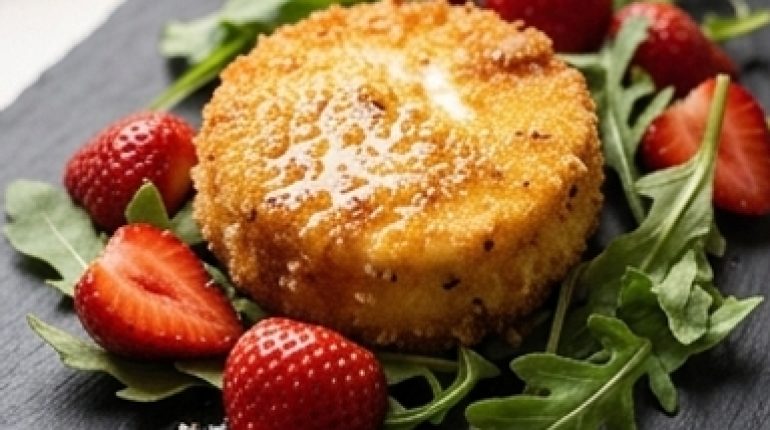
The plate arrives and you see the crust first — amber like light caramel, cracking slightly under the fork before giving way to a creamy, slightly tangy interior. The roasted strawberries have concentrated their sugar, shining in their brown, syrupy juice. The scent of fried thyme still floats above the plate. A handful of arugula brings that bitter background that holds everything together and prevents it from becoming too sweet.
Why you’ll love this recipe
Ingredient Notes
Everything you need for this summer appetizer: fresh cabécous, ripe strawberries, and a few pantry staples.
- The cabécous : These are small round goat cheeses from the Lot region, aged for about ten days. Choose them slightly firm to the touch — not too ripe, or they will melt before the crust is ready. In supermarkets, Picandine or Soignon brands work well.
- Strawberries : Gariguette or Mara des Bois if you can find them. The natural sugar caramelizes in the oven with the honey — with an insipid December strawberry, you get nothing. Out of season, move on or adapt with figs.
- Fresh thyme : Strip the leaves by hand directly into the breadcrumbs. Fresh thyme when cooked smells truly different from dried thyme — more vibrant, almost citrusy. Dried works if you have no choice, but reduce the quantity.
- Balsamic vinegar : No need for the fancy vintage stuff. A Balsamic Vinegar of Modena PGI at 4-5 euros does the job perfectly. It reduces with the honey and creates that slightly syrupy sauce that coats the strawberries and keeps them from being too sweet.
Put the cabécous in the freezer now
Before you touch anything else, put the cabécous in the freezer. Fifteen minutes. It’s not to freeze them — it’s to firm them up just enough so they hold their shape in the frying oil. A cabécou that’s too soft collapses as soon as it hits the hot oil, even before the crust has time to form. This little detail changes everything. Use this time to prepare your three breading bowls.
Flour, egg, breadcrumbs — in that order, it matters
Flour first, on all sides. This dry film is what will allow the egg to cling properly. Then the beaten egg, then the breadcrumbs mixed with the stripped thyme. Press lightly with your palms so the breadcrumbs adhere everywhere — you should feel that it’s holding. The contact of the fragrant breadcrumbs between your fingers already smells like something good. Keep the breaded cheeses chilled until cooking.
Roast the strawberries first
Cut the strawberries in half, arrange them on a tray. Drizzle with olive oil, honey, and balsamic vinegar, add two turns of the pepper mill. Oven at 200°C for about 10 to 12 minutes. They will release their juice which will caramelize on the edges of the tray — the smell is slightly vinegary at first, then it becomes sweet and candied. Take them out when they are shiny and slightly slumped. Keep them warm while you handle the frying.
Two minutes in the oil, not one more
Heat the oil to 175-180°C in a deep saucepan. If you don’t have a thermometer, dip a corner of bread — if lively bubbles form around it, it’s ready. Put the cabécous in two by two. Not all together: that would cause the temperature to drop and the crust would soak up the oil. Listen: the first few seconds sizzle loudly, then it calms down — that’s the sign the crust is forming. Two minutes. Take them out when the color goes from pale to golden like light caramel. Place on paper towels and salt immediately with fleur de sel.
Plate and serve immediately
A few arugula leaves on the plate. Roasted strawberries on top, with their cooking juices. The cabécou placed delicately — it is fragile, the crust will crack if you press too hard. A fresh strawberry for vibrant color, a sprig of thyme. It’s done. Serve immediately. A breaded cabécou that cools down becomes rubbery inside and soft outside — a disappointment you can easily avoid.
Tips & Tricks
- Put the cabécous in the freezer as soon as you get home from the store — that way you don’t have to think about it and they are already ready when you need them.
- Don’t touch the cabécous during the first few seconds of frying. Let the crust form on its own — it’s what keeps them whole. If you handle them too early, they will open up.
- If you want to prepare ahead, bread the cabécous and keep them in the fridge for up to 2 hours. The frying must be done at the last moment. No shortcuts on this.
Can they be made in the oven instead of fried?
Yes, but the result is different. Spray olive oil on the breaded cabécous, oven at 220°C, 8-10 minutes, turning halfway through. The crust will be less crispy and slightly drier. It works, but frying clearly gives a better result here.
How do I prevent the cheese from opening during frying?
Two things: the cabécous must be very cold (15 minutes in the freezer before breading), and the oil must be at the right temperature — 175-180°C. Oil that is too cold makes the breadcrumbs soak it up and the cheese softens too fast. Oil that is too hot burns the exterior before the crust stabilizes.
Can I prepare the breaded cabécous in advance?
Yes, up to 2 hours before. Bread them, place them on a plate without overlapping, and keep them in the refrigerator. Frying happens at the last moment, just before serving — it’s essential for keeping the crunch.
Can I use another cheese instead of cabécous?
Semi-dry goat cheese crottins work well, cut in half. Thick camembert slices too. Avoid cheeses that are too soft or runny — they collapse during cooking even after being in the freezer.
Can frozen strawberries replace fresh ones?
Not really. Frozen strawberries release too much water during cooking and end up soft and washed out. If it’s not strawberry season, replace them with fresh figs cut in half or pears — they roast very well with the same balsamic-honey mix.
How do I know if the oil is at the right temperature without a thermometer?
Dip a small piece of bread in the oil: if it starts sizzling lively right away and browns in about 30 seconds, the oil is ready. If not, wait another minute. The classic mistake is putting the cheese in oil that isn’t hot enough yet.
Breaded Cabécous with Thyme and Balsamic Roasted Strawberries
French
Appetizer
Small goat cheeses, crispy on the outside, melting on the inside, served with strawberries roasted in honey and balsamic vinegar. A seasonal appetizer that impresses effortlessly.
Ingredients
- 4 cabécous (round goat cheeses)
- 2 eggs
- 100g flour
- 100g fine breadcrumbs
- 2 sprigs fresh thyme
- 80cl frying oil (sunflower or peanut)
- 3g fleur de sel
- 500g fresh strawberries
- 50ml (5cl) Balsamic vinegar of Modena
- 30g honey
- 20ml (2cl) olive oil
- 2 turns freshly ground pepper
- 40g arugula
- some extra fresh strawberries for plating
- 2 sprigs fresh thyme for plating
Instructions
- 1Place the cabécous in the freezer for 15 minutes to firm them up.
- 2Strip the thyme leaves and mix them with the breadcrumbs in a bowl.
- 3Beat the eggs in a second bowl, put the flour in a third.
- 4Bread the cabécous: flour → beaten egg → thyme breadcrumbs. Press lightly to adhere. Keep chilled.
- 5Preheat oven to 200°C. Cut the strawberries in half and arrange them on a tray.
- 6Drizzle strawberries with olive oil, honey, and balsamic vinegar. Season with pepper. Roast for 10 to 12 minutes until shiny and candied.
- 7Heat frying oil to 175-180°C in a deep saucepan.
- 8Fry the cabécous 2 at a time, for about 2 minutes, until golden caramel color. Drain on paper towels and salt immediately with fleur de sel.
- 9Plate: arugula on the plate, roasted strawberries with their juice, delicately place the breaded cabécou, a fresh strawberry and a sprig of thyme. Serve immediately.
Notes
• The breaded cabécous can be prepared up to 2 hours in advance and kept in the refrigerator. Frying must be done at the last moment.
• Roasted strawberries keep for 24 hours in the refrigerator — they are also delicious cold over yogurt or on toast.
• Outside of strawberry season, replace with fresh figs cut in half or pear wedges, roasted with the same balsamic-honey mixture.
Nutrition Facts (per serving, estimated)
| 390 kcalCalories | 14gProtein | 27gCarbs | 24gFat |