The smell rising from the pot after ten minutes—brown butter, mushrooms sweating, veal stock lightly caramelizing on the edges—is exactly the kind of smell that justifies spending an entire Saturday in the kitchen. Braised paupiettes are the dish you don’t rush. They require patience, and that’s precisely why you should make them when you have time.
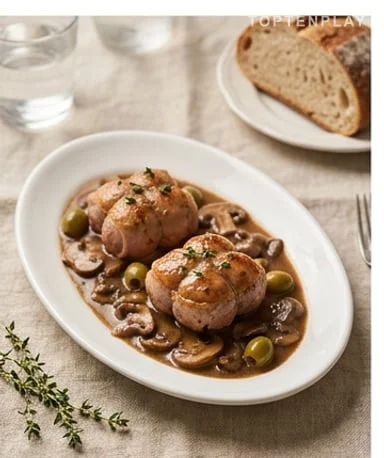
The surface of the paupiettes after searing shows an uneven golden crust contrasting with the pale flesh visible at the ends. After an hour of simmering, the sauce takes on a light brown, slightly translucent color—almost amber—and coats the back of a spoon without dripping. The mushrooms have melted into it without disappearing, the olives add a bright green touch in this monochrome of warm tones. It’s rustic, generous, and smells like the bottom of a pot from someone who really knows how to cook.
Why you’ll love this recipe
Ingredient Notes

Veal, fresh mushrooms, green olives, smoked turkey matchsticks—all you need for a family stew.
- Veal paupiettes : Thin slices of veal, pounded, stuffed, then rolled and tied. The string holds the filling together during cooking in liquid and maintains shape. As they cook slowly, the veal’s collagen gelatinizes and naturally enriches the sauce. Choose them from a butcher rather than a pre-packaged tray—the quality of the filling really changes everything in the final result.
- Fresh mushrooms : Button mushrooms work well, but brown (cremini) mushrooms give a stronger flavor and better hold during cooking. Their role is twofold: they absorb the broth’s aromas while simmering and release their own flavor into the sauce. Avoid very young, white mushrooms—they release a lot of water and have little character.
- Smoked turkey matchsticks : They fill exactly the role of classic bacon: bring a salty, slightly smoky base that anchors the sauce. Smoked turkey melts less, but it browns well and its melted fat flavors the cooking oil. Choose thick enough matchsticks so they remain visible in the dish at the end of cooking.
- Green olives : Surprising in a veal stew, olives bring a slight bitterness and a salty note that cuts through the meat’s sweetness. They don’t need to cook long—added with the broth, they infuse without breaking apart. Prefer jarred olives over canned ones, which are much less acidic.
- Chicken broth : It provides the cooking liquid and the base flavor that complements the meat. Homemade broth or a good quality cube is fine. Avoid overly salty broths: the reduction at the end concentrates everything, and too much salt at that stage is very hard to correct.
- Thyme and bay leaf : Bay leaf infuses slowly and gives a slightly camphor-like note that blends without dominating. Thyme, more volatile, perfumes mainly at the start of cooking. One bay leaf is enough—two, and you’ll taste bitterness lingering in the background throughout the meal.
Sear the paupiettes without rushing
Start by taking the paupiettes out of the refrigerator twenty minutes before cooking. Cold meat placed in hot fat immediately drops the pot’s temperature and prevents browning—the surface steams instead of roasts. In the pot, heat the olive oil and butter together over medium-high heat: the combination reaches a higher temperature than butter alone without burning as quickly. Place the paupiettes and don’t touch them for two to three minutes. You hear the meat singing against the hot metal, a steady, sustained sizzle. If the sound fades, the heat is too low. The crust forms through direct, continuous contact; turning too early means peeling off a surface that hasn’t had time to set. Once the sides are browned—a deep golden brown, not gray—remove the paupiettes and set them aside on a plate.

Build the flavors layer by layer
In the same pot, without wiping the bottom—those caramelized bits are concentrated flavor—sauté the sliced onion over medium heat. It should soften and become translucent before adding the garlic. Garlic burns quickly and becomes bitter: add it when the onion is well along, stir for one minute, no more. Then add the smoked turkey matchsticks. They will brown slightly and release their fat into the cooking oil—the smell changes, from sweet onion to something smokier, meatier. Finally add the sliced mushrooms and turn the heat up slightly. The mushrooms first absorb all the fat in the pot, then release their water when their flesh is well heated. Wait until this water has almost completely evaporated before continuing: a mushroom still bathing in its own liquid hasn’t finished developing its flavor.
Deglaze to lose nothing from the bottom
Return the paupiettes to the pot, nestled among the vegetables. Pour in the chicken broth all at once—you hear a sharp thermal shock, a burst of steam rising abruptly. With a wooden spoon, immediately scrape the bottom of the pot: the caramelized bits release and dissolve into the hot liquid, which will greatly enrich the final sauce. Let it simmer uncovered for a full five minutes before covering. This first slight reduction concentrates the flavors and gives the sauce a firmer base. Add the olives, thyme, and bay leaf, then cover. The heat should be gentle—you want a steady simmer, not a boil that would jostle the meat and make it stringy.
Let time work for you
One hour over low heat, lid on. This is where the weekend comes into its own: there’s nothing to do, just check occasionally that it’s still simmering. Around the forty-minute mark, lift the lid—the sauce has thickened slightly, the color has deepened, and the smell is now round, almost sweet from the slow onion cooking. Pierce a paupiette with the tip of a knife: if it slides in without resistance, the meat is ready. If you still feel firmness in the flesh, cover and let it go another fifteen minutes. At this stage, the veal fibers have fully relaxed in the hot liquid, and the interior filling has had time to perfume the surrounding juices.
Finish the sauce at the right moment
Remove the paupiettes gently—the string holds, but the meat is fragile after long cooking. Taste the sauce. It should be balanced: if too mild, add salt and pepper. If too thin, remove the lid and let it reduce over medium heat for five to ten minutes, stirring regularly—the sauce gains depth with each additional minute. A knob of butter added off the heat, whisked into the still-hot sauce, gives it extra shine and creaminess without weighing it down. Let rest for ten minutes before serving: the meat rehydrates slightly in its own sauce during this time, and the flavors redistribute. Serve directly from the pot if it’s presentable—it’s always prettier than a serving dish.

Tips & Tricks
- Dry the paupiettes with paper towels before searing: surface moisture causes steam in the pot instead of a Maillard reaction. You end up with a gray, boiled surface where you wanted a golden crust.
- Don’t move the paupiettes while searing: prolonged contact with the hot bottom is what creates the crust. If the meat sticks slightly at first, that’s normal—it will release on its own when the reaction is complete.
- Only salt at the end, after tasting: the reduced broth concentrates its salt, and the smoked turkey matchsticks already contribute a fair amount. Too much salt at the start is very hard to correct once the sauce has reduced.
- Prepare this dish the day before and reheat it over very low heat the next day: the sauce will have thickened naturally as it cooled and the flavors will have melded. Add a splash of water if needed, adjust the seasoning, and it’s often better than the day it was made.

Can you prepare the paupiettes the day before?
Yes, and it’s even recommended. Like all stews, the flavors concentrate as it cools and the dish will be even better reheated the next day. Reheat over very low heat with a splash of water if the sauce has thickened too much, and adjust the seasoning before serving.
How do you know when the paupiettes are cooked through?
Pierce a paupiette with the tip of a knife: it should slide in without any resistance, like butter. If you still feel firmness in the flesh, cover and cook for another 15 minutes—veal needs time for its fibers to fully relax in the liquid.
My sauce is too thin, how do I fix it?
Remove the paupiettes and let the sauce reduce uncovered over medium heat for 5 to 10 minutes, stirring regularly. It thickens naturally thanks to the collagen released from the veal during cooking, without needing to add starch or roux.
Can you freeze this dish?
Yes, braised paupiettes freeze very well. Let it cool completely, then freeze in portions with the sauce in airtight containers. Thaw ideally in the refrigerator the night before, and reheat over very low heat with a splash of water if needed.
Can you use mushrooms other than button mushrooms?
Absolutely. Brown (cremini) mushrooms give a stronger flavor and hold up better during cooking. Shiitakes or chanterelles also work very well and add a more aromatic note to the sauce—just avoid rehydrated dried mushrooms, which release too much water.
What side dish should I choose so as not to mask the sauce?
Plain white rice is ideal: it absorbs the sauce without competing with it. Homemade mashed potatoes also work very well. Avoid heavily seasoned or creamy starches, which would overpower the delicate flavors of the stew.
Braised Veal Paupiettes with Mushrooms
French
Main course
A great classic of French family cooking: veal paupiettes simmered for an hour over low heat with mushrooms, olives, and smoked turkey matchsticks. The sauce thickens naturally thanks to the veal’s collagen, the meat is fork-tender—the kind of dish you make on the weekend and enjoy again the next day.
Ingredients
- 5 veal paupiettes
- 200g fresh button mushrooms, sliced
- 100g smoked turkey matchsticks
- 100g pitted green olives
- 500ml chicken broth
- 1 medium onion, sliced
- 2 garlic cloves, minced
- 1 tbsp olive oil
- 25g butter (20g for cooking + 1 knob at the end)
- 1 bay leaf
- 1 fresh thyme sprig
- salt and freshly ground black pepper
Instructions
- 1Take the paupiettes out of the refrigerator 20 minutes before cooking. Pat them dry thoroughly with paper towels.
- 2In a pot, heat the olive oil and 20g butter over medium-high heat. Brown the paupiettes on all sides for 3 to 4 minutes. Set aside on a plate.
- 3In the same pot without wiping the bottom, sauté the sliced onion over medium heat for 3 to 4 minutes until translucent. Add the minced garlic and stir for 1 minute.
- 4Add the smoked turkey matchsticks and brown for 2 minutes. Add the sliced mushrooms and cook over high heat until their water has completely evaporated, about 5 to 6 minutes.
- 5Return the paupiettes to the pot. Pour in the chicken broth and scrape the caramelized bits from the bottom with a wooden spoon. Let it reduce uncovered for 5 minutes.
- 6Add the olives, thyme, and bay leaf. Cover and simmer over low heat for 1 hour, checking and stirring occasionally.
- 7Check doneness by piercing a paupiette: the tip of the knife should slide in without resistance. If needed, extend cooking by 15 minutes covered.
- 8Remove the paupiettes gently. Taste the sauce and adjust seasoning. If too thin, let it reduce uncovered for 5 to 10 minutes over medium heat.
- 9Off the heat, whisk in the remaining knob of butter for a shiny sauce. Return the paupiettes, let rest for 10 minutes, and serve.
Notes
• Prepared the day before, this dish is even better: the flavors concentrate as it cools. Reheat over very low heat, adding a splash of water if necessary.
• For a creamier sauce, add 150ml of heavy cream off the heat, just before serving.
• Suggested sides: plain white rice, homemade mashed potatoes, fresh pasta, or steamed potatoes.
Nutrition Facts (per serving, estimated)
| 420 kcalCalories | 38gProtein | 8gCarbs | 24gFat |