📌 Bounty-style chocolate coconut tart: the 3-step recipe for a melting dessert ready in less than an hour
Posted 25 March 2026 by: Admin
Behind The Scenes Of A Mythical Pairing: Chocolate And Coconut
The alliance of chocolate and coconut is no accident. Born in confectionery workshops at the beginning of the 20th century, this combination is based on a precise taste principle: the bitterness of cocoa balances the milky sweetness of coconut, while their opposing textures create a sensory contrast sought after by professional pastry chefs.
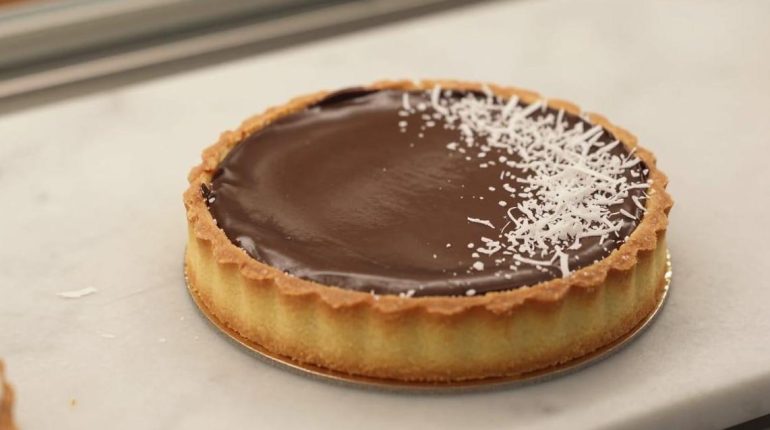
This tart transposes this mechanism into three distinct layers. The base: a delicate shortcrust pastry that provides the initial crunch. In the center, a soft coconut filling where 100g of shredded coconut offers that characteristic slightly grainy texture. At the top, a smooth and shiny chocolate ganache, made with 45g of dark chocolate and coconut cream, seals the whole.
What distinguishes this recipe from industrial versions can be summed up in one word: accessibility. Classified between easy and intermediate, it requires no complex techniques. The total time amounts to exactly one hour: 30 minutes of preparation, 30 minutes of baking. No specialized utensils are necessary, just rigor in respecting temperatures and resting times.
The taste promise rests on a winning triangle: melting texture against a crunchy base, intensity of dark chocolate against exotic sweetness, simplicity of execution against a result worthy of a pastry shop. A recipe designed to transform commercial inspiration into a mastered home creation, accessible even to attentive beginners.
Decoding The Formula: Ingredients And Their Strategic Function
The secret of this tart lies in the precision of the proportions and the understanding of the role of each component. Three layers, three distinct logics that come together according to proven pastry mechanics.
For the sweet shortcrust pastry, the 60g of cold butter constitutes the technical pivot. Its low temperature allows for that characteristic sandy texture: the butter does not mix with the flour but creates tiny pockets that, when baked, generate the sought-after crunch. The 125g of flour and 45g of icing sugar complete this structural base, with the egg serving only as a binder.
The coconut filling rests on a measured balance between 100g of shredded coconut and 60g of coconut cream. This double presence amplifies the aromatic intensity while playing on two textures: the shredded coconut brings character and that light granularity that avoids any blandness, while the cream ensures the softness. The 50g of sugar and the egg transform the whole into a coherent mass that holds up during baking.
The final ganache works as an intensity counterweight. The 45g of dark chocolate (prefer a minimum of 60% cocoa) offer the necessary bitterness to balance the coconut sweetness. The 60g of coconut cream replaces classic cream, reinforcing the aromatic coherence of the whole. The 10g of butter provide final shine and creaminess. This three-story construction transforms simple ingredients into mastered taste architecture.
The Manufacturing Protocol In 7 Timed Steps
The success of this tart depends as much on technical gestures as on respecting the times. Each phase responds to a precise logic, where timing conditions the final texture.
First step: sanding the dough. In a bowl, flour, icing sugar, and salt welcome the butter cut into cold cubes. Working with the fingertips must remain fast, without heating the material. As soon as the grainy texture appears, the egg comes into play to form a homogeneous ball. Then comes a mandatory resting time in the refrigerator: 30 incompressible minutes that allow the gluten to relax and the butter to harden again.
During this rest, the oven preheats to 180°C. The rolled-out dough fills the mold, the bottom pricked with a fork avoids any anarchic swelling. Simultaneously, the coconut cream is prepared: egg whisked with sugar, incorporation of the cream then the shredded coconut. This filling is poured directly onto the raw base before simultaneous baking for 25 to 30 minutes. The surface should turn a light golden color, without browning excessively.
Complete cooling constitutes the major point of vigilance. No ganache should be poured onto a lukewarm tart or the chocolate may melt in an anarchic way. Once room temperature is reached, the heated coconut cream is poured over the crushed dark chocolate. The final 10g of butter create that characteristic shine of a professional ganache. Uniform spreading is done with a spatula, the final setting can be done at room temperature or accelerated in the refrigerator. This chronological rigor transforms a succession of simple gestures into a mastered result.
Personalization And Optimization: From Classic To Variants
Once the technique is mastered, the recipe reveals its potential for adaptation. Four variations allow for the exploration of other taste registers without denaturing the fundamental balance.
The milk chocolate version softens the intensity for palates sensitive to bitterness. The crunchy variant integrates toasted almond or hazelnut slivers into the coconut filling, creating an additional textural contrast. The exotic option adds lime zest to the cream, whose acidity awakens the roundness of the coconut. Finally, using gluten-free flour for the dough opens the recipe to specific dietary constraints.
Presentation plays a determining role. Chocolate shavings arranged in a rosette, a light rain of dried coconut, or regularly cut slices transform a homemade dessert into a window-worthy proposal. Recommended accompaniments remain minimalist: black coffee to accentuate the chocolate, plain tea to refresh, or a scoop of vanilla ice cream to create a gourmet thermal shock.
Regarding storage, the tart keeps for 2 to 3 days in the refrigerator in an airtight container. Taking it out 10 minutes before tasting allows the chocolate to regain its optimal melting point. The nutritional intake oscillates between 350 and 400 kcal per portion, with 25g of lipids mainly due to the chocolate and coconut.
Errors to avoid: overbaking which dries out the filling, ganache poured too hot which liquefies the whole, or lack of cooling which compromises the hold. This vigilance on three critical points is enough to guarantee a constant result, transforming each creation into a reproducible success.