📌 Boiled papaya leaves: how their natural enzymes relieve digestion and inflammation according to traditional medicine
Posted 25 March 2026 by: Admin
Papaya Leaves: A Little-Known Treasure of Traditional Medicine
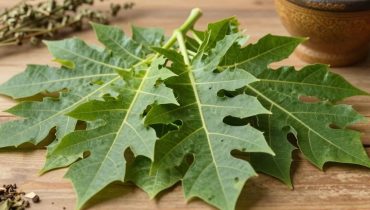
While the papaya fruit conquers global market stalls for its sweet flesh and digestive benefits, another part of _Carica papaya_ remains stubbornly in the shadows. Yet, in Asia, Africa, and Latin America, the leaves of this tropical tree have stood for generations as a pillar of ancestral pharmacopoeias. Their secret? A nutritional composition that modern medicine is only beginning to decipher.
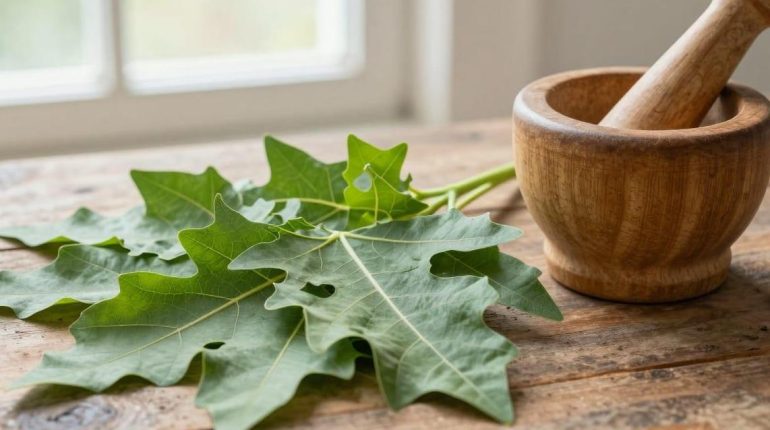
When boiled, these leaves release a remarkable concentration of digestive enzymes—papain and chymopapain—along with flavonoids, alkaloids, and vitamins A, C, and E into the water. This slightly bitter infusion, obtained by decoction, transforms a neglected plant waste into a therapeutic vector. Unlike the fruit consumed fresh, the leaves require this extraction process to reveal their active compounds.
Modern science is progressively validating this empirical knowledge. The antioxidants present protect cells from oxidative stress, while enzymes facilitate the breakdown of proteins. This contrast between massive traditional use and late scientific recognition illustrates a troubling reality: some natural remedies wait centuries before research deigns to take an interest. Papaya leaves embody precisely this tension between folk wisdom and academic validation, opening the way to unsuspected applications.
Seven Scientifically Documented Benefits
This progressive academic validation crystallizes around seven medicinal properties now supported by preliminary research. The first benefit concerns immune support: the antioxidants contained in the leaves neutralize free radicals, unstable molecules that accelerate cellular aging. This protection against oxidative stress strengthens the body’s natural defenses.
But it is a second effect that is attracting global attention. Papaya leaf extract demonstrates unique potential in maintaining blood platelet levels—essential components of coagulation. During certain viral infections causing a sharp drop in these cells, leaf decoctions could promote their production. A therapeutic lead that still requires in-depth clinical studies, but which justifies the growing enthusiasm of researchers.
On the digestive front, papain acts as a powerful catalyst. By breaking down dietary proteins, this enzyme relieves bloating, gas, and constipation—three chronic ailments affecting nearly 30% of the Western population. Anti-inflammatory properties complete this picture: flavonoids and vitamin E alleviate joint pain and muscle tension, offering a natural alternative to synthetic anti-inflammatories.
These virtues, long confined to traditional medicines, are gradually crossing the threshold of laboratories. Between empirical validation and scientific confirmation, papaya leaves embody that gray area where observed efficacy precedes the understanding of underlying biological mechanisms.
Home Preparation: Detailed Instructions
This therapeutic promise is only valid if the preparation follows a precise protocol. Transforming raw leaves into an active infusion requires rigor and patience—far from the approximations that neutralize active principles.
The basic recipe requires 3 to 5 fresh leaves for one liter of water. First imperative: meticulous washing to remove pesticide residues and dust. The leaves are then cut into small pieces—this fragmentation facilitates the release of compounds during prolonged simmering. For that is where the effectiveness lies: 20 to 30 minutes of gentle cooking, never aggressive boiling which would destroy heat-sensitive enzymes. This process extracts papain, flavonoids, and antioxidants into the amber liquid.
After filtration and partial cooling, the decoction reveals its main flaw: a marked bitterness that few tolerate plain. Hence the frequent addition of honey to sweeten, lemon to balance, or ginger and lemongrass which mask the harshness while reinforcing anti-inflammatory effects. The consensus dosage is one small cup once or twice daily—sufficient to benefit from the virtues without overloading the body.
This technical accessibility democratizes a remedy once reserved for communities growing the papaya tree. However, simplicity of preparation does not mean absence of risks—a reality that the final part of our analysis will specify with the rigor required for any bioactive substance.
Essential Precautions and Usage Limits
This accessibility does not exempt one from indispensable vigilance. Every bioactive compound has contraindications—and papaya leaves, despite their natural aura, are no exception to this fundamental rule of pharmacology.
Side effects generally remain moderate: mild nausea, gastric discomfort or, more rarely, allergic reactions in people sensitive to latex (as papain shares similar proteins). But serious complications concern drug interactions. Anticoagulants like warfarin see their action potentiated by the leaf’s enzymes, increasing the risk of bleeding. Anti-diabetic treatments undergo similar interference, as the decoction already lowers blood sugar—a dangerous accumulation without dosage adjustment.
Pregnancy imposes absolute caution. As no clinical study has validated safety for the fetus, any consumption requires the approval of a healthcare professional. This rule illustrates a cardinal principle: papaya leaves are in no way a cure for diseases. They can complement a balanced lifestyle, but never replace a medical diagnosis or conventional treatment.
The craze for the natural sometimes masks this evidence. Using a leaf decoction with discernment—by listening to one’s body signals and consulting at the slightest doubt—transforms an ancestral use into a responsible practice. For traditional wisdom does not oppose scientific rigor: it calls for it.