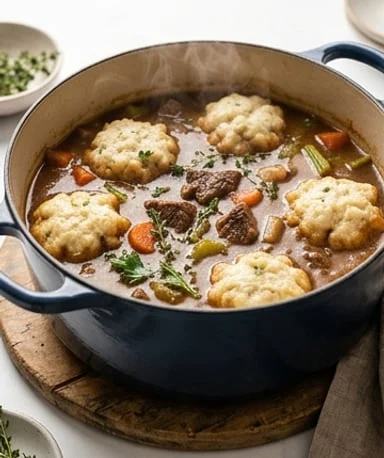
This beef stew with dumplings is the dish I bring out when the weather turns truly damp and dinner needs to stick to your ribs. Here, we stick to a classic, but without complicating things: a Dutch oven, a meat that simmers, simple vegetables, and fluffy dumplings placed on top at the end of cooking.
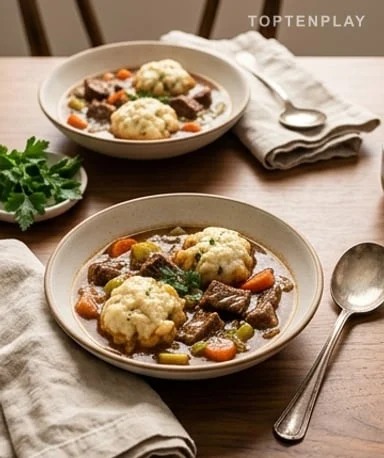
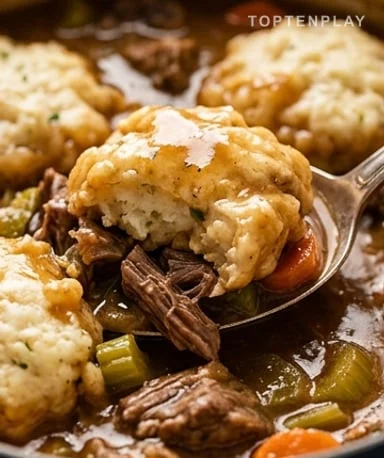
The sauce becomes dark and glossy, with that smell of broth, melted onion, and herbs filling the kitchen without effort. The carrots keep a warm color, the beef pulls apart into tender fibers, and the dumplings absorb the juice from below while staying soft on top. With a spoon, you should feel the contrast between the coating sauce, the melting vegetables, and the slightly puffed dough.
Why you’ll love this recipe
Ingredient Notes
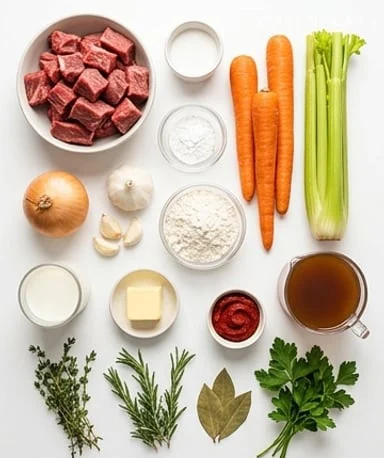
Take chuck or a stewing cut, simple vegetables, good broth, and what you need for a quick dumpling dough.
- Beef for stewing : Chuck, neck, or shin give tender meat after long cooking because they contain tissue that melts gently into the sauce. Avoid overly lean cuts: they seem practical but become dry and stringy.
- Beef broth : It builds the base of the sauce and brings the salty, round, deep taste of the dish. Choose a broth that isn’t too salty, so you can adjust at the end, because the sauce reduces during simmering.
- Carrots, celery, and onion : This trio provides natural sweetness, aroma, and a real stew base. Cut the carrots thick enough so they stay visible and tender, not into small dice that disappear into the sauce.
- Tomato paste : It deepens the brown color and adds slight acidity that prevents a heavy sauce. Let it cook for a minute with the vegetables to remove its raw taste and get a warmer, almost grilled aroma.
- Flour : In the stew, it helps the sauce coat the spoon without becoming thick like a puree. For the dumplings, it forms a soft dough; measure it without packing to avoid dense balls.
- Butter and milk : Butter gives the dumplings a softer crumb, while milk provides the necessary moisture to make them rise. If needed, replace butter with vegetable margarine and milk with unsweetened plant milk.
The meat must take on color, or the stew stays flat
Start by drying the beef cubes with paper towels, then brown them in a hot Dutch oven with a drizzle of oil. Don’t crowd them, or they’ll release water and boil instead of browning. When the pieces get a brown crust and the bottom of the pot has some fond, that’s a good sign: those juices will give the deep flavor to the sauce. Work in batches if needed, even if it takes a few extra minutes. This step already smells like roast, and that’s exactly what we want to capture in the stew.
The vegetables deserve more than a quick pass
Once the meat is removed, add the onion, carrots, and celery to the same pot. They will pick up the fond, get a glossy coating, and start smelling sweet, almost sugary. Add garlic only when the onion begins to soften, because burnt garlic gives bitterness that marks the whole sauce. Tomato paste comes next: let it heat until its color darkens slightly. This small detour really changes the dish, because it turns a simply red sauce into a rounder, more stewed sauce.
Gentle simmering does all the work
Return the beef to the pot, sprinkle the flour, stir, then pour in the broth little by little to avoid lumps. Add thyme, rosemary, bay leaves, salt cautiously, and pepper. The liquid should barely simmer, with a few lazy bubbles on the surface, not boil vigorously. Cover and cook until the meat begins to yield under a fork. If the sauce reduces too much, add a little broth; if it seems too thin, finish a few minutes uncovered.
The dumplings must stay light, not leaden
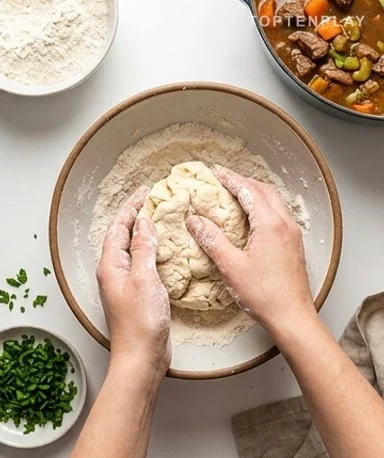
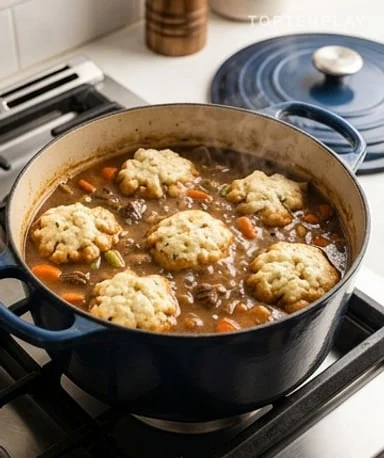
Mix flour, baking powder, and salt, then work in cold butter with your fingertips until sandy. Pour in milk and add parsley if using, then mix just enough to form a soft dough. Resist the urge to work the dough like bread dough: the more you mix, the denser the dumplings become. Drop spoonfuls of dough onto the simmering stew, leaving space, as they will puff up. The steam in the pot cooks them from below, while the top stays pale and tender.
The final rest makes the dish better
When the dumplings are puffed and cooked through, turn off the heat and let the pot sit for a few minutes. The sauce stabilizes, the meat relaxes, and the dumplings absorb just enough juice to become flavorful without falling apart. Taste before serving: a bit of fresh pepper or a pinch of salt can wake it up. Serve in deep bowls, with enough sauce so each bite is coated. The dish should arrive steaming, thick, golden brown, with that pot aroma that promises a serious dinner.
Tips & Tricks
- Don’t cut the beef too small, as the pieces shrink during cooking and risk becoming dry before the sauce has had time to develop flavor.
- Keep the heat low during simmering, because a strong boil contracts the meat and clouds the sauce instead of making it smooth and glossy.
- Add the dumplings only when the stew is almost ready, otherwise they cook too long and lose their light texture.
- Taste the sauce at the end rather than at the beginning, because the broth reduces and salt concentrates during cooking.
Which cut of beef should I choose for this stew?
Go for chuck, neck, shin, or beef cheek. These are cuts made for stewing: they become tender with time instead of drying out.
How can I avoid heavy dumplings?
Mix the dough just enough to combine the ingredients. If you overwork it, it becomes elastic and the dumplings cook into compact blocks.
Can I prepare the stew in advance?
Yes, beef stew is even better reheated. Prepare the base the day before, then add and cook the dumplings on the day so they stay fluffy.
What if the sauce is too thin?
Simmer uncovered for a few minutes before adding the dumplings. The sauce will reduce, become glossier, and coat the meat better.
Can I add other vegetables?
Yes, potatoes, mushrooms, and peas work very well. Add potatoes early, mushrooms in the middle of cooking, and peas at the end.
Beef Stew with Dumplings
British
Stew
A beef stew simmered with carrots, celery, onion, and herbs, finished with fluffy dumplings cooked directly on the sauce.
Ingredients
- 900g beef for stewing, cut into cubes
- 2 tbsp neutral oil
- 1 yellow onion, chopped
- 3 carrots, cut into thick rounds
- 2 stalks celery, sliced
- 3 cloves garlic, chopped
- 2 tbsp tomato paste
- 2 tbsp flour
- 1 liter beef broth
- 1 tsp dried thyme
- 1 tsp dried rosemary
- 2 bay leaves
- 1 tsp salt
- 1/2 tsp black pepper
- 150g flour for dumplings
- 2 tsp baking powder
- 1/2 tsp fine salt for dumplings
- 30g cold butter, diced
- 120ml milk
- 2 tbsp chopped parsley
Instructions
- 1Dry the beef cubes, then brown them in a hot Dutch oven with the oil, in batches if needed.
- 2Remove the meat, add the onion, carrots, and celery, and sauté for 5 minutes until the vegetables begin to soften.
- 3Add the garlic and tomato paste, then mix for 1 minute to slightly darken the base.
- 4Return the beef to the pot, sprinkle the 2 tablespoons of flour, and stir to coat the meat.
- 5Pour in the beef broth little by little, then add the thyme, rosemary, bay leaves, salt, and pepper.
- 6Cover and simmer over low heat for about 1 hour 30 minutes, until the meat is almost tender.
- 7In a bowl, mix the dumpling flour, baking powder, and fine salt.
- 8Add the cold butter and rub it in with your fingertips, then pour in the milk and parsley. Mix just enough to form a soft dough.
- 9Drop spoonfuls of dough onto the simmering stew, cover, and cook for 20 to 25 minutes without lifting the lid.
- 10Remove the bay leaves, taste the sauce, adjust seasoning, and serve hot.
Notes
• For a thicker sauce, simmer uncovered for a few minutes before adding the dumplings.
• Do not overwork the dumpling dough, otherwise they will become dense.
• The stew base can be prepared the day before, but dumplings are best cooked at the last minute.
• Add mushrooms or potatoes if you want an even more generous dish.
Nutrition Facts (per serving, estimated)
| 520 kcalCalories | 42gProtein | 38gCarbs | 22gFat |