A lingering November Sunday, a Dutch oven placed on the stove around noon — Poulet Basquaise is exactly that kind of recipe. One hour of stress-free cooking, vegetables that do all the work themselves, and a house that smells like the Basque Country. You don’t need to be a chef to nail this.
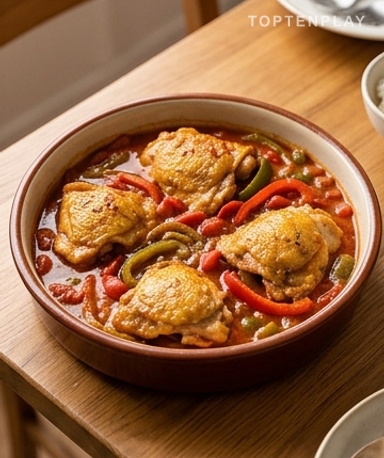
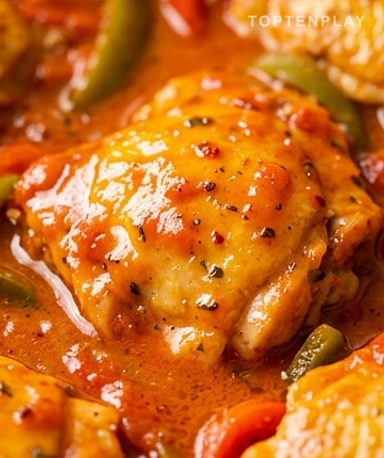
The sauce is a deep red, almost orange where the tomatoes have melted with the peppers. The chicken has that mahogany hue you only get with a good dry sear, without rushing. When you lift the lid, a scent of slightly smoky Espelette pepper rises, mixed with confit garlic and thyme that has dissolved into the sauce. The peppers have become silky strips, almost transparent, melted into the tomato juices.
Why you’ll love this recipe
Ingredient Notes
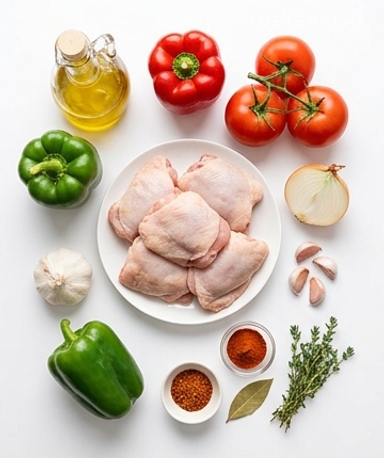
The ingredients for Poulet Basquaise: simple, colorful, fragrant — everything needed for a great regional classic.
- Chicken thighs : Breasts dry out too quickly during long cooking. Thighs have enough collagen to stay juicy after 35 minutes of simmering. If possible, get them with bone and skin — the skin crisps during searing and holds up well to the heat.
- Red and green bell peppers : The red is mild and sweet, the green slightly bitter. The combination of both creates a natural balance. Avoid large watery peppers — choose small, firm ones that feel fleshy to the touch.
- Espelette pepper : The signature ingredient. Not very spicy, rather fruity and slightly smoky — nothing like an ordinary chili. It’s found in a small red and white box. Without it, a mix of smoked paprika and a pinch of cayenne gives something similar.
- Fresh tomatoes : Out of season, a quality tin of crushed tomatoes (Mutti or Cirio) will be much better than a pale tomato bought in January. In the height of summer, use well-ripened field tomatoes — then, it’s worth peeling them.
- Olive oil : No need for exceptional oil — an ordinary fruity oil does the trick here since it’s used for searing at a fairly high heat. Keep your top-shelf bottle for finishing or salads.
Sear the chicken until you hear it crackle
Take the thighs out of the refrigerator at least 20 minutes before. Cold meat in a hot pan cooks on the surface without ever really searing to the core. Heat the pot over medium-high heat with olive oil, wait until it shimmers slightly, then place the thighs skin-side down. You should hear a clear sizzle — not a murmur, a real crackle. Leave them untouched for 4 to 5 minutes until the skin is light caramel gold, almost reddish on the edges. Flip, 3 minutes on the other side, then set aside. This step is not optional: the juices stuck to the bottom of the pot are the base of your sauce.
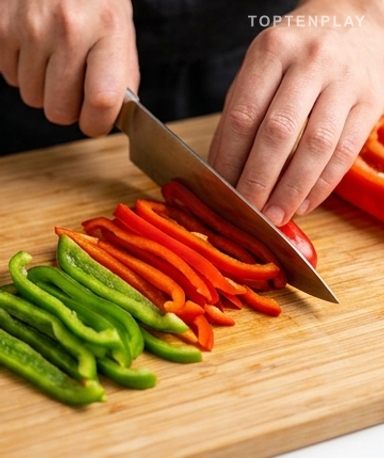
Give the peppers the time they deserve
In the same pot, without cleaning anything, sauté the sliced onion over medium heat until translucent and lightly colored. Add the pepper strips. Let them cook for a good ten minutes — they must truly soften, becoming supple and almost pliable. Many people rush this step: as a result, the peppers remain firm under the sauce and the dish feels unfinished. Stir in the minced garlic, wait 30 seconds for the aroma to release, then add the diced tomatoes with all the spices at once.
Return the chicken, cover, and go do something else
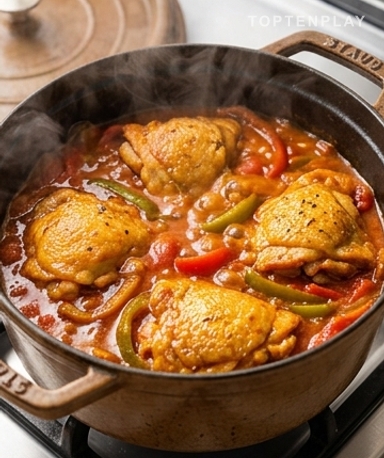
Place the thighs on the vegetables, pushing them slightly into the sauce so they are well coated. Cover. Lower to low heat — a gentle, steady simmer, not an aggressive boil that toughens the sauce and dries the chicken. For the next 30 to 35 minutes, you really have nothing to do. Halfway through, lift the lid once to check it isn’t sticking (if it is, two tablespoons of water are enough). The sauce will gradually darken and thicken, and the kitchen will start to smell like bay leaf melted into tomato.
Uncover and watch the sauce concentrate
During the last 5 minutes, remove the lid. The sauce should reduce slightly, becoming denser and glossier. If it’s still very liquid, two minutes over slightly higher heat will suffice. Taste and adjust the salt — tomatoes vary a lot by season. The chicken is done when the meat pulls away from the bone with a fork without resistance. Serve directly in the pot if you have guests: it maintains the heat and is much more convivial than a serving platter.
Tips & Tricks
- Prepare it the day before if you can — gently reheated the next day, the chicken is even more tender and the sauce has had time to truly unify. Most braised dishes are like this.
- No need to peel the tomatoes if you’re short on time — dice them directly, skin and all. With such long cooking, the skin disappears into the sauce unnoticed.
- Want a heartier dish? Add two large potatoes cut into cubes directly into the sauce at the same time as the chicken. They cook in 25 minutes and absorb all the Basque flavors — no side dish needed.
Can I prepare Poulet Basquaise the day before?
Yes, and it is even recommended. Like all stews, it improves as it rests: the sauce unifies and the chicken absorbs more aromas. Reheat it over low heat with a small splash of water if the sauce has thickened too much.
How do I prevent the chicken from being dry?
Two key points: first, use thighs rather than breasts — they have more intramuscular fat and withstand long cooking well. Second, do not exceed low heat while simmering. A boil that is too vigorous dries the meat in 10 minutes.
Can I use bottled peppers instead of fresh?
Yes, provided you drain them well and reduce the cooking time of the vegetables by half — they are already cooked. The result will be slightly milder than fresh peppers, but perfectly fine for an express version.
I don’t have Espelette pepper, what can I replace it with?
A mixture of smoked paprika and a small pinch of Cayenne pepper is the best alternative. Smoked paprika brings the fruitiness, Cayenne brings the heat. Dose according to your tolerance — Espelette pepper is quite mild naturally.
Can you freeze Poulet Basquaise?
Absolutely, it freezes very well for up to 2 months in an airtight container. Defrost in the refrigerator the night before and reheat gently over low heat or in the oven at 160 °C covered.
What should I serve with Poulet Basquaise?
White rice remains the classic accompaniment — it absorbs the sauce perfectly. Steamed potatoes work very well too. If you have good bread, that will suffice: the sauce deserves to be mopped up to the last drop.
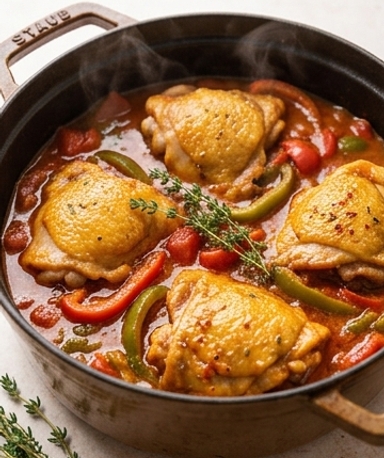
Basque Chicken with Peppers and Espelette Pepper
French
Main Course
A Basque Country classic slowly simmered in a sauce of peppers, tomatoes, and Espelette pepper. Simple, fragrant, and generous.
Ingredients
- 4 (approx. 900g) chicken thighs with bone and skin
- 1 (150g) red bell pepper
- 1 (150g) green bell pepper
- 2 (300g) ripe fresh tomatoes
- 1/2 (80g) onion
- 2 garlic cloves
- 2 tablespoons (30ml) olive oil
- 1 teaspoon (3g) paprika
- 1/2 teaspoon (1.5g) Espelette pepper
- 1 bay leaf
- 1 sprig fresh thyme
- to taste salt and black pepper
Instructions
- 1Remove chicken thighs from the refrigerator 20 minutes before cooking. Slice the onion, cut peppers into thin strips, dice the tomatoes, and mince the garlic.
- 2Heat olive oil in a large pot over medium-high heat. Place thighs skin-side down and brown without moving for 4 to 5 minutes until light caramel colored.
- 3Flip the thighs, brown for 3 minutes on the other side, then set aside on a plate.
- 4In the same pot over medium heat, sauté the sliced onion for 3 minutes until translucent.
- 5Add the pepper strips and cook for 10 minutes, stirring regularly, until they soften significantly.
- 6Stir in the minced garlic, leave for 30 seconds, then add diced tomatoes, paprika, Espelette pepper, bay leaf, thyme, salt, and pepper.
- 7Return the thighs to the pot, nestling them into the sauce. Cover and simmer on low heat for 30 to 35 minutes.
- 8Remove the lid for the last 5 minutes to let the sauce reduce slightly. Adjust seasoning and serve.
Notes
• Keeps for 3 days in the refrigerator. Reheat over low heat, adding a little water if the sauce has thickened.
• Out of season, replace fresh tomatoes with 400g of quality canned crushed tomatoes — the result is just as good, if not better in winter.
• Can be frozen for up to 2 months in an airtight container. Defrost in the refrigerator the night before.
Nutrition Facts (per serving, estimated)
| 420 kcalCalories | 28gProtein | 12gCarbs | 26gFat |