Basque chicken is one of those dishes that is underestimated because it looks too simple. That’s a mistake. Poorly executed, it yields a bland sauce and rubbery chicken; well executed, it’s one of the best stewed dishes in French cuisine.
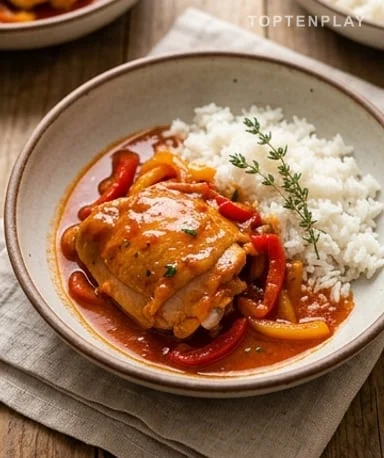
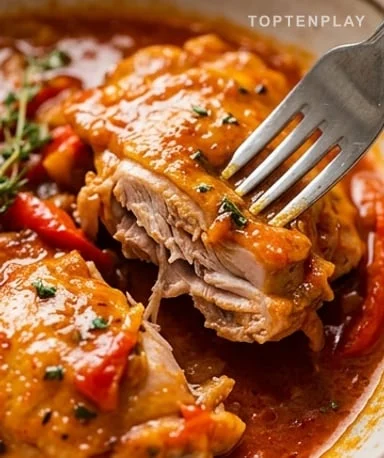
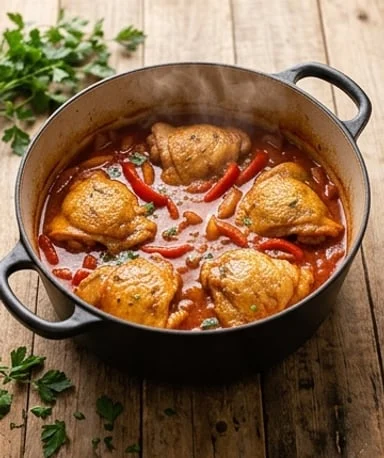
The sauce takes on a deep reddish-orange color, almost candied, that stains the spoon and smells of warm paprika mingled with melted garlic. The peppers have completely disappeared into the mass, melted down to mere flecks of color. The chicken, meanwhile, has soaked up all of it for forty minutes — its skin, crispy at first, is now tender and infused to the bone. This dish smells good an hour before it’s ready.
Why you’ll love this recipe
Ingredient Notes
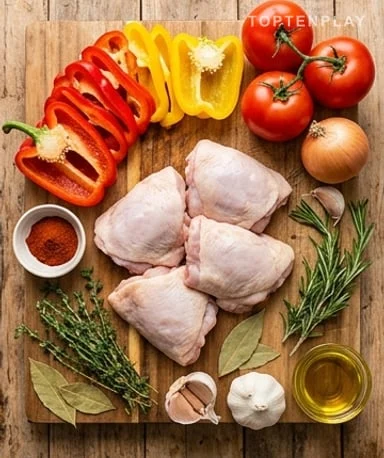
Everyday ingredients — colorful peppers, ripe tomatoes, garlic, chicken thighs — that yield a result far above their simplicity.
- Chicken thighs : Choosing thighs is no accident: they contain enough collagen to withstand long cooking without drying out, and their fat releases into the sauce during simmering, giving it body. Breasts dry out before the sauce has time to build. If you only have breasts, limit cooking to twenty minutes and check often.
- Red and green bell peppers : Red adds natural sugar and sweetness; green gives a slight bitterness that prevents the dish from falling into monotonous sweetness. Choose firm ones: a soft pepper before cooking will give a mushy texture once stewed.
- Tomatoes (fresh or canned crushed) : They form the liquid body of the sauce. In season, fresh ripe peeled tomatoes are far superior. Off season, a can of quality crushed tomatoes is better than a bland supermarket tomato with no flavor or juice.
- Sweet paprika : It’s not just for color: it brings a slightly smoky roundness that immediately identifies the dish. Absolute rule: add it with the tomatoes, never directly on hot oil — it burns in seconds and makes the sauce bitter.
- Garlic : It is added at the end of sautéing the vegetables, after the peppers. Thirty seconds over medium heat is enough to melt it into the onions without burning. Added too early, it cooks too long, loses its punch, and takes on an acrid taste that spreads throughout the sauce.
- Chicken broth (instead of white wine) : The white wine in the original recipe is used to deglaze and add acidity. Chicken broth serves exactly the same structural role: use 15 cl hot to scrape up all the caramelized juices stuck to the bottom of the pot — that’s where the most flavor is concentrated.
Browning the chicken is not a step to skip
Start by drying the thighs with paper towels. This simple move makes all the difference: a wet surface creates steam in the pot and prevents caramelization. You need a very hot pot, sizzling olive oil, and patience. Place the thighs skin side down and don’t touch them for four to five minutes — they should release on their own when ready. If they resist the fork, it’s not time yet. The skin should be a deep golden, almost hazelnut color, and the pot should smell of caramelized poultry drippings. This crust will later melt into the sauce and give it depth. Flip and brown the other side for three minutes, then set the thighs aside on a plate.
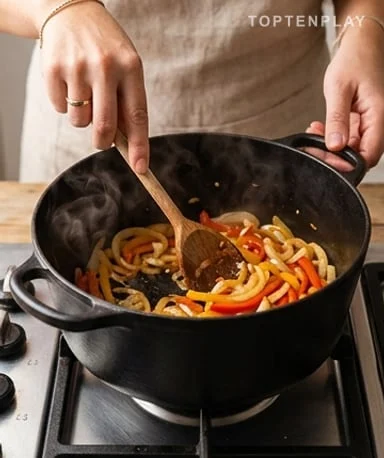
Vegetables deserve time to melt
In the same pot, still hot from the chicken drippings, start with the onions alone. Three minutes over medium heat — just enough for them to become translucent and for the first cooking juices to lift off the bottom. You can see the future sauce taking shape: a pale brown, slightly syrupy base that smells of caramelized onion. The peppers come next, cut into even strips for uniform cooking. Five to seven more minutes, stirring two or three times, until they begin to soften without completely losing their structure. Garlic is added last, finely chopped, and cooks for only thirty seconds — enough to release its aroma, not enough to brown.
The sauce builds in the order you add things
Tomatoes go in with sweet paprika and aromatics. Stir immediately so the paprika disperses in the tomato liquid rather than falling on the dry, hot surface of the pot. At this point, the dish starts to smell as it should finish: warm paprika, acidic tomato, melted pepper, a hint of thyme. Let it simmer for five minutes uncovered — the sauce concentrates slightly and the flavors begin to bind. Then pour the chicken broth directly onto the bottom and scrape with a wooden spoon to pick up all the caramelized bits stuck there. That’s where the most flavor hides. Return the thighs to the pot, cover partially.
Forty minutes where the heat works for you
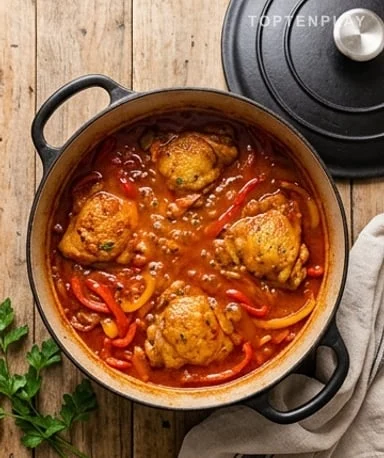
Low heat, lid slightly ajar. The dish should simmer, not boil: a few bubbles slowly rising to the surface, a gentle steam escaping from the side. At this pace, collagen from the thighs releases and the sauce thickens naturally. After twenty minutes, taste the sauce — it will have changed consistency but not yet reached its balance. After forty minutes, the chicken should pull apart easily with a fork and the sauce should have reduced by a third, become noticeably denser and more colored. If it still seems too liquid, remove the lid for the last ten minutes.
Finishing: few moves, but the right ones
Remove the thyme and bay leaf. Taste and adjust salt — the sauce concentrated during cooking, so the initial seasoning may no longer be right. A turn of the pepper mill. If you have quality black olives, now is the time to add them: two minutes in the hot sauce is enough to warm them without denaturing. Sprinkle with fresh chopped parsley just before serving. The contrast of bright green on the deep red sauce is also part of the cooking — and it reminds you this is a dish from the South.
Tips & Tricks
- Dry the thighs with paper towels before browning: surface moisture creates steam in the pot and prevents caramelization. A wet skin will never brown properly, no matter the heat.
- Don’t rush the pepper cooking — they need time to release their water and begin to confit. Peppers still crunchy in the final sauce means you skipped this step, and it shows in the taste.
- Add paprika with the tomatoes, never directly on hot oil: in contact with a dry, hot surface, it burns in seconds and makes the sauce bitter. The tomato liquid protects it and distributes it evenly.
- Make this dish the day before if you can: after a night in the fridge, the sauce balances out and the chicken absorbs more. Reheat gently, covered, and the result is far superior to the first day’s meal.
Can I replace chicken thighs with breasts?
Technically yes, but the result is significantly less interesting. Breasts lack collagen and fat, they dry out quickly and don’t enrich the sauce during simmering. If it’s the only option, limit cooking to 20 minutes and check often.
Is the dish really better reheated?
Yes, and that’s not an empty phrase. On resting, the sauce balances, the chicken continues to absorb flavors, and the texture becomes more tender. Make it the day before, reheat gently with the lid on, and you get a result superior to the first serving.
How to tell if the chicken is cooked without a thermometer?
Insert a fork into the thickest part of the thigh and pull gently: the meat should come apart without resistance and the fibers should separate. The juices should run clear, with no pink traces. If the meat resists or remains pink at the bone, cover and cook for another 10 minutes.
My sauce is too liquid at the end, what should I do?
Remove the lid and slightly increase the heat for the last 10 minutes — the sauce will reduce without the chicken drying out. If still insufficient, remove the chicken, reduce the sauce alone over medium heat for 5 minutes, then return the thighs to warm through. Avoid adding starch, which changes the texture.
Can I freeze Basque chicken?
Yes, this dish freezes very well. Let it cool completely before placing in an airtight container, and consume within a month. Thaw in the fridge overnight and reheat gently, adding a splash of broth if the sauce has thickened.
Can I add other things to the sauce?
A few whole black olives added in the last two minutes bring a slightly bitter and salty note that complements the dish well. A pinch of Espelette pepper instead of black pepper, or a spoonful of tomato paste with the tomatoes, gives more depth to the sauce. Beyond that, the dish doesn’t need much.
Basque Chicken
French
Main course
A great classic of southwestern France: golden chicken thighs simmered with melting bell peppers, tomatoes, and aromatics. Simple, generous, and even better the next day.
Ingredients
- 4 chicken thighs (about 1.2 kg total)
- 2 red bell peppers
- 1 green bell pepper
- 4 ripe tomatoes (or 400 g canned crushed tomatoes)
- 2 medium onions
- 3 garlic cloves
- 3 tbsp olive oil
- 15 cl chicken broth
- 1 tsp sweet paprika
- 1 bay leaf
- 1 sprig of thyme
- to taste salt and black pepper
- a few sprigs fresh parsley
Instructions
- 1Pat the chicken thighs dry with paper towels. Heat olive oil in a large pot over high heat. Place the thighs skin side down and let them brown without moving for 4 to 5 minutes, until a deep hazelnut color. Turn and brown the other side for 3 minutes. Season with salt and pepper, then set aside on a plate.
- 2In the same pot over medium heat, sauté the sliced onions for 3 minutes until translucent. Add the peppers cut into strips and cook for 5 to 7 minutes, stirring two or three times, until they begin to soften. Add the minced garlic and cook for 30 seconds more.
- 3Add the peeled and chopped tomatoes (or canned crushed), sweet paprika, thyme, and bay leaf. Stir well to incorporate the paprika into the liquid. Simmer uncovered for 5 minutes.
- 4Pour in the chicken broth and scrape the bottom of the pot with a wooden spoon to release all the caramelized bits. Return the chicken thighs to the pot. Cover partially and cook over low heat for 35 to 40 minutes, until the chicken pulls apart easily with a fork and the sauce has reduced by a third.
- 5Remove the thyme and bay leaf. Taste and adjust salt and pepper. Sprinkle with fresh chopped parsley just before serving. Serve with white rice, steamed potatoes, or country bread.
Notes
• This dish is better reheated the next day: let it cool, refrigerate, and reheat gently covered over low heat.
• For a richer sauce, add a few whole black olives in the last 2 minutes of cooking.
• If the sauce is too liquid at the end, remove the lid and cook for an additional 10 minutes over medium heat.
• The dish freezes very well once cooled. Consume within a month.
Nutrition Facts (per serving, estimated)
| 430 kcalCalories | 34 gProtein | 12 gCarbs | 26 gFat |