📌 Basil flowers: 8 little-known uses to transform your garden leftovers into gourmet and cosmetic products
Posted 6 March 2026 by: Admin
Basil Flowers: A Little-Known Treasure With Multiple Virtues
When the first flower buds appear on a basil plant, the traditional reflex is to remove them immediately. This practice is based on a widespread belief: flowering marks the irreversible decline of the plant. However, this misconception deprives gardeners of an ingredient with remarkable properties.
Basil flowers contain the same aromatic compounds as the leaves, but in different proportions. They contain natural antioxidants, volatile essential oils, and mild antibacterial compounds. Their flavor profile differs significantly: more delicate and slightly sweet, it offers a subtle aromatic palette that harmoniously complements many preparations.
This floral sweetness, far from being a flaw, is a culinary asset. Unlike the leaves, whose pronounced flavor can dominate a dish, the flowers integrate with finesse, bringing a herbaceous touch without aggression. Their delicate texture and aesthetic appearance also make them a sought-after decorative element.
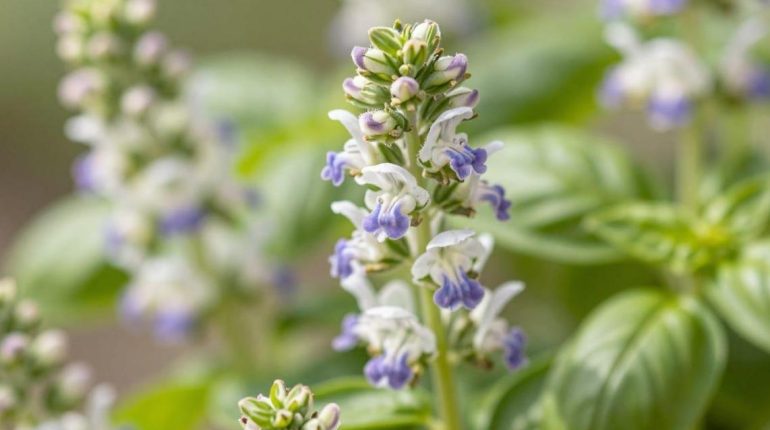
Botany confirms what experience reveals: these small white or purple inflorescences concentrate an unsuspected richness. Beyond their modest nutritional value, they above all offer a diversity of uses that deserve to be explored rather than systematically eliminated.
Creative Culinary Uses: From Gastronomic Garnish To Floral Pesto
This aromatic richness finds its most immediate expression on the plate. Basil flowers lend themselves to a multitude of culinary applications, from the simplest to the most elaborate.
As a garnish, they instantly transform an ordinary dish into an elegant creation. A few petals scattered over a tomato salad, a cold soup, or fresh pasta are enough to create a striking visual contrast. Their delicate presence evokes Mediterranean cuisines where every detail counts. Botanical cocktails also benefit from this aromatic touch: a flowering sprig in a gin and tonic or a spritz brings an unexpected olfactory dimension.
Infusion in olive oil is a particularly effective preservation technique. The process remains elementary: flowers submerged in extra-virgin oil for one to two weeks, away from light. The result offers a condiment with subtle herbaceous notes, ideal for finishing roasted vegetables or enhancing a vinaigrette. This method preserves volatile compounds while creating a multi-use product.
Floral pesto represents a bold variation of the Ligurian classic. By mixing flowers, garlic, nuts, parmesan, and oil, you get a sauce with lighter and more floral aromas than the traditional version. This preparation is particularly suitable for spring dishes where delicacy takes precedence over power.
Infused vinegar follows a similar logic: flowers macerated in white wine vinegar or cider vinegar for ten to fifteen days. The acidity of the vinegar extracts the essences while developing a characteristic pinkish tint. This condiment enhances marinades, sauces, and fermented vegetables with a fragrant acidity.
Preservation And Benefits: From Soothing Tea To Wellness Applications
Beyond these gastronomic uses, basil flowers reveal soothing properties that have long been exploited in traditional herbal practices.
Infusion is the most direct method to benefit from them. A few grams of fresh or dried flowers plunged into boiling water for five to ten minutes are enough to release their aromatic compounds. The resulting beverage gives off a delicate, naturally refreshing floral fragrance. A spoonful of honey or a slice of lemon accentuates the nuances without masking the herbaceous character. This herbal tea can be consumed hot in the evening or iced during summer days.
Drying considerably extends the life of the flowers. Suspended in inverted bouquets in a dark and ventilated space, they lose their moisture in a few days while preserving their essential oils. Once dehydrated, they can be kept for several months in airtight glass jars. This reserve makes it possible to prepare herbal teas out of season, enrich homemade spice blends, or compose scented sachets for wardrobes.
Wellness applications also extend to skin care. A facial steam bath with basil flowers offers a simple sensory experience: head covered with a towel over a bowl of steaming water decorated with a few flowers. The essence-laden vapors gently penetrate the pores. The infused oil, obtained by prolonged maceration in a neutral vegetable oil like jojoba, is suitable for relaxing massages or body routines. A preliminary test on a small skin area remains recommended before any extensive application.
Ecological Impact: Transforming Your Garden Into A Sanctuary For Pollinators
This domestic valorization should not obscure the ecological role of basil flowers when one agrees not to harvest them all.
Unlike the leaves intended for the kitchen, a few flower stalks left to their natural cycle become a powerful magnet for beneficial fauna. Honeybees and wild bees, butterflies, hoverflies, and other pollinating insects spontaneously converge on these purple or white clusters. Their nectar, accessible and generous, attracts these winged visitors who in return ensure the cross-pollination of surrounding crops: tomatoes, zucchini, and strawberry plants benefit directly from this intense activity.
The impact goes beyond the strict framework of the vegetable garden. A garden enriched with various honey plants hosts stable populations of beneficials that naturally regulate pests. Aphids and caterpillars find more predators when pollinators thrive. This virtuous dynamic improves the overall health of cultivated plants without recourse to chemical inputs.
Three or four basil plants left in bloom are enough to create a functional micro-ecosystem. The investment remains modest: a few square meters neglected in favor of local biodiversity. The weeks of prolonged flowering offer a constant resource to insects, a period during which the gardener observes unusual buzzing activity. This simple gesture concretely participates in the maintenance of pollinating species, weakened by increasing urbanization and the scarcity of natural habitats.