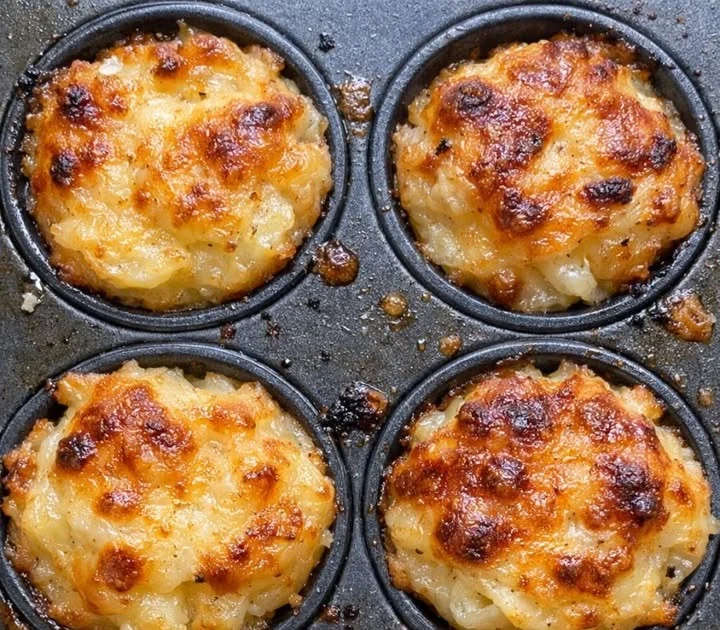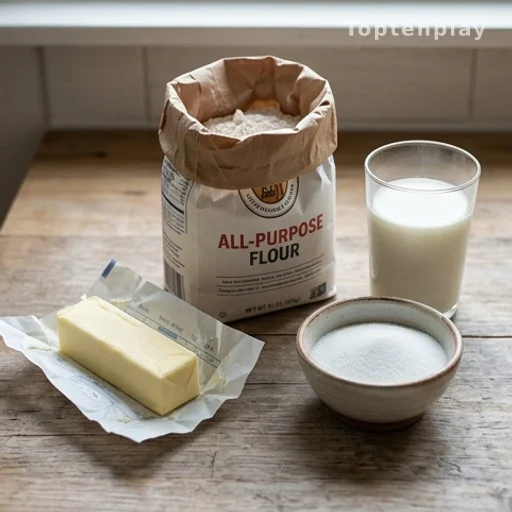
The entire batch yields 9 generous biscuits from a standard 8×8-inch metal pan, and the total grocery cost lands under $4. For households feeding children or hosting a weekend brunch, that price-per-biscuit ratio is difficult to match at any bakery.
Optional additions at serving — extra butter, honey, jam, or shredded cheddar — can dress the biscuits up or down depending on the meal. The base recipe, however, needs nothing extra to stand on its own.
The bubbling butter trick that makes these biscuits different
The defining technique of this recipe is also its simplest: before a drop of batter enters the pan, the butter must already be melted and actively bubbling. The pan goes into a 425°F (220°C) oven for 5 to 7 minutes with nothing but chunks of butter inside. Only then is the batter poured in.
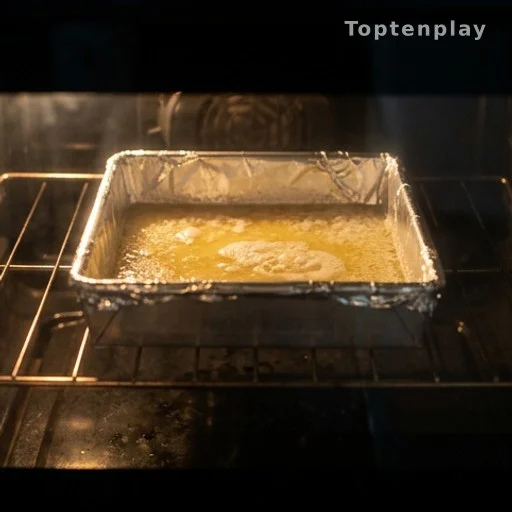
When the cold, flour-heavy batter meets the hot fat, the butter immediately begins to fry the underside and creep up the edges of each biscuit as it bakes. The result is a crispy, golden exterior with a soft, pillowy center — a texture that is nearly impossible to achieve by brushing melted butter on top after the fact.
Lining the pan with foil before adding the butter serves a practical purpose: it allows the entire batch to be lifted out cleanly once baked, and it cuts cleanup to almost nothing.
A Southern staple, simplified
Butter Dip Biscuits are a long-standing fixture of Southern American home cooking, traditionally valued for their simplicity and speed. Unlike classic rolled biscuits, which require chilled fat to be cut into flour by hand, this method eliminates that step entirely by using the pan butter as both the fat source and the cooking medium. The technique has gained renewed attention among home bakers looking for reliable, low-cost recipes that do not require specialist equipment or ingredients.
How to mix the batter without ruining the rise
Mixing technique matters more than most home bakers expect with biscuit dough. The instructions are explicit: stir until the ingredients are just combined, and stop. Lumps in the batter are not a problem — they are a sign the gluten has not been overworked, which is exactly what keeps the interior tender.
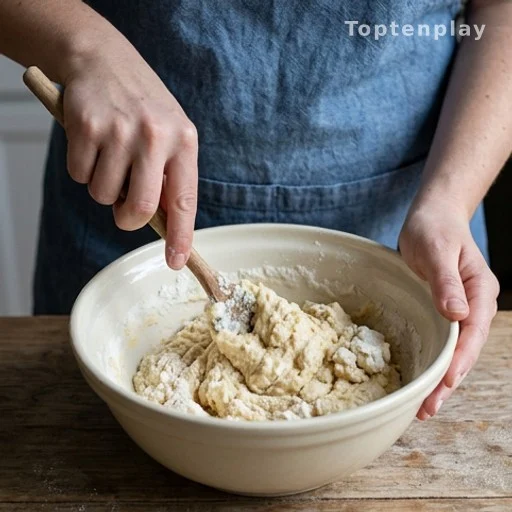
Cold milk is also specified for a reason. The low temperature helps activate the baking powder already present in the self-rising flour, producing more lift during baking. Warm or room-temperature milk would blunt that reaction.