📌 Baked potatoes: the chefs’ trick for a crispy exterior and a soft interior
Posted 28 December 2025 by: Admin
The Perfect Potato: Choosing And Preparing
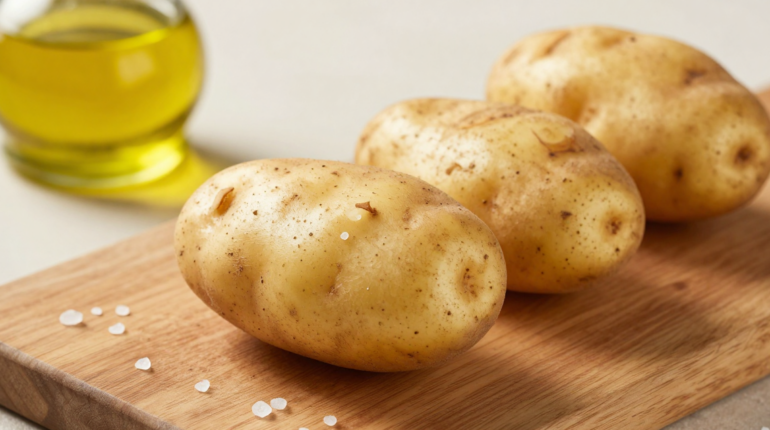
The success of a baked potato depends first on an informed choice. Russet varieties stand out as the absolute reference for this cooking method. Their dense and starchy flesh guarantees that much-sought-after airy interior, while their thick skin transforms into a crispy shell under the effect of heat. Baking potatoes offer similar results, creating that textural contrast that defines the success of the dish.
The basic seasoning comes down to three fundamental elements: olive oil or melted butter, and salt. Olive oil brings a subtle Mediterranean flavor, while melted butter enriches the skin with a gourmet touch. The secret lies in the generous application of salt directly onto the lightly oiled surface. This step, far from being trivial, creates a chemical reaction during cooking: the salt draws moisture to the outside, progressively dehydrating the skin which stiffens and becomes crispy.
This minimalist preparation masks a precise science. Russet varieties contain less moisture than their waxy-fleshed cousins, which promotes the formation of internal steam. This steam, as it escapes, puffs up the flesh and gives it that characteristic light texture. The choice of variety is therefore not just a matter of taste, but a technical guarantee of excellence.
The Art Of Oven Cooking: Infallible Technique
Once the preparation is complete, the transformation begins in the heat of the oven. Cooking reveals the true potential of the potato: the oiled and salted shell progressively metamorphoses into a golden crust under the effect of intense and constant heat. This surface caramelization creates a striking contrast with the interior which, simultaneously, becomes fluffy and tender.
The process relies on a precise balance between temperature and duration. Heat slowly penetrates through the dense flesh, generating steam that swells the starch and fragments its structure. This reaction transforms the initial compact texture into an almost creamy airy mass. Meanwhile, the oil applied to the surface conducts heat uniformly, allowing the skin to dehydrate and harden without burning.
The visual signs of successful cooking are recognizable: a tight, slightly wrinkled, and uniformly golden skin that gives way under light pressure. The size of the tubers directly influences the time required: large specimens require prolonged exposure for the heat to reach the core. An infallible test consists of gently inserting a fork into the center – there should be no resistance.
This technical mastery, accessible to any attentive cook, guarantees a professional result. It then remains to exploit this perfect base to create infinite gourmet variations.
Gourmet Customization: The Universe Of Toppings
These gourmet variations radically transform the tasting experience. The cooked potato, split in its center to release the steam, becomes a welcoming vessel for an infinity of combinations. Classic toppings come first: creamy sour cream, grated cheese that melts on contact with the hot flesh, freshly snipped chives bringing their pungent herbal note. Each element dialogues with the natural sweetness of the tuber.
The addition of proteins elevates the status of the dish. Crispy bacon bits introduce a smoky and salty dimension, creating an additional textural contrast. This simple integration metamorphoses the modest side dish into a self-sufficient and satisfying meal. The layering of flavors and temperatures – cold cream, hot potato, crunchy bacon – composes a balanced culinary architecture.
The true strength lies in this total adaptability. A minimalist version with salt and butter suits purist palates, while generous assemblies satisfy robust appetites. Individual preferences dictate the choices: sober vegetarian or assumed carnivore, every configuration remains valid. This flexibility explains why the dish crosses generations without fading.
This capacity for adaptation is not limited to toppings – it extends to contexts of use, revealing an even more remarkable versatility.
Universal Culinary Solution: When And Why
This contextual versatility explains why the baked potato stands out as a must-know recipe in the domestic repertoire. On busy evenings, it requires minimal intervention – four basic ingredients, a passive cooking time allowing one to attend to other tasks. No constant monitoring, no perilous technique. The oven works alone while the cook manages other aspects of daily life.
Festive gatherings reveal another facet of its utility. Served as a self-service topping station, it simultaneously satisfies divergent preferences without multiplying preparations. Each guest composes their plate according to their tastes, transforming the constraint of dietary diversity into a convivial asset. This approach drastically reduces the culinary stress of the hosts while guaranteeing general satisfaction.
The status of “must-know recipe” for any amateur cook rests on this functional duality. Simple side dish or independent main course, the baked potato meets opposing requirements with the same efficiency. It bridges the gap between pragmatic daily cooking and polished presentation for special occasions. This universal reliability, combined with ease of execution, makes it a safe bet passed down from generation to generation, resisting the ephemeral trends that cross the culinary landscape.