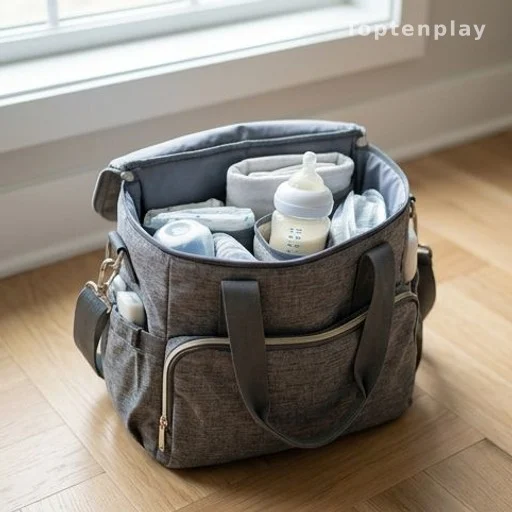
The concern was not unfounded. According to Teresa, the agency had explicitly warned them that Leo had been what staff described as "a lazy feeder" in the hospital nursery, losing 7% of his birth weight — a medically significant threshold that puts newborns at risk. The couple had prepared accordingly.
"They told us it might take two or three hours to get him to take even half an ounce," Teresa, 34, told local reporters. "We had a feeding tube kit in the diaper bag, just in case." That kit would never leave the bag.
Feeding challenges in adopted newborns
Newborns placed for adoption can face transitional feeding difficulties in their first days, partly linked to the stress of changing caregiving environments. Pediatric guidelines recommend close monitoring of weight in the first week, as a loss exceeding 10% of birth weight may require medical intervention. Adoptive parents are often coached by family services staff and pediatric care teams before bringing a newborn home.
Four minutes, one bottle, and a burp ‘like a truck driver’
The couple’s home video shows Mark unbuckling Leo from his car seat on the living room rug, the adoption paperwork still spread across the coffee table beside them. Mark, a high school coach, jokes to the camera: "Bet you five bucks he’s hungry." He was right.

Rather than moving to the kitchen to warm a bottle, Mark sat down cross-legged on the floor, propped the infant in the crook of his arm, and offered a 2-ounce ready-to-feed formula bottle. Leo latched immediately. "He ate the entire bottle in four minutes," Mark said. "Burped like a truck driver. And then fell asleep with his little hand wrapped around my thumb."
"He latched onto the bottle like he had been waiting for us his whole life," Teresa added. "But that wasn’t the shocking part. The shocking part was where he ate" — not in a clinical setting, not after a prolonged struggle, but on the living room floor, minutes after arriving home for the first time.