Suivez-nous
31 May 2026

Apple and Yogurt Flan

Prep Time
10 minutes
Cook Time
40 minutes
Total Time
50 minutes
Servings
6 servings

The classic Parisian flan is a beautiful promise that usually comes with a lot of washing up. This yogurt version cuts through all that—no cream, no pre-cooking, no fuss. Ten minutes of prep and the oven does the rest.
Publicité
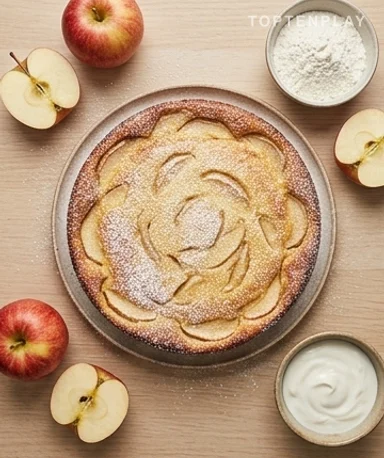
Final result
The apple and yogurt flan in all its simplicity: melting, golden, and irresistible.

This flan comes out of the oven with a pale caramel top, slightly puffed at the edges and still wobbling in the center. When you cut into it, the blade slides without resistance into something that sits between a set custard and a moist cake. The apples have melted into the batter, almost disappearing, but their slightly tart fragrance rises as soon as the plate gets close. Warm, sweet, with that scent of vanilla and baked apple—a simple mix but hard to ignore.

Why you’ll love this recipe

Ten minutes flat : That’s honestly all it takes to assemble the mixture. No egg whites to whip, no cream to boil. You mix, you pour, you bake.
Yogurt replaces everything : No heavy cream, no whole milk. Two plain yogurts do the job and provide a melting texture without weighing the result down.
Effortless crowd-pleaser : Not too sweet, not too heavy. The kind of dessert that disappears before you’ve even had time to offer a second slice.
Often better the next day : It keeps in the fridge for three days without a problem. The flavors have time to develop, and the texture becomes more consistent. Make it the day before, it’s even better.

Ingredient Notes

Ingredients

Three apples, two yogurts, eggs—that’s all you need for this homemade dessert.

Publicité
  • The apples : Go for Boskoop or Reinette—slightly tart, they hold up well during cooking and balance the sugar. Golden Delicious, being too sweet, makes for a bland result. Three medium apples are enough: you want pieces in the batter, not a disguised tart.
  • Plain yogurts : Classic plain yogurts, not low-fat. 0% versions give a drier, less pleasant mouthfeel. If you only have Greek yogurt on hand, dilute it with a tablespoon of water before incorporating.
  • The flour : Marked as optional in many recipes, it is actually useful. Sixty grams is enough to provide some structure. Without it, the flan remains very wobbly—good, but fragile to serve. For a gluten-free version, cornstarch works very well in the same quantity.
  • Vanilla and cinnamon : Don’t skip the flavoring, whatever it may be. A packet of vanilla sugar or half a teaspoon of cinnamon—it changes everything. Flour, sugar, and eggs without fragrance are flat. Half a lemon zest is also a very fresh option if you don’t like cinnamon.

Peel the apples without getting lost in it

Three apples are done in no time. Peel them, core them, and cut them into dice or thin slices—about half a centimeter thick. Slices give a prettier visual result, while dice integrate better and disappear into the batter. A squeeze of lemon juice over them to prevent browning while you prepare the rest. No other secret technique.

Peel the apples without getting lost in it
Apples cut into thin slices, ready to dive into the batter.

Mix without trying to impress

In a large bowl, crack the three eggs with the sugar and whisk by hand until the mixture lightens slightly—a pale cream color, almost frothy. This takes two minutes. Add the yogurts, mix, then add the flour in two batches to avoid lumps. The final batter is fluid, slightly thick, with a light milky scent. Fold in the apples with a spatula; three or four turns are enough. Don’t aim for something perfectly homogeneous.

Don’t touch anything for 40 minutes

Pour the mixture into a buttered mold—a 22 to 24 cm round one works well. The oven must be preheated to 180°C. Forty minutes, without opening the door. The top will gradually go from pale to pale golden caramel, with a slightly deeper color on the edges. The center should still wobble gently when you lightly shake the mold—this is intentional; it will firm up as it cools.

Resist the urge to slice too early

This is where many people rush and regret it. Out of the oven, the flan is still very soft inside. Let it cool for at least 30 minutes at room temperature, then an hour in the fridge if you want clean slices. Cold, it develops a firmer and creamier texture—almost like a traditional flan, but lighter. Patience really pays off here.

Publicité
Resist the urge to slice too early
Forty minutes in the oven and magic happens—the top browns, the center stays slightly wobbly.

Tips & Tricks
  • Butter the mold generously and sprinkle a little sugar on the sides before pouring the batter—this creates a thin, slightly caramelized crust around the edge, much more pleasant than the plain white edge of a poorly prepared flan.
  • If your oven runs hot, cover the flan with a sheet of foil after 25 minutes to prevent the top from browning too quickly while the center finishes setting.
  • Test for doneness with the tip of a knife on the edge of the flan, not the center—the center will always be a bit soft even when cooked, which is normal.
Close-up
This melting and creamy texture is exactly what you look for in a good homemade flan.
FAQs

Can I prepare this flan the day before?

Yes, and it’s even recommended. A night in the refrigerator allows the flavors to develop and provides a firmer, more homogeneous texture. Simply cover the mold with plastic wrap before putting it in the fridge.

How do I know if the flan is cooked?

Publicité

Test with the tip of a knife on the edge—it should come out clean. The center will remain slightly wobbly; that’s normal: it will firm up as it cools. If the whole flan still wobbles significantly, extend the baking time by 5 minutes.

Voir la suite dans la page suivante:
Publicité
Voir la suite dans la page suivante:
Publicité
Partager sur Facebook