📌 Antipasto Squares: the easy recipe that transforms crescent dough into a festive three-cheese appetizer
Posted 28 December 2025 by: Admin
Antipasto Squares: A Recipe That Transforms The Italian Aperitif Into Gourmet Squares
What if the traditional antipasti platter was reinvented in a compact and crispy version? These squares merge the very essence of the Italian appetizer with the practicality of a buttery flaky pastry, creating a bite where each layer tells a culinary story. Imagine: noble cold cuts layered between two veils of crescent dough, melting cheeses blending with smoky flavors, all sealed in a golden envelope.
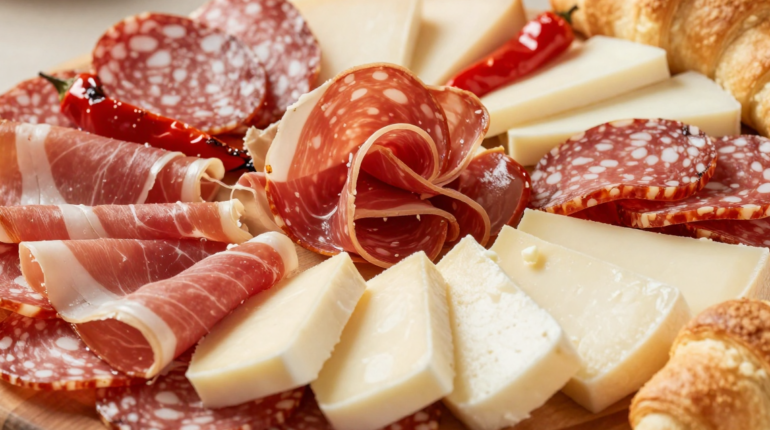
The recipe relies on a precise taste architecture. Tender ham, full-bodied salami, and spicy pepperoni follow one another methodically, each bringing its aromatic personality. Provolone offers its bold character while mozzarella softens the whole with its stringy texture. This strategic layering is not incidental: it guarantees a uniform distribution of flavors in each square.
The appeal of these antipasto squares lies in their universal accessibility. No complex techniques, no sophisticated equipment – just quality ingredients assembled intelligently. Children discover their favorite cold cuts in a playful form, while adults appreciate the discreet sophistication of a recipe that evokes Italian trattorias. For receptions, these squares solve the eternal appetizer question: how to serve variety without multiplying preparations.
The simplicity hides a revelation: transforming a classic concept into a modern format only requires a precise understanding of proportions and textures.
The Crispy Base And Its Layers Of Italian Flavors
The proportions reveal the sought-after balance. Two 8 oz cans of crescent dough form the flaky backbone, this double golden envelope that traps 1.25 lb of noble ingredients. Each cold cut weighs exactly ¼ pound – ham, salami, pepperoni – ensuring that no flavor dominates brutally. This precision is no accident: it ensures that each bite delivers the same meat-to-cheese ratio.
The stratification obeys a precise logic. The ham sets the foundation with its salty sweetness, the salami intensifies the aromatic profile, and the pepperoni crowns the assembly with its spicy notes. Between these meaty layers, provolone brings its slightly pungent bite while mozzarella (also ¼ lb) creates melting bridges. This cheese architecture doesn’t just add creaminess: it physically binds the layers of cold cuts.
Roasted red peppers – ½ cup strategically dispersed – introduce the only vegetable note. Their smoky sweetness contrasts with the proteins, their tender texture breaks the monotony of the slices. This Mediterranean detail anchors the recipe in its Italian terroir, reminding us that traditional antipasto always marries cold cuts and marinated vegetables.
This methodical construction transforms simple ingredients into a coherent taste experience. But assembly is not enough: it’s the top topping that seals the magic.
The Flavored Egg Mixture: The Secret Touch That Makes The Difference
This topping transforms the assembly into a coherent creation. Three beaten eggs form the aromatic binder that unifies the layers, penetrating every gap to weld cold cuts and cheeses into a homogeneous block. But their role goes beyond simple structural function: enriched with ¼ cup of grated parmesan, they develop an intensely flavorful golden crust as they bake.
The seasoning reveals a mastery of Mediterranean balances. A teaspoon of Italian herbs – that classic blend of oregano, basil, thyme, and rosemary – breathes in the regional identity. Half a teaspoon of garlic powder reinforces the character without being aggressive, while a quarter teaspoon of black pepper brings just enough liveliness to wake up the taste buds without masking the noble flavors.
This combination of traditional spices is not random: it precisely reproduces the aromatics that scent authentic antipasti in Italian trattorias. The parmesan, as it melts, caramelizes slightly on the edges, creating those crispy zones that everyone fights over. The egg, as it coagulates, traps the oils from the cold cuts and the herbal essences, transforming each square into a concentrate of flavors.
This golden glaze doesn’t just beautify: it hermetically seals the internal moisture while developing a contrasting texture. All that remains is to master the baking to fully reveal this potential.
Preparation Methods And Guaranteed Success
This taste architecture requires a precise method to reveal its full potential. The first step is to unroll one can of crescent dough in a rectangular pan, carefully sealing the perforations to create a leak-proof base. The layers of cold cuts and cheese are then layered according to the established order, before the second dough tops it all. The flavored egg mixture is poured uniformly, penetrating the smallest gaps.
Baking at 350°F for 25 to 30 minutes transforms the assembly: the dough puffs and browns, the cheeses melt into creamy layers, while the egg topping forms that characteristic golden crust. A 10-minute rest after baking allows the layers to solidify, facilitating a clean cut into regular squares.
This remarkable versatility explains its universal success. For a Sunday brunch, these squares advantageously replace quiches and savory tarts. During receptions, they can be served at room temperature without losing their appeal. Children appreciate this practical format that eliminates complicated assemblies, while adults savor the sophistication of authentic Italian flavors.
The promise holds: easy to make even for novice cooks, spectacular in presentation, unanimously appreciated. Each square concentrates the essence of a traditional antipasto platter in a controlled bite, transforming the Italian appetizer into an experience accessible to all.