People think a homemade anti-anemia juice requires a 300€ juicer, overpriced organic superfoods, and massive motivation. In reality, you just need a beet, some oranges, a carrot, and ten minutes. That’s it.
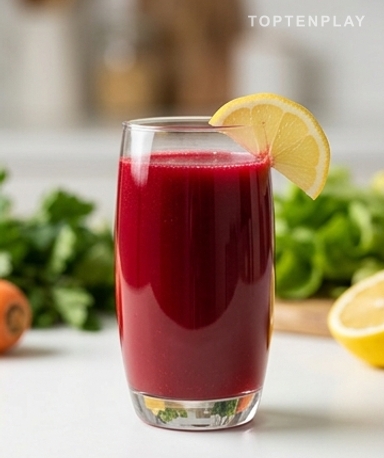
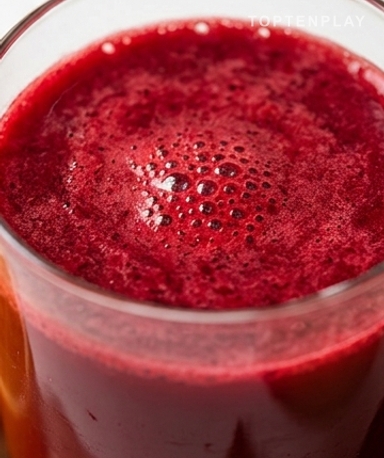
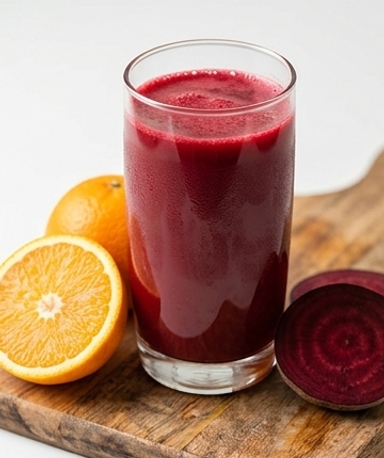
In the glass, the color is striking — a deep garnet red, almost purple, with copper reflections where the orange lightens it slightly. It smells like raw beetroot, that earthy yet sweet scent that sticks to your fingers when you peel it. In the mouth, it’s smoother than you’d imagine: the carrot rounds it out, the orange lightens it, and the lemon provides just enough zing to keep the whole thing fresh and not heavy.
Why you’ll love this recipe
Ingredient Notes
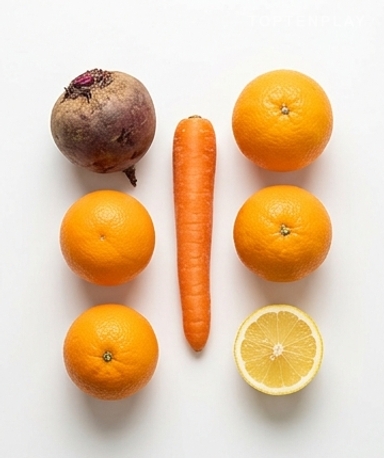
Beetroot, carrot, oranges, and lemon — four simple ingredients for a powerful nutritional cocktail.
- Raw Beetroot : Choose a small to medium one — less than 200 g. Large ones are often more fibrous and less sweet. Raw and uncooked: this is imperative, as cooking destroys part of the nitrates and folates you’re after. In standard grocery stores, raw beets are often found in mesh bags in the vegetable aisle. Avoid vacuum-packed pre-cooked beets; they are not suitable here.
- Oranges : Two or three depending on their size and your taste. Choose juicing oranges — Navels are good, blood oranges give an even more intense color and a slightly more complex taste. Squeeze them by hand or with a citrus press: you get more juice and it’s fresher than if extracted in the blender. This is the pivotal ingredient — without it, the iron from the beet won’t be well absorbed.
- Carrot : Just one medium carrot. Its role: to soften the beetroot taste which can sometimes be a bit too direct, provide beta-carotene, and give body to the juice. Look for a carrot that is firm to the touch, not soft — a sign that it is still fresh and full of water.
- Lemon (optional but recommended) : Half a lemon is enough. It brightens the whole thing and prevents oxidation — it’s what keeps that beautiful bright color longer. Without it, the juice starts to brown within minutes. If you don’t have one, a bit of extra orange juice will do.
Peel the beet over the sink
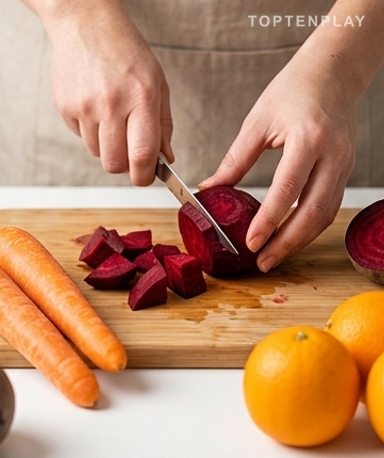
Raw beetroot stains. Really. Your fingers will go from pink to crimson in seconds, and if you’re not careful, your cutting board will keep the marks. Use gloves if you have them handy, or wash your hands immediately with cold water. Peel it with a vegetable peeler like an apple, then cut it into 3-4 cm cubes — no need to be precise, just small enough for the blender to handle easily. Same for the carrot: peeled, cut into chunks. It’s fast, maximum five minutes of prep.
Let the blender run long enough
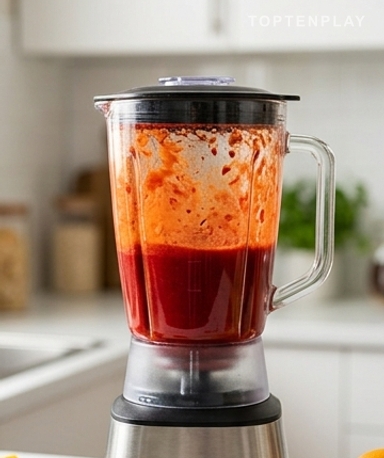
Pour the beetroot and carrot pieces into the blender with the cup of water. Blend first for thirty seconds on high speed — you’ll hear the motor working a bit on the raw beet, that’s normal, it’s dense. Then add the squeezed orange and lemon juice, and blend again for another twenty seconds. The result should be homogeneous, without large chunks. The color shifts from blood red to a bright purple-garnet as soon as the orange juice incorporates. If you prefer a pulp-free juice, pour it through a fine-mesh sieve while pressing with a spoon — you’ll get a perfectly smooth liquid.
Drink it within ten minutes
This juice does not keep well. Exposed to air, the beet oxidizes and the vitamin C degrades — after an hour, you lose part of the benefits for which you made it. Drink it immediately, preferably in the morning on an empty stomach or between meals, when the stomach is less full and absorption is optimal. If you must prepare it in advance, put it in a hermetically sealed jar in the fridge and consume it within the hour. Avoid coffee or tea for thirty minutes afterward — tannins block the absorption of plant-based iron, which would be a shame.
Tips & Tricks
- Don’t systematically strain it: beet and carrot pulp contain fibers that slow down sugar absorption. If your digestion tolerates it, keep it.
- If you’re a bit wary of beets, start with a small one and three oranges. You can adjust the proportions until you find the balance that suits you — the main thing is that you drink it.
- Raw beetroot can turn urine pink-red. It’s harmless, it’s called beeturia — it’s surprising the first time, but it’s just the beet pigment passing through.
Can I prepare this juice the night before?
No, this juice is ideally consumed within 10 to 15 minutes after preparation. Vitamin C degrades quickly in contact with air and the beet oxidizes, reducing both the benefits and the color. If you absolutely must prepare it in advance, store it in an airtight jar in the fridge and consume it within an hour.
Is a normal blender enough or do I need a juicer?
A standard blender works perfectly. Raw beetroot is dense, so blend at maximum speed for at least 45 seconds. If you prefer a pulp-free juice, then pass the mixture through a fine sieve. A juicer gives a smoother result, but it is absolutely not essential.
How many times a week can I drink this juice?
3 to 5 times a week is a reasonable frequency. Beetroot is rich in oxalates and natural sugars — drinking it every day in large quantities can be irritating to the kidneys for some people. Listen to your body and vary the sources of iron in your diet.
My urine turned pink after drinking this juice, is it normal?
Yes, it is completely normal. This is called beeturia — the red pigment of the beet (betalain) partly passes into the urine. It is harmless and disappears within 24 to 48 hours.
What can I substitute for beetroot if I can’t find any?
Raw spinach is the best alternative — rich in iron and folates, it blends easily with oranges and carrots. You can also add fresh parsley, which is surprisingly rich in iron. The taste will be less earthy and more vegetal, but the benefits remain comparable.
Can this juice replace medical treatment for anemia?
No. This juice is nutritional support, not a treatment. In case of confirmed anemia, medical follow-up and iron supplementation may be necessary. This juice complements a balanced diet — it does not replace a diagnosis or a medical prescription.
Anti-Anemia Beet Carrot Orange Juice
International
Beverage
A fresh and natural juice combining raw beetroot, carrot, and orange to boost your iron and energy in ten minutes.
Ingredients
- 1 (about 150g) raw beetroot, peeled
- 1 (about 80g) carrot, peeled
- 2 to 3 (about 300g) oranges, juiced
- ½ lemon, juiced
- 100ml water
Instructions
- 1Peel the beetroot and carrot, cut them into 3-4 cm cubes.
- 2Squeeze the oranges and lemon by hand or with a citrus press.
- 3Place the beetroot and carrot pieces in the blender with the water. Blend at maximum speed for 45 seconds.
- 4Add the squeezed orange and lemon juice. Blend for another 20 seconds until homogeneous.
- 5For a smooth juice, pass the mixture through a fine sieve, pressing with a spoon. Drink immediately.
Notes
• This juice oxidizes quickly: drink it within 10-15 minutes of preparation for maximum vitamins and a beautiful garnet color.
• Avoid coffee or tea for 30 minutes afterward — tannins reduce plant iron absorption.
• Variation: add a small handful of fresh spinach or a few sprigs of parsley for even more iron and folates.
Nutrition Facts (per serving, estimated)
| 180 kcalCalories | 4gProtein | 42gCarbs | 1gFat |