📌 Amaranth: this resilient plant contains the 9 essential amino acids and resists drought
Posted 22 December 2025 by: Admin
Amaranth: The Misunderstood Super-Plant With Ancestral Virtues
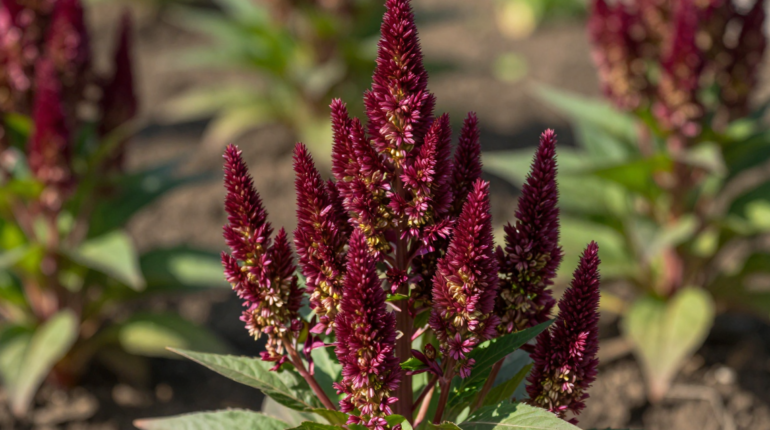
Cultivated for millennia by pre-Columbian civilizations, amaranth has moved through the ages without ever gaining the notoriety it deserves. Behind its modest name of pigweed lies one of the rare plants offering both edible green leaves and nutritionally complete seeds. This double botanical identity makes it an accessible superfood, capable of rivaling contemporary health food stars.
The nutritional profile of amaranth reveals an exceptional concentration of vitamins A, C, and K, accompanied by an impressive mineral cocktail: calcium, magnesium, potassium, and iron combine naturally. The seeds, tiny but remarkably effective, contain the nine essential amino acids that our body cannot synthesize on its own. This characteristic, extremely rare in the plant kingdom, places amaranth in the rank of complete proteins, a status generally reserved for animal products.
Adapted to gluten-free diets and resistant to difficult climatic conditions, this plant of the genus Amaranthus combines ecological and nutritional assets. Yet, it often grows discreetly in our gardens, ignored by consumers in search of expensive exotic novelties. Modern science now confirms what ancestral traditions already knew: amaranth fully deserves its rediscovery.
Four Major Scientifically Validated Nutritional Assets
This concentration of essential amino acids gives amaranth a unique status among plant protein sources. The seeds naturally contain lysine, an amino acid often deficient in traditional cereals, thus filling a major nutritional gap in vegetarian diets. This rare protein completeness allows athletes, vegans, and people in recovery to obtain all the structural elements necessary for tissue regeneration without resorting to animal proteins.
Beyond its protein profile, amaranth offers a natural gluten-free alternative for the 1% of the population with celiac disease and the millions of people suffering from gluten sensitivity. Unlike wheat, rye, or barley, its seeds can be processed into versatile flour, retaining their nutritional density while guaranteeing perfect digestibility. This property makes it a strategic ingredient in the formulation of functional foods adapted to modern food intolerances.
Researchers have also identified flavonoids and phenolic compounds in amaranth with measurable antioxidant properties. These molecules protect cells against daily oxidative stress generated by pollution, UV exposure, or energy metabolism. Finally, its richness in dietary fiber promotes intestinal regularity and nourishes the microbiota, the digestive ecosystem whose balance conditions many immune and metabolic functions.
Five Health Benefits Validated By Research
These antioxidant and digestive properties form the foundation for more targeted physiological effects, documented by several clinical studies. Amaranth contains plant sterols structurally similar to cholesterol, allowing for the reduction of its intestinal absorption through competition. Combined with the soluble fibers present in the seeds, these compounds help maintain blood cholesterol levels within normal values when integrated into a balanced diet, as confirmed by trials conducted on populations at moderate cardiovascular risk.
Mexican and Indian medicinal traditions have long attributed mild anti-inflammatory properties to amaranth. Contemporary research partially validates these ancestral uses by identifying bioactive peptides capable of modulating certain inflammatory pathways without notable side effects. This measured action supports post-exercise muscle recovery and could alleviate discomfort related to mild chronic inflammation.
On the immune level, the concentration of vitamin C in fresh leaves strengthens the body’s natural defenses, particularly during periods of seasonal vulnerability. At the same time, the calcium-magnesium association present in all parts of the plant optimizes bone mineralization, slowing down age-related demineralization. This mineral synergy proves particularly relevant for menopausal women and people avoiding dairy products, offering a credible plant-based alternative for preserving skeletal strength.
Sustainable Cultivation And Practical Daily Integration
Beyond its nutritional assets, amaranth stands out for its exceptional agronomic resilience. Capable of thriving in depleted soils with less than 400 mm of annual rainfall, this plant resists prolonged droughts while producing stable yields. This characteristic makes it a strategic lever for food security in semi-arid regions, where conventional crops regularly fail. Agronomists also observe its ability to regenerate land degraded by intensive rotations, thus contributing to regenerative agriculture without massive chemical inputs.
Culinary integration of amaranth is remarkably simple. The leaves are prepared like spinach: sautéed in a pan with garlic and olive oil, incorporated into soups or omelets. The seeds, after rinsing, cook in 20 minutes in three volumes of water, offering a neutral base to accompany roasted vegetables or proteins. Ground into flour, they enrich gluten-free breads and pastries with a soft texture and a slight nutty taste.
A few precautions facilitate its adoption: wash the leaves thoroughly to remove soil and residues, introduce the seeds gradually to accustom the digestive system to their fiber richness, and consult a health professional in case of chronic kidney disease given the oxalate content. These minor adjustments allow one to fully benefit from a food combining nutritional density, cultural accessibility, and positive environmental impact.