📌 Activated charcoal and lemon: why dentists formally advise against this viral DIY mixture
Posted 23 December 2025 by: Admin
The Detoxifying Virtues Of The Charcoal-Lemon Duo
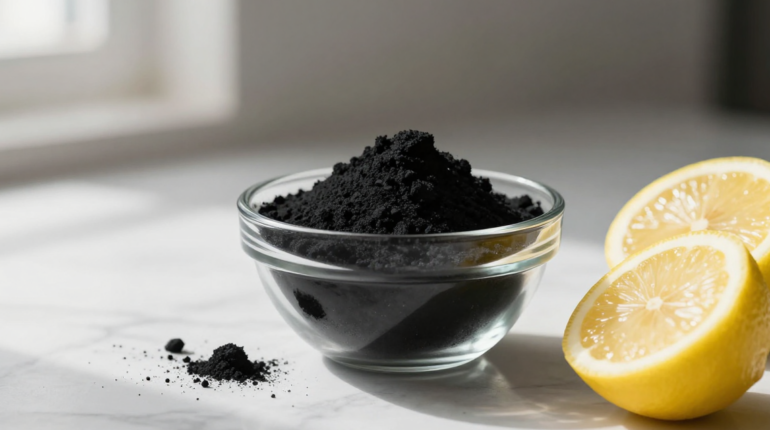
The alliance of activated charcoal and lemon is establishing itself as one of the most discussed detox trends of the moment. This popularity is based on scientifically documented properties: activated charcoal possesses an exceptional adsorption power that allows it to capture and bind toxins thanks to its massive interaction surface. For its part, lemon juice concentrates vitamin C and citric acid, two compounds with recognized antioxidant effects.
This combination has given rise to multiple applications, from the famous “black lemonade” — that black detoxifying drink flooding social media — to purifying facial masks made at home. Charcoal acts like a molecular magnet attracting impurities and undesirable substances, while lemon contributes its vitamins and astringent action.
However, behind the craze for these homemade recipes lies a more nuanced reality. While the individual properties of each ingredient are proven, mixing them for DIY solutions — particularly for direct cosmetic use — raises major safety questions that health professionals no longer hesitate to point out. The line between detox benefit and risk to the body turns out to be much thinner than it appears.
Cosmetic Applications: Purifying Masks And Homemade Recipes
This promise of purification finds its most popular translation in DIY facial masks. The basic recipe combines 1 teaspoon of activated charcoal powder with a non-acidic moisturizing base — aloe vera gel or raw honey. This formulation allows for deep cleaning: the charcoal adsorbs excess sebum, pollution residues, and impurities lodged in the pores, whose appearance is visually reduced.
Some add pure lemon juice for its brightening properties and its astringent action on oily skin. Vitamin C effectively acts as an antioxidant and skin toner. But this practice carries a critical risk: applied directly, lemon juice causes irritation, redness, and increased photosensitivity. The skin then becomes vulnerable to sun damage, with a multiplied risk of burns and hyperpigmentation.
Dermatologists recommend abandoning fresh lemon in favor of commercial extracts or highly diluted lemon essential oil — and always after a prior skin test. The natural acidity of the fruit, far from being a harmless beauty ally, weakens the skin barrier and compromises its natural defenses. A reality that contrasts sharply with the promises of a glowing complexion conveyed in online tutorials, and which proves even more worrying when examining the internal use of this combination.
Black Lemonade: Digestive Detox Under Strict Conditions
This concern does not apply to internal use, where “black lemonade” is establishing itself as a trendy detox tonic. The standard recipe combines 1 teaspoon of food-grade activated charcoal with the juice of a whole lemon, a natural sweetener (honey or maple syrup), and 1 cup of water. Consumed away from meals, this black drink exploits the binding power of charcoal to trap gas-producing elements in the intestine.
Followers report notable relief from bloating and digestive discomfort. This adsorption property — the very one that justifies the use of charcoal in emergency treatments for poisoning — captures toxins and undesirable compounds to facilitate their elimination. A scientifically validated mechanism, but one whose effectiveness relies on a completely non-selective action.
Precisely this lack of discrimination constitutes the major risk: charcoal captures essential nutrients and medicinal active ingredients indiscriminately. Oral contraceptives, heart treatments, antidepressants — all can have their effectiveness wiped out by simultaneous ingestion of charcoal. Health professionals therefore impose an imperative rule: NEVER take charcoal within 90 minutes to 2 hours following medication or a meal.
Without sufficient hydration, regular consumption causes severe constipation, or even intestinal blockage in extreme cases. Precautions that take on a critical dimension when examining the most controversial use of this combination: its dental application.
Dental Alert: Why This Mixture Irreversibly Destroys Enamel
Oral application transforms this combination into a threat to dental health. Activated charcoal, despite its ability to remove extrinsic stains from coffee or tea, acts as an aggressive abrasive that scrapes the surface of the enamel with each use. Dental professionals hammer home the warning: enamel does not regenerate. Every brushing with charcoal permanently erodes this protective layer, progressively exposing the underlying yellowish dentin.
The cruel paradox hits those seeking a bright smile: repeated use of charcoal produces the opposite effect, revealing yellower teeth that are permanently sensitive to heat, cold, and sugar. A permanent degradation that even professional treatments cannot reverse. Dentists tolerate at most a weekly application of certified charcoal products, specifically formulated to minimize abrasion.
Adding lemon juice to this equation is a disaster waiting to happen. Its extreme acidity directly attacks the enamel through chemical dissolution — a process that brushing dramatically amplifies. Professionals are categorical: NEVER brush with lemon juice, under any pretext. No homemade recipe can neutralize this acidity without compromising the other properties of the mixture.
This double aggression — mechanical abrasion and acid erosion — causes irreparable damage in just a few applications. Permanent sensitivity, cracks, increased vulnerability to cavities: the dental consequences of this DIY trend far outweigh its supposed cosmetic benefits.