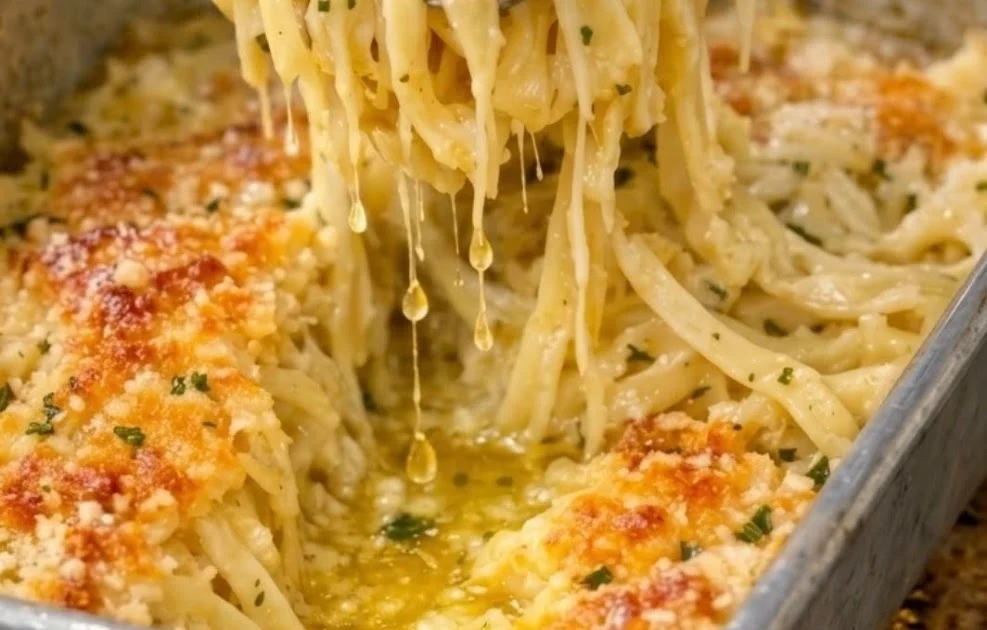
Few dishes carry the weight of American comfort food tradition quite like Chicken Tetrazzini — a baked pasta casserole that has anchored church potlucks and family reunions across the Midwest and South for generations. This version strips the recipe back to its most essential, budget-friendly ingredients while leaning on a clever piece of kitchen science: starchy pasta water in place of a heavy flour roux. The result is a velvety, deeply savory casserole crowned with a shatteringly crispy Parmesan crust.
En bref
- —No flour roux — pasta water creates the creamy sauce
- —A high-heat blast gives the Parmesan topping its crispy crust
- —Low-sodium broth keeps the dish lighter without sacrificing flavor
A casserole rooted in potluck tradition and farmhouse kitchens
Chicken Tetrazzini has long been one of those dishes that needs no introduction at a communal table. Its reputation was built in the church halls and reunion pavilions of the American heartland, where a bubbling baking dish arriving at the buffet line was enough to draw a crowd before the lid even came off.
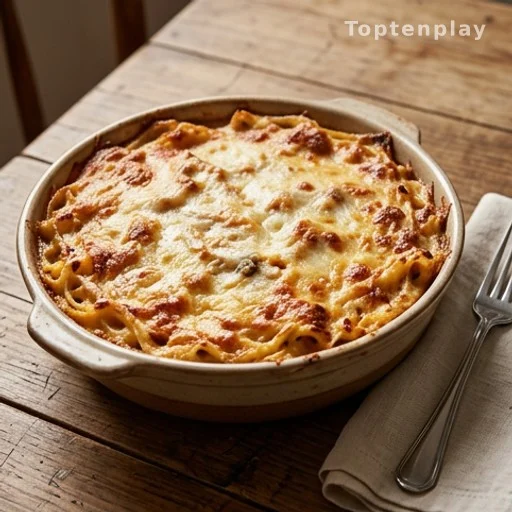
The appeal has always been straightforward: a handful of humble ingredients — cooked pasta, shredded chicken, mushrooms, a creamy binder, and a generous layer of cheese — come together into something that feels far more indulgent than the sum of its parts. It is the kind of cooking that prioritizes feeding people well over technical complexity.
This particular version traces its philosophy directly to a family tradition. The guiding principle, described as a golden rule for family gatherings, is that a great casserole should rely on budget-friendly core ingredients, demand almost no active effort, and still be compelling enough that the baking dish is scraped clean before the main course is served.
What is Chicken Tetrazzini?
Chicken Tetrazzini is a baked American pasta casserole combining cooked spaghetti, shredded poultry, mushrooms, and a creamy cheese sauce, typically finished with a breadcrumb or Parmesan topping. It became a fixture of community cooking across the Midwest and South throughout the mid-20th century, valued for its low cost, ease of preparation in large quantities, and its ability to be assembled ahead of time.
Pasta water and the Maillard reaction: the science behind the texture
What separates this recipe from heavier versions of the dish is a deliberate choice to skip the traditional flour roux entirely. Instead, the technique relies on starch emulsification: when cooked spaghetti is tossed with a creamy base and a splash of the starchy water it was boiled in, the dissolved starches act as a natural binder.
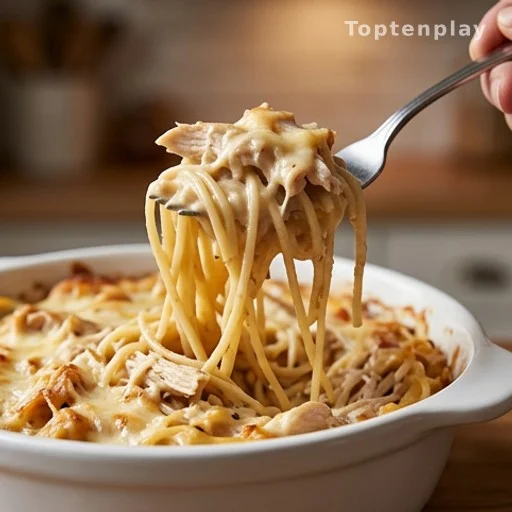
The effect is a thick, glossy sauce that clings to every noodle without the dense, floury texture that a roux can sometimes produce. It is a technique borrowed from Italian pasta cooking, applied here to give a classic American casserole a noticeably lighter, more velvety finish.
The crispy top layer is the product of a separate reaction entirely. An initial blast of high oven heat triggers the Maillard reaction — the same chemical process responsible for the golden crust on a seared steak or a well-baked loaf of bread. Applied to a Parmesan topping, it produces what the recipe describes as a magnificent lift and a gorgeous, golden-brown, crispy crust: a textural contrast achieved, notably, with almost no additional active effort from the cook.
Suggested Posts

The hidden hook on your shopping cart and what it’s actually for
Most grocery shoppers have seen it without ever knowing what it does. The small hook found on the front edge or side of a…