📌 Yogurt cake: the ultra-moist recipe that uses the pot as a measuring tool
Posted 10 January 2026 by: Admin
The Iconic Yogurt Pot Recipe
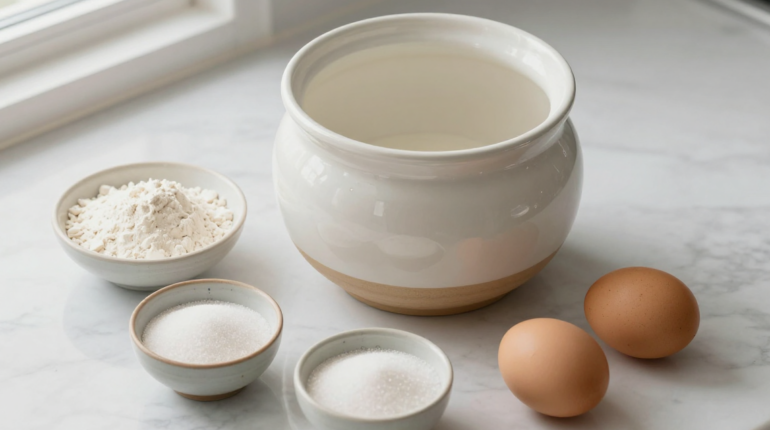
For decades, this recipe has embodied simplicity in family baking. Its secret lies in a revolutionary measuring system: the 125g plain yogurt pot becomes the unique dosing tool. No more scales, complicated conversions, or proportion errors. A clear arithmetic formula governs the whole: 1 pot of yogurt, 2 pots of sugar, 3 pots of flour.
This “1-2-3” method transforms any beginner into a confident baker. The empty pot, once the yogurt is incorporated, is used to successively measure all the ingredients. Nine basic components are enough: plain yogurt, three eggs, vegetable oil, a 10g sachet of baking powder, vanilla sugar or vanilla extract, and a pinch of salt.
The ingenuity also lies in the total accessibility of the ingredients. No rare products, no sophisticated equipment. The pot of vegetable oil, often overlooked, plays a decisive role: it guarantees the characteristic moistness and extends shelf life well beyond classic butter cakes. This iconic recipe spans generations without losing its status as an absolute reference for busy cooks seeking impeccable results.
Dry Ingredients And Their Role
This seemingly simple architecture relies on a precise chemical balance. The three pots of flour constitute the structural framework of the cake, creating the gluten network necessary for its hold. Faced with this mass, the 10g sachet of baking powder triggers the rising reaction that transforms the dense batter into an airy texture.
The two pots of sugar are not limited to sweetening. They actively participate in surface caramelization, create pockets of moisture, and stabilize the structure during baking. The 2:3 ratio between sugar and flour guarantees a taste balance where neither sweetness nor the taste of flour dominates.
Vanilla sugar or vanilla extract provides the essential aromatic signature. Without this ingredient, the cake remains bland despite its successful texture. Vanilla amplifies the perception of natural sweetness, even allowing for a slight reduction in sugar without sacrificing taste.
This combination of dry ingredients forms a self-sufficient system: each element compensates for or activates the other. The baking powder lifts the flour, the sugar feeds the yeast with heat, the vanilla masks the residual bitterness of the baking powder. But these inert powders require a liquid catalyst to reveal their transformative potential.
Wet Components And Binders
This inert dry system activates upon contact with liquid elements. The three eggs play a triple role: their proteins form structural chains, their yolks emulsify fats, and their whites trap air that will expand with heat. Beaten, they create thousands of micro-bubbles that the baking powder will amplify during baking.
The pot of vegetable oil is the true secret to long-lasting moistness. Unlike butter which solidifies when cold, oil remains liquid at room temperature, coating the flour particles without binding them together. This permanent lubrication keeps the texture supple three to four days after baking, whereas a butter cake dries out in 48 hours.
The 125g plain yogurt provides the acidity necessary to activate the baking powder while hydrating the batter differently than pure water. Its lactic ferments generate a slight residual fermentation that adds complexity to the neutral taste. Its creamy texture binds the ingredients without weighing them down, creating a crumb that is neither compact nor airy but perfectly in between.
The pinch of salt remains discreet but indispensable. It enhances the perception of sweet flavors by contrast, amplifies the vanilla aroma, and regulates the activity of the baking powder to prevent a rise that is too sudden. Without it, the cake seems flat despite all the other ingredients present.
These wet components transform inert powders into a living batter, ready to undergo the test of heat that will definitively set its structure.
The Preparation Structure
The alchemy of ingredients guarantees nothing without an assembly method. The “Preparation” section announces the precise protocol that will transform this raw list into a structured batter. Every movement counts: the order of incorporating liquids determines the final homogeneity, the duration of mixing conditions the formation of the gluten network, and the oven temperature sets the speed of coagulation.
The recipe adopts a progressive multi-page format, an editorial strategy that guides the cook step-by-step without overwhelming them with information. This segmentation avoids common mistakes made by beginners who skim and miss a critical instruction. It also imposes a reading rhythm compatible with execution in the kitchen, where consulting a floured screen requires breaks between tasks.
The “Read more on the next page” link creates a natural transition between the theory of ingredients and the practice of assembly. The full instructions will likely reveal the oven preheating time, the exact baking temperature, the duration to the nearest degree, and the knife test to check the center. These technical parameters never appear in the introduction so as not to discourage with their apparent technicality.
This two-stage architecture distinguishes the understanding of components from their concrete implementation. It follows the pedagogical logic of great cookbooks: understand why before learning how. Moving to action now requires turning the page to discover the gestures that will transform these nine ingredients into a golden cake.