📌 Yellow bananas vs. spotted bananas: how the ripening stage reverses their nutritional composition
Posted 3 February 2026 by: Admin
Bananas According to Their Maturity: Two Distinct Nutritional Profiles
Present on all continents and consumed daily by millions of people, the banana stands out as one of the most popular fruits in the world. Its practicality, natural sweetness, and nutritional richness explain this global success. However, a little-known reality escapes the majority of consumers: not all bananas are equal in terms of health.
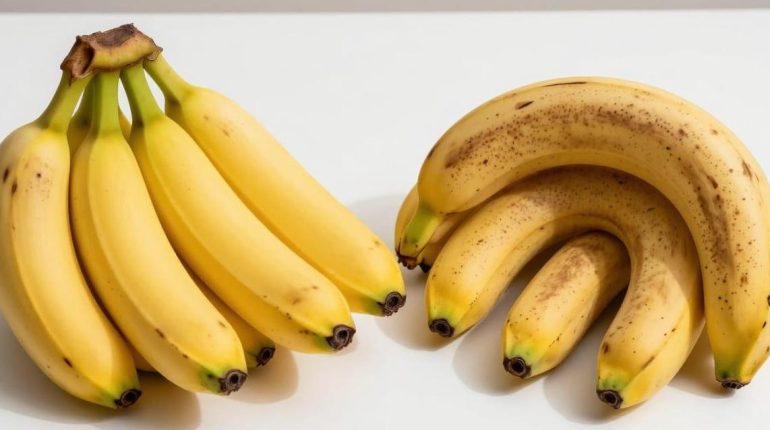
The stage of maturity radically transforms the fruit’s properties. On one side, the slightly ripe banana sports a uniform yellow coat, without brown spots or with a few rare discrete points. On the other, the spotted banana presents a multitude of brown marks characteristic of full maturity. This visual distinction, far from being trivial, reveals major nutritional differences.
The biochemical processes at work during ripening modify the fruit’s composition substantially. Starch progressively converts into simple sugars, antioxidants evolve, and certain compounds concentrate while others decrease. These transformations directly impact the banana’s effect on the body: digestion, blood sugar, energy intake.
Understanding these variations allows you to adapt your choice to your personal goals. Whether you are looking for a quick energy boost, better glycemic regulation, or specific antioxidant benefits, the fruit’s maturity determines its relevance to your needs.
The Slightly Ripe Banana: Profile and Characteristics
This biochemical transformation expresses itself differently depending on the degree of progress. At its early stage, the yellow banana without brown spots presents specific nutritional properties that clearly distinguish it from its riper counterpart.
Resistant starch is its major asset. At this stage, the fruit contains a high proportion of this complex carbohydrate that passes through the small intestine without being digested. This particularity slows down the absorption of sugars and moderates the rise in post-prandial blood sugar. For people monitoring their blood glucose levels or seeking prolonged satiety, this characteristic proves decisive.
The lower glycemic index represents another tangible advantage. The slightly ripe banana releases its energy progressively, avoiding brutal glycemic peaks followed by energy drops. This regular diffusion is particularly suitable for athletes before physical effort or for individuals seeking to stabilize their appetite between meals.
The firmer texture also facilitates integration into certain culinary preparations. The fruit retains its structure during cooking and is better suited for fruit salads or decorative slices. Its less sweet, slightly tangy flavor harmonizes with savory ingredients in creative recipes.
This precise nutritional profile meets specific physiological needs, but other benefits emerge with full maturity.
The Brown-Spotted Banana: Assets and Particularities
Opposite this firm and moderate profile, the banana sprinkled with brown spots reveals a biochemical metamorphosis with surprising effects. These visual markers do not betray any deterioration: on the contrary, they signal the conversion of starch into directly assimilable simple sugars.
Digestibility reaches its peak at this advanced stage. Enzymatic transformation facilitates the absorption of nutrients by the body, reducing the required digestive effort. This property particularly benefits people suffering from gastrointestinal disorders or seeking rapid energy recovery after intense physical effort.
The concentration of antioxidants increases proportionally to browning. Scientific studies demonstrate that spotted bananas produce more phenolic compounds and cytokines, substances recognized for their anti-inflammatory properties and their ability to strengthen the immune system. This chemical evolution transforms the fruit into a true defensive ally for the body.
The natural sugar content increases considerably, offering an immediate energy source without artificial additives. This instant availability is suitable for athletes in the recovery phase or for people needing a quick energy boost. The creamy texture also facilitates integration into smoothies, pastries, or mashed preparations.
These distinct characteristics naturally guide the choice according to the desired objectives and individual physiological needs.
Making the Right Choice According to Your Needs
This understanding of nutritional metamorphoses imposes a strategic rather than random selection. The optimal choice depends essentially on three parameters: metabolic objectives, glycemic sensitivity, and time of consumption.
People monitoring their blood sugar will systematically favor slightly ripe bananas. Their moderate glycemic index prevents blood glucose peaks while providing progressive energy. Diabetics, pre-diabetics, or individuals following a hypoglycemic diet find in this stage a safe option promoting prolonged satiety.
Conversely, athletes in post-workout recovery or convalescents seeking rapid assimilation will direct their preference toward spotted bananas. Their high simple sugar content immediately replenishes exhausted energy reserves, while their anti-inflammatory properties accelerate muscle regeneration.
Digestive disorders constitute a decisive indicator: sensitive stomachs and fragile intestines benefit from the pre-digested texture of browned bananas, while tolerant organisms will favor the resistant firmness of less advanced fruits to stimulate intestinal transit thanks to insoluble fibers.
The time of day also influences this decision: yellow banana at breakfast for sustained energy release, spotted banana as an afternoon snack for an immediate pick-me-up. This personalized approach transforms a simple fruit into a nutritional tool adapted to each particular physiology.