Wor Shu Duck—many imagine it as an untouchable restaurant dish, ordered behind lacquered glass and never made at home. The reality is that it’s primarily about discipline and time: a braised duck, deboned, pressed overnight in the cold, then fried until the crust snaps under your teeth. Absolute comfort food, Cantonese style.
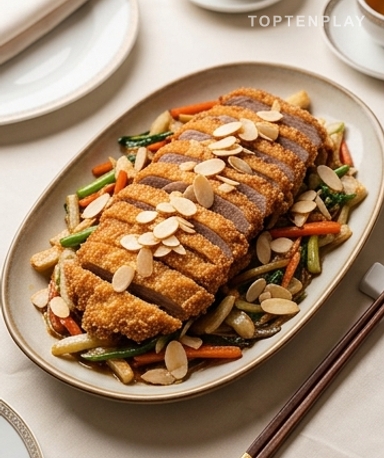
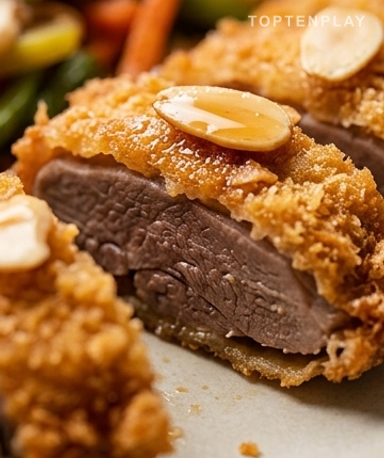
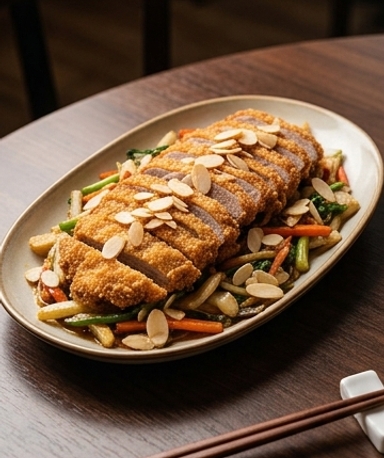
Imagine the plate in front of you: deep mahogany brown duck slices, the breading slightly rough to the touch, sautéed vegetables still glistening from the wok’s heat. The scent is that of star anise that has permeated the meat for hours, mixed with the toasted notes of dark soy sauce. When you bite down, the crust gives way first—a sharp, almost satisfying crunch—then the meat appears: dark, juicy, melting. Flaked almonds on top, lightly toasted. A dish that smells like history.
Why you’ll love this recipe
Ingredient Notes
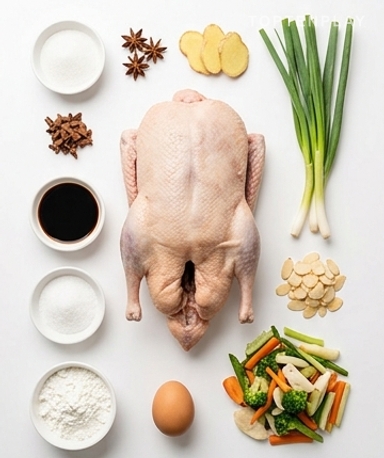
All Wor Shu Duck ingredients gathered: whole duck, aromatic spices, condiments, and vegetables for the wok.
- Whole duck (1.8 to 2 kg) : Choose a medium-sized duck. Large ducks over 2.5 kg work but require more time. Avoid roasting ducks that are too lean—you need a bit of fat so the meat stays juicy after frying.
- Chicken stock (instead of Shaoxing wine) : Shaoxing wine is the classic rice wine of Cantonese cuisine. We replace it here with concentrated chicken stock—it brings that umami base without the alcohol. Use a good stock, not a cube diluted in lukewarm water.
- Light soy sauce + dark soy sauce : The two don’t do the same job. Light soy brings salt and flavor. Dark soy gives that deep brown color to the skin and caramelizes slightly during cooking. Without dark soy, the duck looks visually pale.
- Star anise : 3 to 4 stars are enough. It’s the signature aroma of the dish—that slightly licorice note that permeates the meat during braising. If your stars are old and odorless, replace them. Stale star anise is useless.
- Flaked almonds : These go on top at the end, dry-toasted for 2 minutes in a pan until they smell like toasted hazelnuts. It’s the little detail that distinguishes Wor Shu Duck from simple fried duck.
Braise covered, on low heat, without lifting the lid every five minutes
This is the first and most important step. In a pot just large enough to hold the duck, sauté the sliced ginger, spring onions, and star anise in a little oil for 2 minutes—the emerging aroma should be bold, almost heady. Then add the chicken stock, both soy sauces, salt, and sugar. Bring to a boil, then gently slide in the duck. Cover, reduce heat to the minimum, and simmer for 20 minutes per side—flip it twice for a total of 80 minutes. The skin should turn from raw pink to a deep brown, like melting dark chocolate.
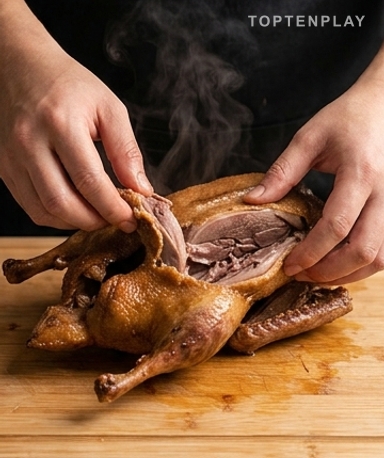
Debone while the duck is still warm—it’s now or never
Once the duck is off the heat, let it cool for 20 minutes. Just enough to handle it without burning yourself. Deboning is the part that intimidates people but is learned quickly. The braised meat almost falls off the carcass. Start with the legs, then the wings, then run your fingers along the spine—you’ll feel the joints let go one by one. The goal is to recover the duck in one flattened piece, not perfect but intact. Keep the carcass for stock.
Press, wrap, and let the fridge do the work tonight
Spread the deboned duck flat, skin side down. Cover with plastic wrap, place a board on top, then something heavy—a bottle of oil, a tin can. The idea is to flatten it uniformly to achieve a steady thickness of about 3 centimeters. In the fridge with the weight on top, all night. The next morning, the duck will be firm, dense, cold. Perfect.
Bread in order and wait 5 minutes before diving into the oil
Cut the pressed duck into wide slices of 4 to 5 centimeters. Dredge each slice in cornstarch, then in beaten egg, then again in cornstarch. This double layer is what gives it the thick, crunchy crust. After breading, let the slices rest for 5 minutes flat—the starch adheres better and won’t fall off during frying. Heat the oil to 175°C. Not by eye—use a thermometer if you can.
Stir-fry the vegetables at maximum heat, then serve immediately
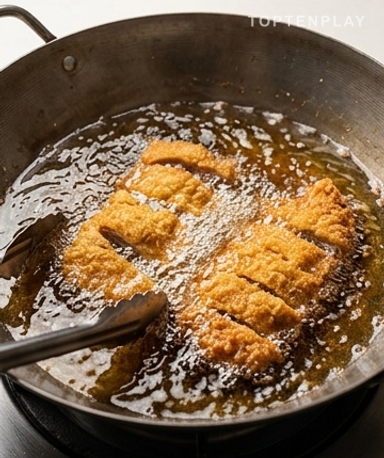
Frying first: submerge the breaded slices for 3 to 4 minutes, until the crust is golden like light caramel—not too dark, not pale. Drain on paper towels. Meanwhile, in a wok over very high heat, sauté the vegetables—julienned carrots, snow peas, mushrooms—with a little soy sauce and a spoonful of diluted cornstarch to bind. It should hiss loudly in the wok. Arrange the vegetables on the plate, place the duck slices on top, add the toasted almonds. Eat immediately.
Tips & Tricks
- Use the smallest pot possible for braising—the duck should fit almost snugly. The less space there is, the less liquid you need, and the more concentrated and fragrant the base becomes.
- Whatever you do, don’t throw away the braising liquid. Filter it, let it cool, remove the solidified fat from the surface, then freeze in portions. It’s a base that can be used for other dishes or for braising a future duck—it will be even better.
- For frying, work in small batches: 4 to 5 slices maximum at a time. Too many pieces at once drops the oil temperature, and the crust becomes soggy instead of snapping.
- If making this recipe for 4 or more people, prepare two ducks simultaneously—same braising, same sauce, same time. You can freeze the uncooked breaded slices for next time.
Can Wor Shu Duck be prepared in advance?
It’s actually recommended. The duck is braised and deboned the day before, then pressed all night in the fridge. The next day, only breading and frying remain. You can even freeze the uncooked breaded slices, wrapped individually, and fry them directly from the freezer by adding 2 minutes to the cooking time.
How do I know if the duck is braised enough?
The meat should easily pull away from the carcass without force—the joints almost let go on their own when pulled gently. If the duck still resists, give it 10 more minutes on each side. An under-braised duck is hard to debone and remains tough after frying.
Can I pan-fry instead of deep-frying?
Yes. Pour 1.5 cm of oil into a large pan heated to 175°C and fry the slices for 3-4 minutes per side. The result is slightly less uniform than deep-frying but perfectly satisfying, and it uses much less oil.
Can I use chicken instead of duck?
Absolutely—it’s actually the most common version in the US, known as Wor Shu Gai. You would use whole legs or thick breasts. The braising time drops to 40-50 minutes and deboning is much simpler.
What should I do with the braising liquid after cooking?
Don’t throw it away. Filter, let cool, remove the fat from the surface, then freeze in portions. This fragrant star anise and soy base can be reused for a future duck or for braising other poultry—it gets richer with every use.
The breading fell off during frying—what happened?
Two possible causes: the oil wasn’t hot enough when adding the slices (below 165°C the crust absorbs oil instead of searing), or the slices didn’t rest for 5 minutes after breading. This rest time is short but crucial for the starch to properly adhere to the duck’s surface.
Wor Shu Duck — Cantonese Crispy Almond Duck
Chinese
Main course
Whole duck braised with spices, deboned, pressed overnight, then breaded and fried until achieving a snapping crust. Served over stir-fried vegetables and toasted flaked almonds.
Ingredients
- 1 whole (~2 kg) duck
- 2 tbsp neutral oil (+ oil for frying)
- 5 slices fresh ginger
- 3 spring onions
- 3 star anise stars
- 1 tsp salt
- 1 tbsp sugar
- 60ml light soy sauce
- 30ml dark soy sauce
- 500ml chicken stock
- 400ml water
- 120g cornstarch (for breading)
- 2 beaten eggs
- 200g julienned carrots
- 150g snow peas
- 150g sliced button mushrooms
- 1 tbsp light soy sauce (for the wok)
- 1 tsp cornstarch (to bind the wok)
- 50g flaked almonds
Instructions
- 1Rinse the duck inside and out. Remove the wing tips.
- 2In a pot barely larger than the duck, sauté ginger, spring onions, and star anise in oil over medium heat for 2 minutes.
- 3Add light soy sauce, dark soy sauce, stock, water, salt, and sugar. Bring to a boil.
- 4Gently lower the duck into the pot, ensuring there are no air pockets in the cavity. Cover.
- 5Simmer on low heat for 20 minutes, flip, 20 minutes on the other side—repeat for a total of 80 minutes (twice per side).
- 6Remove the duck from the pot. Let cool for 20 minutes. Debone completely by hand, starting with the legs then the spine.
- 7Spread the deboned duck flat, skin side down. Cover with plastic wrap, place a board and a weight on top. Refrigerate overnight.
- 8The next day, cut the pressed duck into slices 4 to 5 cm wide.
- 9Dredge each slice in starch, then in beaten egg, then again in starch. Let rest for 5 minutes.
- 10Heat frying oil to 175°C. Fry slices in batches, 3 to 4 minutes, until a light caramel golden hue is achieved. Drain on paper towels.
- 11Dry-toast the flaked almonds in a pan over medium heat for 2 minutes while stirring. Set aside.
- 12In a wok over very high heat, stir-fry carrots, snow peas, and mushrooms with oil, soy sauce, and the starch diluted in 2 tbsp of water, for 3 minutes.
- 13Arrange vegetables on plates, place duck slices on top, and garnish with toasted almonds. Serve immediately.
Notes
• Make ahead: the duck can be braised, deboned, and pressed up to 2 days in advance in the refrigerator. Uncooked breaded slices can be frozen individually—fry directly from frozen adding 2 minutes.
• Braising broth: filter, degrease, and freeze after use. It gets richer with every duck and can be used indefinitely.
• Chicken variant (Wor Shu Gai): replace duck with 4 chicken legs. Braising time reduced to 40-50 minutes, deboning is simpler.
Nutrition Facts (per serving, estimated)
| 590 kcalCalories | 42gProtein | 27gCarbs | 34gFat |