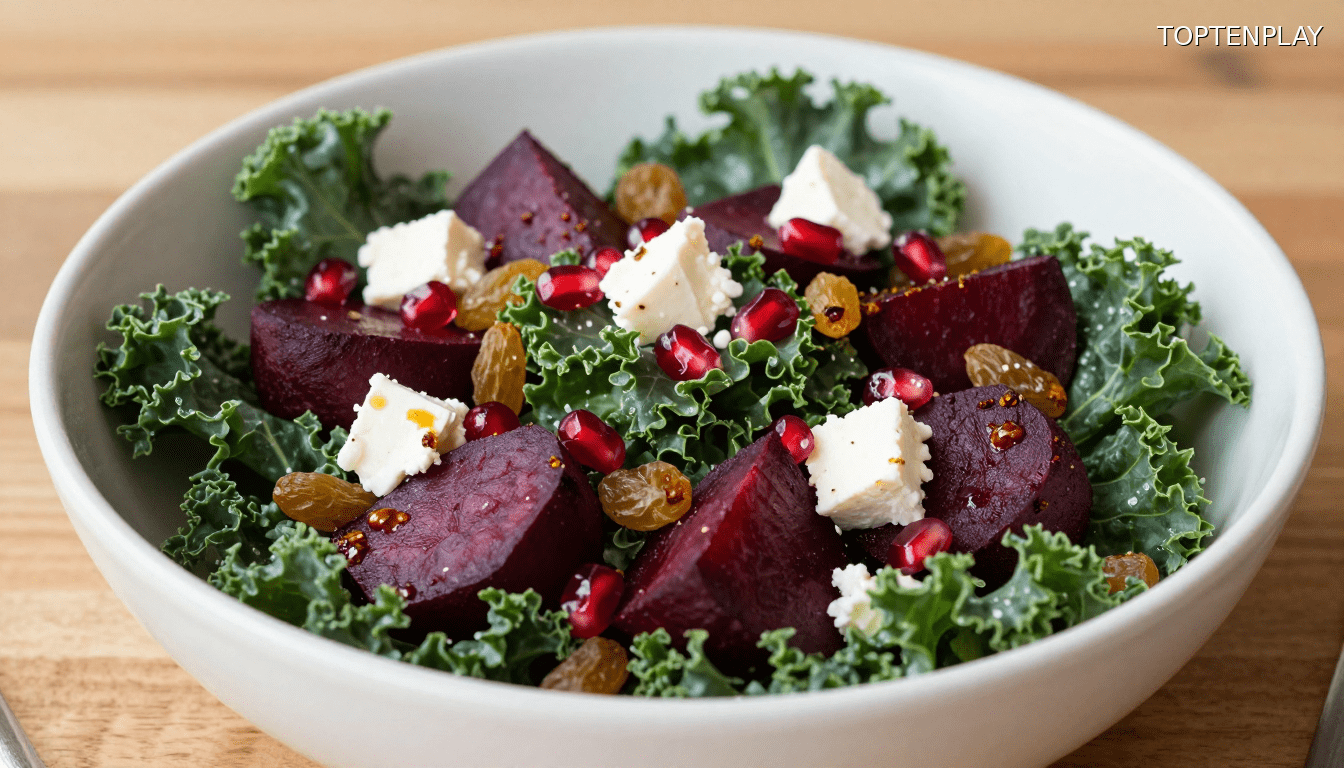
The Fundamentals Of A Gourmet Winter Salad
This roasted beet and kale salad is the perfect answer to cravings for freshness and comfort during the cold months. Classified as easy difficulty level, it is prepared in 1 hour 20 minutes for four guests, combining 20 minutes of active preparation and one hour of passive cooking for the beets.
The strength of this recipe lies in its balance between noble and accessible ingredients. Kale, the flagship winter vegetable, combines with roasted beets to create a robust plant-based base. The enrichment with crumbled feta, vibrant pomegranate seeds, and soft raisins transforms the whole into a gourmet composition with multiple textures.
Its versatility is its main asset: this salad works equally well as a generous starter or a refined accompaniment for roasted meats or grilled fish. The 30 grams of walnuts add the essential crunch, while the 50 grams of feta provide the salty creaminess that binds everything together.
The technical accessibility allows cooks of all levels to succeed with this winter preparation. No special skills are required, simply respecting the cooking times and paying attention to the final assembly. This simplicity of execution sacrifices nothing of the taste sophistication of the result.

The Beet Roasting Technique
The secret of this preparation lies in an ancestral cooking method: roasting in foil. The red beets, individually wrapped in aluminum foil, are placed in an oven preheated to 200°C for a full hour of cooking. This technique preserves the vegetable’s natural moisture while concentrating its sugars through progressive caramelization.
The transformation happens slowly: the starch converts into sweet softness, the firm flesh becomes melting under the knife blade. The indicator of perfect cooking is checked by simple pressure – the beet should give way without resistance. This passive process frees the cook to prepare the other components of the salad.
Once out of the oven, the beets require cooling time before handling. The skin, once adherent, then detaches with disconcerting ease, sliding between the fingers effortlessly. This step prevents burns and greatly facilitates peeling, unlike the tedious work on raw beets.
The final cutting into large cubes respects the rustic aesthetic of the recipe. These generous pieces, still lukewarm or completely cooled according to preference, retain their velvety texture while offering a strong visual presence on the plate. Their deep purple hue will subtly color the other ingredients during mixing, creating a natural chromatic harmony that already announces the taste richness of the whole.

Assembling Fresh And Textured Ingredients
The cooled beets now join a base of 80 grams of kale previously washed, whose veined leaves provide a resistant crunch. This cruciferous vegetable, often shunned raw, reveals here its ability to structure a winter salad without yielding to the moisture of the other components.
Fresh parsley, coarsely chopped, acts as the first aromatic correction. Its herbaceous notes counterbalance the earthy sweetness of the beets. Then come the raisins, whose sweet softness contrasts with the firmness of the kale, while the pomegranate seeds burst in the mouth, releasing their tangy juice with every bite.