📌 White patina on glasses: baking soda and two other solutions to give them back all their brilliance
Posted 29 December 2025 by: Admin
The Formation Of White Patina: Understanding The Phenomenon
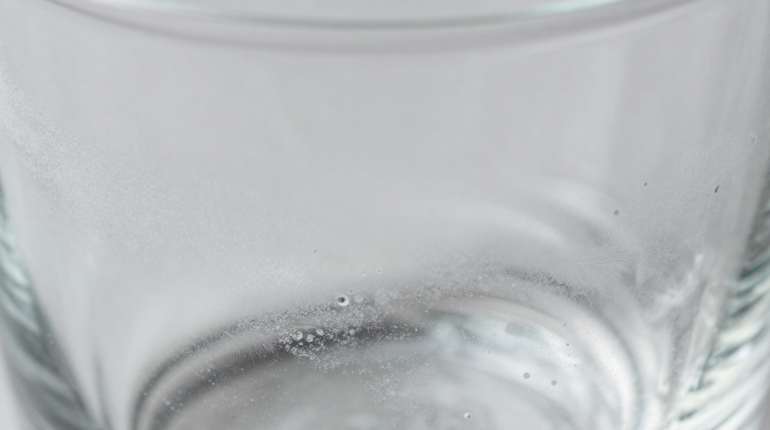
Glass, a noble material par excellence, undergoes a progressive transformation that alters its natural transparency. This degradation manifests as the appearance of a whitish film that veils the original brilliance of the glassware, a phenomenon that every glass owner has already noticed.
The origin of this deterioration lies in two specific factors: the limescale present in the washing water and the corrosion of the glass itself. These elements gradually accumulate on the surface, forming an opaque layer that resists conventional cleaning. The problem intensifies particularly when using the dishwasher, where high-temperature washing cycles favor the encrustation of mineral deposits.
Dishwashers, despite their apparent efficiency, paradoxically constitute an aggravating factor. The high temperatures and chemicals used create conditions conducive to the formation of this stubborn patina, which automatic programs then struggle to eliminate. The glass thus gradually loses its crystalline clarity, taking on this characteristic frosted appearance.
This alteration is not, however, irreversible. Understanding the mechanism of white patina formation is the first step toward its definitive neutralization, opening the way to targeted solutions capable of restoring the lost brilliance.
Traditional Solutions For Routine Maintenance
Faced with this degradation, several classic maintenance products emerge as immediate reflexes. Black soap, an ancestral product with recognized degreasing properties, is among the most proven solutions for maintaining the cleanliness of glassware. Dish soap, omnipresent in our kitchens, offers a simple alternative for effective daily cleaning.
Natural solutions also appeal to many users. Lemon juice, thanks to its acidity, helps dissolve certain superficial deposits while leaving a fresh scent. White vinegar, a true ally of ecological cleaning, acts similarly by attacking light limescale residues. These methods have the advantage of being economical and environmentally friendly.
However, these conventional approaches quickly reveal their limits when faced with truly frosted glass. While they are perfectly suited for regular maintenance and prevent the progressive accumulation of dirt, they struggle to eliminate deeply embedded white patina. Glass that has lost its crystalline brilliance requires a more targeted intervention, capable of treating mineral deposits firmly anchored in the glass surface.
This observation makes it necessary to seek techniques specifically designed to restore the original brilliance, capable of acting where traditional methods fail.
The Baking Soda Method: The Revealed Solution
This search for efficiency finds its answer in a substance as common as it is unsuspected: baking soda. Identified as one of the three most effective methods for treating dull glass, this versatile product radically transforms the approach to deep cleaning. Its fine crystalline structure acts as a gentle abrasive, capable of dislodging the white patina without scratching the delicate surface of the glass.
Unlike routine maintenance solutions that clean superficially, baking soda directly attacks the embedded mineral deposits responsible for opacity. Its slightly alkaline chemical action gradually dissolves solidified limescale residues, while its mechanical power polishes the glass to restore its original transparency. This dual action – chemical and mechanical – explains why this technique clearly surpasses conventional methods.
The effectiveness of baking soda is particularly evident on glasses that have undergone multiple machine wash cycles. Where white vinegar and lemon show their limits, this white powder manages to peel and restore the glass by eliminating accumulated layers of corrosion. Its use requires no sophisticated equipment or special skills, making this solution accessible to everyone.
This accessibility combined with its formidable effectiveness makes baking soda the indispensable ally for bringing faded glassware back to life, opening the way to a spectacular transformation of opaque glasses into sparkling pieces worthy of the finest tables.
Practical Application And Expected Results
This spectacular transformation materializes immediately upon the first use. Prepare a paste by mixing three spoons of baking soda with a few drops of water until you obtain a creamy consistency. Apply directly to the opaque areas of the glass using a soft cloth, making circular movements for two to three minutes. The white patina gradually dissolves before your eyes, revealing the transparency buried under the limescale deposits.
Rinsing with lukewarm water washes away the detached residues and reveals a transformed glass. The dull and frosted appearance disappears completely, replaced by a crystalline brilliance that catches and reflects light as it did on the first day. The unwanted white spots vanish without a trace, restoring the glass to its original clarity.
This rebirth is particularly noticeable when receiving guests. Glasses once relegated to the back of the cupboard find their place on the table again, displaying an impeccable transparency that enhances the drinks served. The liquid inside appears clearer, the colors more vivid, the overall effect more refined.
The effectiveness of baking soda is proven even on the most damaged glasses from years of machine washing. A single application is generally sufficient for average cases, while the most stubborn deposits sometimes require a second pass. This complete regeneration definitively transforms your daily glassware into a service worthy of great occasions.