White asparagus with mimosa sauce is the kind of dish people order at restaurants thinking it’s complicated to recreate at home. The reality: twenty minutes of prep, five basic ingredients, and a plate that looks as impressive as a dish cooked for two hours.
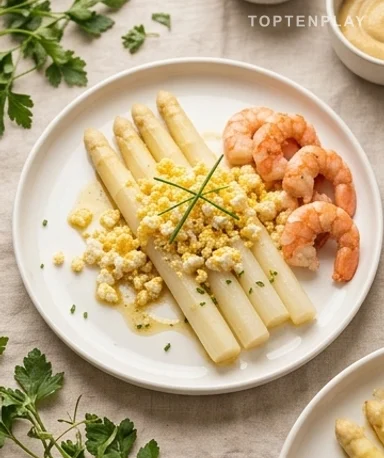
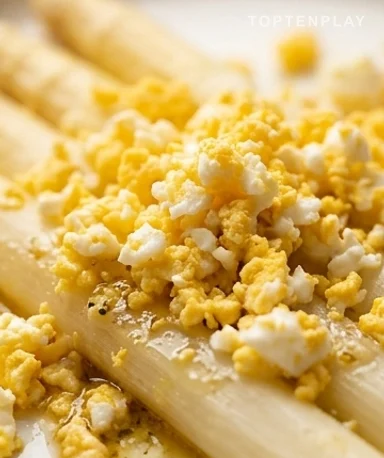
Imagine the asparagus arranged in a fan shape, their pearly white stalks slightly tinted ivory after cooking. Over them, a pale yellow snow of crumbled mimosa egg, sprinkled with bright green chives. The vinaigrette glitters in fine droplets on the tips. It smells of mustard, fruity oil, and that slightly earthy vegetable scent unique to fresh asparagus—the smell of spring on a plate.
Why you’ll love this recipe
Ingredient Notes
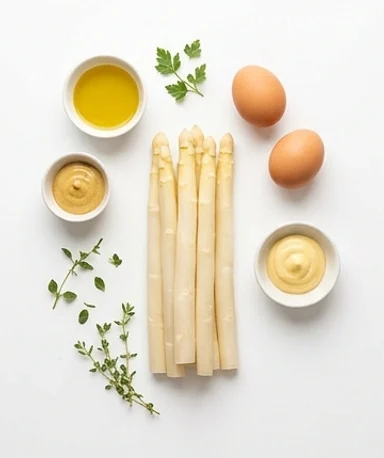
All ingredients assembled: fresh white asparagus, eggs, olive oil, mustard, and fresh herbs for a homemade mimosa sauce.
- White asparagus : Choose firm stalks without brown marks at the base. The thicker they are, the meatier they are—which is what we want here. Thin ones are good for the pan, but for a mimosa sauce starter, we want volume. If you can bend them slightly without them snapping clean, they are fresh.
- Eggs : Fresh, medium-sized eggs. For a successful mimosa effect, the key is to pass the yolk through a fine mesh or grate it with a microplane. You get this golden powder texture like pollen, much prettier than chunky bits.
- Mustard : Mild, not strong. Classic Dijon mustard works very well but can dominate if you use too much. A teaspoon is enough—it’s not a condiment here, it’s a binder for the emulsion.
- Olive oil : Pick a fruity oil, not too bitter. An oil that is too powerful will overwhelm the delicacy of the asparagus. If you only have very strong olive oil at home, cut it half-and-half with a neutral oil like sunflower.
- Shrimp (optional) : If you want to turn the starter into a more substantial dish, add cooked and chilled shrimp when plating. Their coral-pink flesh contrasts beautifully with the white of the asparagus. Pre-peeled shrimp from the deli section work perfectly.
Peeling: no way around it
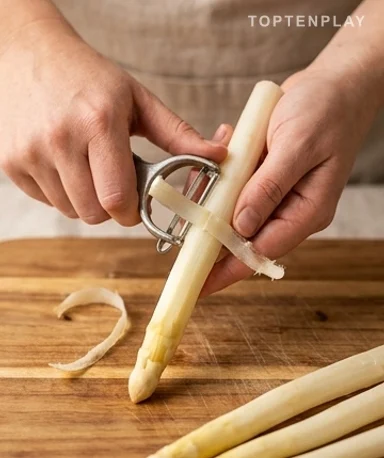
Unlike green asparagus, white ones don’t forgive if you skip the peeling. Their skin is fibrous, almost woody—biting into it without removing it is like chewing cardboard. Take a peeler, start just below the tip and move down towards the base with light pressure. You need to remove a fairly thick layer, not just scratch the surface. Under your fingers, the flesh becomes smooth, almost moist, like a vegetable finally breathing. Then break the end by bending: the stalk will snap naturally where it becomes too tough. No knife needed for this.
Cooking: a matter of minutes
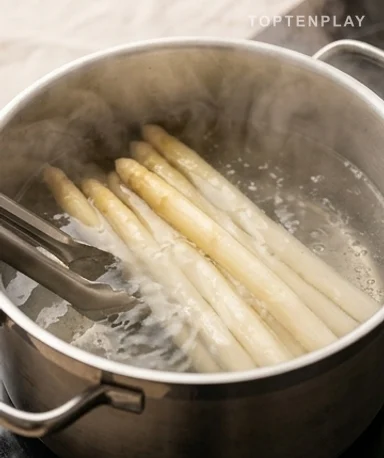
A large pot of well-salted water—salty like a light sea spray, not the Dead Sea. Bring to a boil, then gently submerge the asparagus. They cook for 15 to 20 minutes depending on thickness: a thin stalk will be ready in 12 minutes, a thick one might take 22. The tip of a knife should slide in easily without the stalk collapsing. Somewhere in between is perfect. Drain and let cool flat—definitely not stacked, as that squashes and marks them. If preparing in advance, the fridge is your best friend.
Two-minute vinaigrette
In a bowl, mustard first, then vinegar. Mix. Then olive oil in a steady stream while whisking—this movement creates the emulsion that holds the sauce together. The result should be slightly opaque, not translucent like pure oil: that’s the sign the sauce has emulsified. A vinaigrette that’s too liquid slides off the asparagus without sticking; a well-emulsified vinaigrette coats them cleanly. Taste, adjust salt, and add a crack of freshly ground black pepper.
Mimosa egg: the detail that changes everything
The eggs have cooked for exactly 9 to 10 minutes in boiling water. Not a minute more—otherwise the yolk turns greenish-gray and it’s a visual failure. Plunged into cold water as soon as they’re off the heat, they peel without resistance. Separate the whites from the yolks. Finely dice the whites into regular pieces. For the yolks: pass them through a fine mesh or grate them gently. You get a powder as yellow as saffron, light, falling onto the asparagus like a thin layer of colored snow. That’s the mimosa.
Tips & Tricks
- Don’t cook your asparagus in too little water: they need to swim freely. A well-filled large pot ensures even cooking and prevents the tips from cooking faster than the bases.
- Prepare everything the day before: cooked and cooled asparagus, vinaigrette in a closed jar, peeled eggs separated into two small bowls in the fridge. On the day, ten minutes of plating and you’re done.
- For an even neater presentation, arrange the asparagus alternating the tips in the same direction, brushing the vinaigrette on rather than spooning it—this avoids puddles and gives a much cleaner finish.
How do I know if the asparagus are properly cooked?
Slide the tip of a knife into the thickest part of the stalk. It should go in without forcing, but the stalk should not bend or collapse completely. If it still resists a bit, give it another 2 minutes. Overcooked, they lose their texture and color.
Can this recipe be prepared the night before?
Yes, it’s actually recommended. Cook the asparagus, prepare the vinaigrette in a closed jar, and store the crumbled eggs separately in covered bowls in the fridge. On the day, only plating remains—ten minutes max.
Can frozen white asparagus replace fresh ones?
Technically yes, but the result is different. Frozen ones release more water when cooking and have a softer texture. If you have no choice, reduce cooking time by 5 minutes and drain them carefully before plating.
How do I achieve the real mimosa effect on the eggs?
The key is the tool. Pass the yolk through a small kitchen mesh or grate it with a microplane grater—you’ll get a fine, light powder that falls like snow. With a fork, you only get coarse lumps that don’t have the same visual impact.
Can I replace white asparagus with green asparagus?
Absolutely. Green asparagus don’t need peeling and cook twice as fast (8 to 10 minutes). The taste is slightly more herbaceous and pronounced, but the mimosa sauce pairs very well with them.
Can the vinaigrette be prepared in advance?
Yes, up to 3 days in the refrigerator in a closed jar. It will separate while sitting, which is normal—just shake vigorously or whisk for 30 seconds before serving to restore the emulsion.
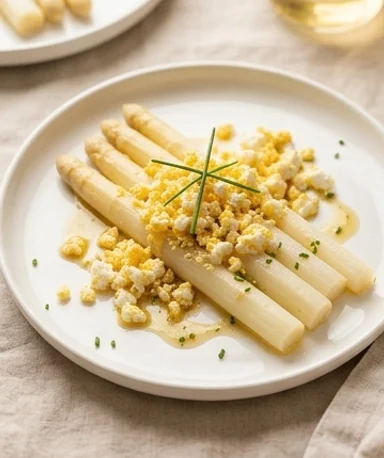
White Asparagus with Mimosa Sauce
French
Starter
An elegant, stress-free spring starter: tender white asparagus, a light vinaigrette, and homemade mimosa egg that changes everything.
Ingredients
- 20 large white asparagus (approx. 900g)
- 2 eggs
- 60ml (4 tbsp.) fruity olive oil
- 30ml (2 tbsp.) white wine vinegar
- 5g (1 tsp.) mild mustard
- 1 pinch salt
- 1 turn ground black pepper
- 8 large cooked peeled shrimp (optional)
- few sprigs chopped chives (optional)
- few leaves salad for plating (optional)
Instructions
- 1Place eggs in a pot of cold water, bring to a boil, and cook for exactly 9 to 10 minutes. Drain and cool immediately in a bowl of cold water.
- 2Peel the asparagus with a vegetable peeler from the tip to the base. Break the foot of each stalk by bending—it will snap naturally at the tough part.
- 3Bring a large pot of salted water to a boil. Submerge the asparagus and cook for 15 to 20 minutes depending on size, until a knife tip enters without resistance.
- 4Drain the asparagus and let them cool flat. Store in the refrigerator if preparing in advance.
- 5Prepare the vinaigrette: whisk mustard and vinegar in a bowl, then slowly add olive oil while whisking until a slightly opaque emulsion forms. Season with salt and pepper.
- 6Peel the cooled eggs. Separate whites from yolks. Finely dice the whites. Pass the yolks through a fine mesh or grate them to obtain a light powder.
- 7Arrange asparagus on plates, coat with vinaigrette, and sprinkle with egg whites then mimosa egg yolks. Garnish with chives and shrimp if desired.
Notes
• Advance preparation: all elements (asparagus, vinaigrette, eggs) can be prepared separately the day before and stored in the fridge. Plate up at the last moment.
• Storage: cooked asparagus keep for 24h in the fridge, well covered. Beyond that, they soften and lose their texture.
• Express variation: replace white wine vinegar with cider vinegar for a fruitier note, or add a few rinsed capers to the vinaigrette for a bolder character.
Nutrition Facts (per serving, estimated)
| 205 kcalCalories | 8gProtein | 7gCarbs | 17gFat |