📌 Walnuts and longevity: how 14 kernels a day improve brain, heart and microbiome according to doctors
Posted 16 February 2026 by: Admin
Walnuts, A Nutritional Treasure With Ancient Virtues Confirmed By Science
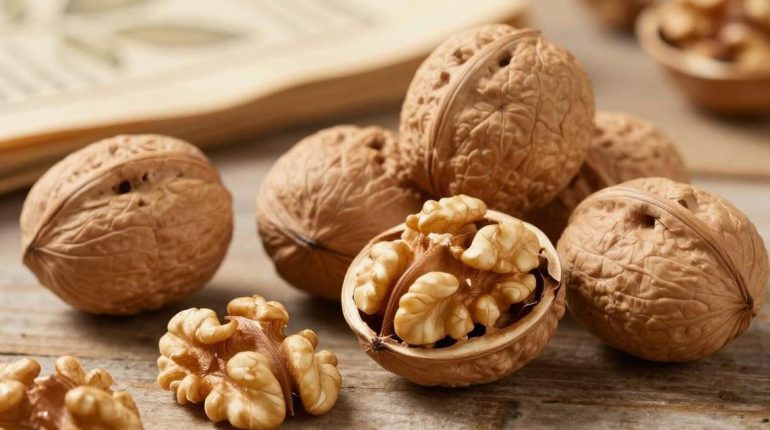
Long before laboratories scrutinized their molecular composition, walnuts held a prominent place in ancestral pharmacopoeias. From the ancient Mediterranean to Persian traditions and Indian Ayurveda, this nut has crossed centuries haloed by a persistent therapeutic reputation. Its shape, evoking cerebral convolutions, is not coincidental: in many cultures, it symbolized wisdom and clarity of mind, making the walnut tree a tree revered for its supposed cognitive properties.
Today, this ancient intuition finds unexpected validation in scientific publications. Research conducted by international medical teams reveals measurable benefits across three major axes: brain function, cardiovascular health, and the diversity of the gut microbiota. What healers prescribed empirically, neurobiologists and cardiologists now quantify with precision.
This convergence between traditional knowledge and contemporary discoveries places walnuts in a category of their own among nuts. Where other varieties excel in a specific nutritional field, walnuts combine a palette of bioactive compounds that explain their therapeutic versatility. A peculiarity that is only just beginning to be fully understood by the scientific community.
An Exceptional Nutritional Composition That Sets Walnuts Apart
This therapeutic versatility is explained by a unique nutritional profile. Walnuts stand out for a characteristic that no other nut shares to the same degree: they are the only significant plant source of alpha-linolenic acid (ALA), an essential omega-3 that the body does not synthesize. Where almonds, hazelnuts, and pistachios shine with their minerals, walnuts provide this polyunsaturated fat rare in the plant kingdom.
Their richness goes far beyond that. Polyphenols are particularly concentrated in that thin, brownish, slightly bitter skin that many remove out of habit. A strategic error: that is precisely where the superior antioxidant power compared to other common varieties resides. Comparative analyses consistently place walnuts at the top of the nuts for their ability to neutralize free radicals.
A standard 28-gram portion—about fourteen kernels—delivers 185 calories, 4 grams of protein, 2 grams of fiber, and 2.5 grams of ALA. This last figure fully covers daily female needs and three-quarters of male needs. To this nutritional density are added magnesium, copper, and vitamin E, forming a cocktail of micronutrients that scientifically explains what traditional medicines intuitively sensed. It remains to be understood how these compounds act concretely on the body.
Five Scientifically Proven Effects Of Regular Consumption
These micronutrients do not remain inert after ingestion. Their action translates into measurable effects that medical research documents with increasing precision. Doctors now identify five major benefits, validated by rigorous protocols and longitudinal studies on significant cohorts.
The first—and probably the most studied—concerns brain health and cognitive functions. ALA omega-3s cross the blood-brain barrier to integrate into neuronal membranes, improving their fluidity and facilitating synaptic transmission. Several clinical trials have shown that regular consumers have higher scores on working memory and information processing speed tests. Polyphenols, for their part, exert anti-inflammatory protection on nervous tissues, potentially slowing age-related cognitive decline.
The cardiovascular system simultaneously benefits from documented protection: reduction of LDL cholesterol, improvement of endothelial function, decrease in blood pressure in subjects at risk. But it is the recent discovery regarding the gut microbiota that particularly intrigues researchers. Walnuts are thought to promote digestive bacterial diversity, creating an environment conducive to anti-inflammatory strains. This triple action—brain, heart, gut—could explain the epidemiological observations associating regular consumption with increased longevity.
Precautions To Know Before Consuming Walnuts In Quantity
These impressive benefits do not, however, justify unrestrained consumption. Doctors insist on a vital distinction: that which separates marketing promises from physiological realities. While walnuts are undeniably a functional food, their caloric density—185 calories for a 28-gram handful—requires measured integration into the daily dietary balance.
The medical recommendation converges toward a daily portion of 30 grams maximum, or about 14 kernels. Beyond that, lipid intake, even of excellent quality, unbalances the energy balance without proportionally improving health markers. Studies showing optimal cardiovascular effects never exceed 40-50 grams per day—a ceiling that would be counterproductive to cross regularly.
Certain populations must exercise increased vigilance. People on anticoagulants require medical monitoring, as the vitamin K present in walnuts can interfere with certain treatments. Individuals suffering from nut allergies must obviously exclude this food entirely. Finally, prioritizing unsalted and unroasted walnuts preserves the integrity of polyunsaturated fatty acids, which are sensitive to thermal oxidation.
The rational approach therefore consists of integrating walnuts as a component of a diversified diet, not as an isolated panacea. This nuance determines the boundary between real therapeutic benefit and disproportionate nutritional hope.