Egg coffee is one of the few culinary trends that truly deserves your attention. Not because it’s exotic or instagrammable — but because it has worked, for decades, in Hanoi. Two main ingredients, five minutes, and your morning completely changes gear.
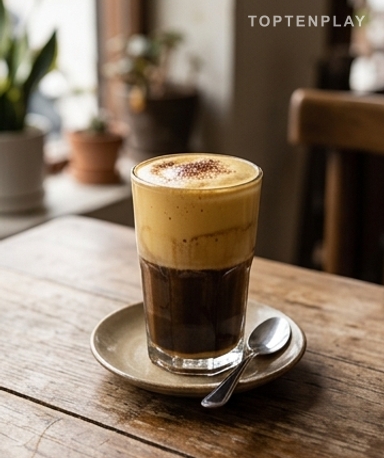
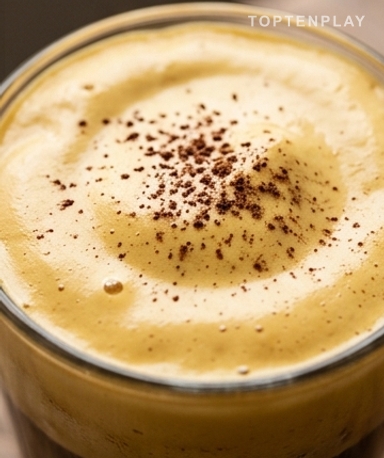
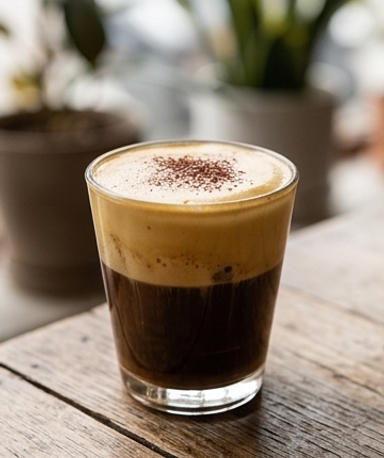
In the glass, the separation is clear. Below, the dark coffee, almost black. Above, a layer of pale yellow foam — thick as a light custard — that holds its shape and doesn’t collapse. When you bring the glass close, the aroma surprises: the coffee is there, but with something round, almost buttery, vaguely reminiscent of a warm sabayon. The first sip blends both layers; the bitterness of the coffee hits first, then the velvety sweetness of the egg rounds everything off like a fade to black.
Why you’ll love this recipe
Ingredient Notes
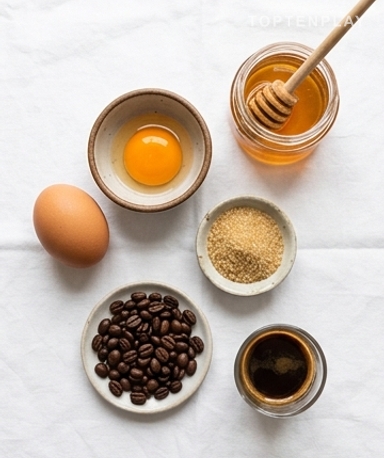
Everything you need for an egg coffee: a very fresh yolk, honey or sugar, and a good strong espresso.
- Egg yolk : The only ingredient where quality really changes everything. A deep orange yolk — a sign of a hen that ate real food — gives a richer, more colorful foam than a pale, anemic one. Buy fresh, free-range eggs if possible. Avoid eggs older than a week for this kind of raw or semi-cooked preparation.
- Coffee : It needs to be strong. An espresso is ideal. A strong Moka pot coffee works very well too. Avoid light filter coffee — the foam would overpower its taste. Rule of thumb: if your ordinary coffee seems too bitter alone, it will be perfect here.
- Sugar or honey : One to two teaspoons. Honey brings a floral note that pairs well with the egg. White sugar gives a more neutral result. Don’t skip this step — sugar isn’t just for sweetness, it helps the foam take shape and hold its structure.
- Cinnamon (optional) : A pinch on top just before serving. The warm, slightly peppery aroma of cinnamon complements the egg and coffee in a way that’s hard to explain but very pleasant. If you don’t have it, no big deal. If you do, don’t miss out.
It’s all in the whisking
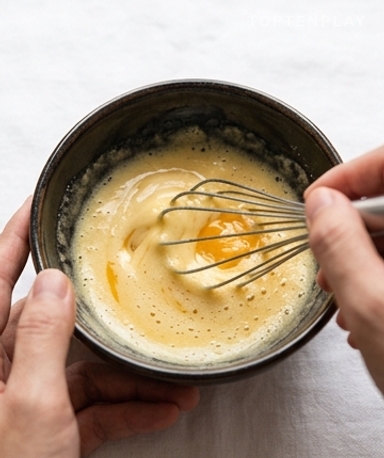
Crack the egg and separate the yolk from the white — the white isn’t needed here, save it for meringues or an omelet. In a small bowl, pour the yolk with your sugar or honey. Start whisking. At first, the mixture is liquid and slides everywhere under the whisk. After thirty seconds, it starts to change: the mixture pales, thickens, and becomes airy. After one to two minutes of sustained effort, you get a very pale yellow cream — almost the color of caramel at the very start of cooking — that holds onto the whisk without falling back. That’s exactly what you’re looking for. Not before.
Coffee, hot and uncompromising
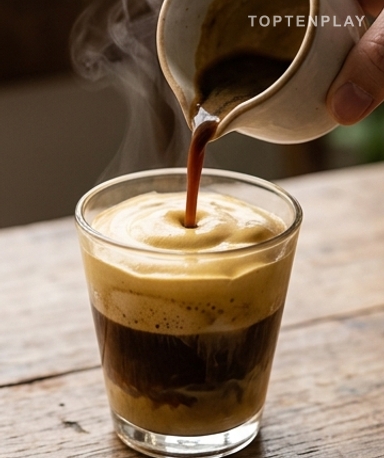
Prepare your espresso while the foam rests. It must be truly hot — not lukewarm, not reheated. It’s the heat of the coffee that will slightly cook the egg foam on contact, creating that texture close to custard. If you’re using a Moka pot, serve just after the coffee finishes rising, when it’s still spitting a bit of steam. A weak capsule coffee won’t hold up against the foam — the balance will be off.
The assembly, without rushing
Pour the hot coffee into your glass or cup. Spoon the egg foam on top gently. Keep the layers visible for a few seconds — visually, this is when you understand why the Vietnamese invented this. Sprinkle cinnamon if you have it. Drink immediately: the foam begins to liquefy after a few minutes of contact with the coffee. By stirring slightly before each sip, you mix the two layers and get a uniform, silky texture with that round, slightly sweet taste that softens every bitter sip.
Tips & Tricks
- An electric milk frother cuts preparation time in half — by hand it’s doable but you must whisk fast and without stopping, otherwise the foam never really rises. If you make this recipe often, the investment is worth it.
- If raw eggs worry you, buy pasteurized in-shell eggs — found in many supermarkets. The very hot coffee also partially cooks the foam surface on contact, which already reduces the risk.
- Never prepare the foam in advance. It holds for a few minutes in the bowl, but beyond that, it collapses and loses its texture. Make it just before serving — it’s a matter of two minutes, no more.
Is it dangerous to drink a raw egg in coffee?
Salmonella risk is real but very low — about 1 egg in 20,000. Very hot coffee partially cooks the foam surface on contact, further reducing exposure. For maximum safety, use pasteurized in-shell eggs.
Does it actually taste like egg?
No, not in the way you imagine. Whisked with sugar, the yolk takes on a texture close to sabayon or light custard — sweet, round, and creamy. The raw egg taste is completely gone if you whisk long enough.
How to do it without an electric whisk?
A manual whisk works great; you just need to whisk fast and continuously for 1 to 2 minutes. A battery-powered milk frother speeds up the process and costs less than ten euros — a good investment if you make this regularly.
What coffee should I use? Is espresso mandatory?
Espresso is ideal for its concentration, but a strong Moka pot coffee works very well. Avoid light filter coffee — the foam would overpower its taste, leaving the result unbalanced. Rule: the stronger the coffee, the better the balance.
Can I prepare the foam in advance?
No. The foam collapses quickly outside the coffee — after five minutes in the bowl, it already starts losing its texture. Always prepare it just before serving. The good news is it only takes two minutes.
Can you make an iced version?
Yes, very easily. Let the espresso cool completely, pour it over ice cubes in a tall glass, then spoon the egg foam on top without mixing. It’s particularly pleasant in summer and the foam holds well on cold coffee.
Vietnamese Egg Coffee (Cà Phê Trứng)
Vietnamese
Beverage
The traditional drink of Hanoi: a strong espresso topped with a foam of egg yolk whisked with honey. Creamy, round, and ready in five minutes.
Ingredients
- 1 fresh egg yolk (about 18g)
- 10g honey (or 8g white sugar, approx. 2 level tsp)
- 70ml strong espresso (1 shot)
- 20ml sweetened condensed milk (1 tbsp) — optional
- 1 pinch cinnamon powder — optional
Instructions
- 1Separate the yolk from the white. Place the yolk in a small bowl with the honey or sugar.
- 2Whisk vigorously for 1 to 2 minutes until you get a pale yellow foam, thick and airy, that holds its shape on the whisk.
- 3Prepare the very hot espresso (if using a Moka pot, serve immediately) and pour it into a cup or glass.
- 4Gently spoon the egg foam onto the coffee surface, keeping the layers visible.
- 5Sprinkle with a pinch of cinnamon if desired. Serve and drink immediately.
Notes
• The foam does not keep — it collapses quickly. Always prepare it just before serving.
• If you add sweetened condensed milk to the foam, reduce or omit the honey to avoid a drink that is too sweet.
• Iced version: let the espresso cool completely, pour over ice cubes, then add the foam on top without mixing.
Nutrition Facts (per serving, estimated)
| 90 kcalCalories | 3gProtein | 9gCarbs | 5gFat |