
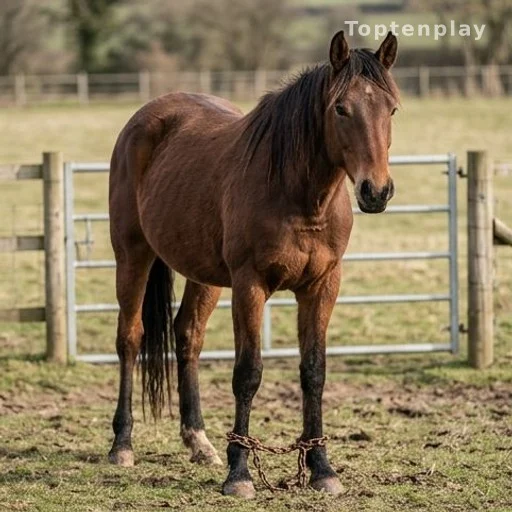
According to the source, this type of chaining is a technique still used in certain areas of Romania. While the practice may be familiar in some local contexts, its consequences for the animal in this case were severe, rendering the horse entirely immobile.
The discovery prompted Rosu to act immediately. The condition of the horse’s legs and skin made the situation urgent, requiring both careful handling and the right equipment to avoid making the animal’s distress worse.
Rosu uses tools to break the chains without adding to the horse’s pain
Faced with the horse’s condition, Ovidiu Rosu did not attempt to remove the chains by hand. Instead, he used dedicated tools to break them, taking care not to inflict additional pain on the animal’s already injured legs.
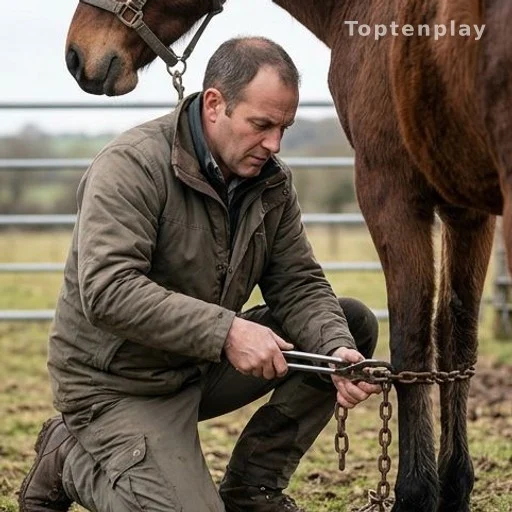
The approach required both precision and patience. The chains were wrapped around the horse’s limbs, meaning any rough or hasty movement could have worsened the wounds. Rosu’s method prioritized the animal’s comfort throughout the process.
Once the chains were removed, the veterinarian proceeded to treat the horse’s skin, which had been damaged by the prolonged restraint. The care provided on-site was described as part of the intervention carried out in collaboration with Four Paws, an international animal welfare organization.
A practice still present in parts of Romania
According to the source, chaining horses by their legs is a technique still used in certain areas of Romania. While the reasons behind the practice are not detailed in the account, its impact on animal welfare can be severe, as this case illustrates. Organizations like Four Paws work in the field to address such situations directly.
Four Paws collaboration behind the rescue operation
Four Paws is the international animal welfare organization with which Ovidiu Rosu collaborates. The group is known for intervening in cases of animal suffering across multiple countries, and this rescue in Romania appears consistent with that mission.
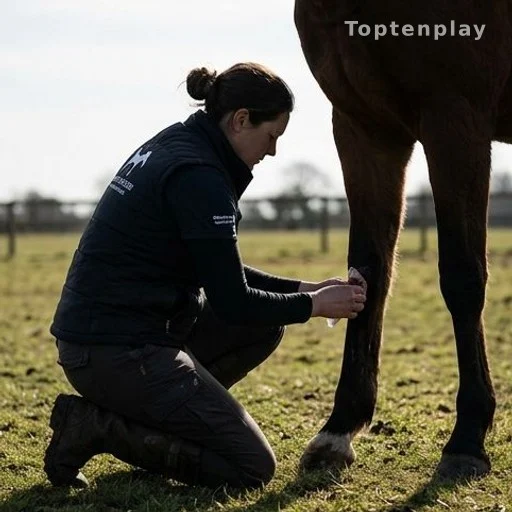
The involvement of an organized structure like Four Paws suggests the rescue was not an isolated act but part of a broader effort to address animal welfare issues in the region. The use of proper veterinary tools and post-rescue skin treatment points to a structured and professional intervention.
Suggested Posts

The study desk puzzle that tricks your brain into missing the obvious
A study desk with books, pens, and a lamp sounds like the easiest possible setting for a spot-the-difference puzzle. Yet that very familiarity is…