This is the kind of cake you bake on a Saturday afternoon, when you’re not in a hurry. When the apartment smells like vanilla and the oven hums gently in the background. A very tall sponge cake, it’s as simple as that — if you respect two or three things that change everything.
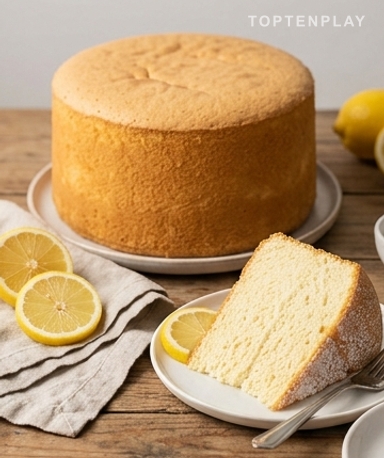
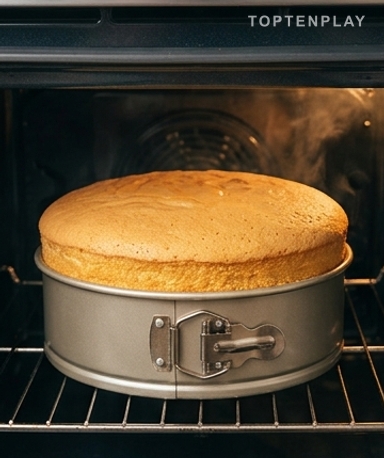
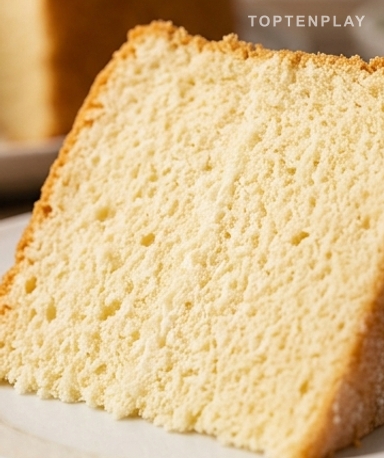
Look at that height. The cake comes out of the mold like a uniform tower, golden as a light caramel, without any brutal cracks on the surface. The crumb, when you lightly press your finger on the still warm top, springs back with the flexibility of a dense mousse. A scent of vanilla mixed with lemon zest escapes as soon as you get close. It’s not spectacular by accident — it’s a matter of technique, and it’s within everyone’s reach.
Why you’ll love this recipe
Ingredient Notes
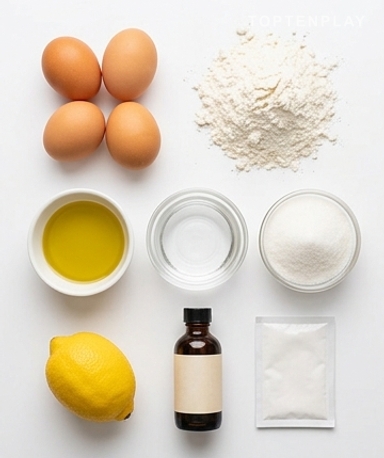
Simple and accessible ingredients — proof that a great cake doesn’t require an endless list.
- The eggs : They really do all the work here. It’s not the baking powder or the flour that gives the height — it’s the eggs beaten for a long time. Get them at room temperature, not straight out of the fridge: they whip up much better and higher.
- Olive oil : No butter in this recipe, it’s intentional. The oil keeps the crumb flexible and moist much longer. No need to take your best bottle — a mild, basic supermarket oil works just fine.
- Lemon zest : Grate it yourself, on a real yellow lemon. Jarred zest is pointless. The aromas are in the skin, not the juice, and it completely changes the perfume of the cake during baking.
- Flour : Sift it. Always. It takes 30 seconds, avoids stubborn lumps, and brings lightness to the batter. Ordinary T45 or T55 flour — nothing special.
- Vanilla extract : Not the artificial aroma that smells like plastic. Real vanilla extract, or a bean if you have one. You can clearly tell the difference: when the oven heats up, the smell in the kitchen will tell you if you made the right choice.
Why I never skimp on whipping anymore
This is really where everything happens. Crack the five eggs into a large bowl, add the sugar, and whisk. Long time. Not two minutes — rather eight to ten minutes with an electric mixer. The mixture should go from bright yellow to a pale ribbon, almost ivory white, which falls back forming thick folds when you lift the beaters. When you see this ribbon flowing like slow honey and leaving a trace that takes several seconds to disappear on the surface, you are in the right place. It’s this stage — and only this stage — that gives the cake its height. Not the baking powder. Not the flour. The whipped eggs.
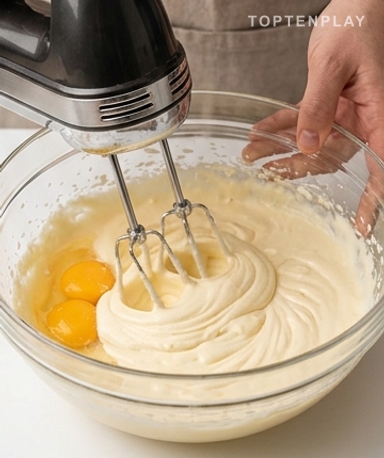
The part everyone fails — and makes everything fall flat
Once the aromas, water, and oil are delicately incorporated, comes the flour. And this is where many lose everything they just built. Sift the flour with the baking powder and salt in three additions, integrate it progressively, and mix with a spatula — never a mixer. Slow movements, from bottom to top, while turning the bowl in the other direction. No zeal. No impatience. The batter must remain voluminous, slightly unstable, with a few bubbles still visible on the surface. If it becomes smooth and dense like pancake batter, it’s too late — you’ve killed the air, and the cake will be flat.
55 minutes where you don’t touch anything
The oven at 170°C, no more. An oven that is too hot makes the cake rise too fast, cracks the surface, and makes it sag in the center — that disappointment we recognize at first glance. Pour the batter into the well-greased mold, lightly smooth the surface without pressing too hard, and close the oven. During the first 40 minutes, do not open the door. Cold air destabilizes the still-fragile structure forming. After 55 minutes, the tip of a knife inserted in the center comes out dry, the surface is a uniform golden brown and firm under the finger. Let cool in the mold for a good fifteen minutes before unmolding onto a wire rack — the crumb consolidates and the cut will be clean.
What to do with this cake once it’s cold
Plain, it’s already good. Thick-sliced with a black coffee, it needs nothing. But its real strength is what you can do with it once it’s on the rack. Cut into two or three regular discs, it holds everything — firm pastry cream, whipped cream made at the last moment, raspberry jam, chocolate ganache. Its tight and flexible crumb absorbs without collapsing or tearing. For a birthday, it’s the perfect base. And it prepares very well the day before: wrapped in plastic wrap at room temperature, it’s even better the next day.
Tips & Tricks
- Take the eggs out of the fridge 30 minutes before starting — at room temperature, they whisk much better and rise higher.
- Grease the walls of the mold well all the way to the top, not just the bottom: a failed unmolding can tear the whole height of the cake at once.
- If your oven tends to run hot, place a sheet of aluminum foil like a tent over the cake after 35 minutes to prevent the top from coloring too fast while the center finishes cooking.
- Wait until the cake is completely cold — not just warm — before cutting it into discs. When hot, the crumb compresses and the layers will never be neat.
Why does my sponge cake fall after baking?
It is almost always related to one of these three things: the oven opened too early during baking, eggs not whipped enough, or flour incorporated too vigorously which drives out the air. Respect the 40 minutes without opening the door, and mix the flour with a spatula using slow movements from bottom to top.
Can I replace the olive oil with melted butter?
Yes, it works. Use 30g of cooled melted butter instead of 25ml of oil. The crumb will be slightly denser and less moist the next day — oil keeps moisture better over time, but for a cake eaten the same day, the difference is minimal.
How to store this sponge cake?
At room temperature, wrapped in plastic wrap, it stays impeccable for up to 3 days. To freeze it, cut it into discs, wrap each disc separately in film then in a freezer bag — it keeps for 3 months and thaws in 2 hours at room temperature.
Is this cake suitable for a filled layer cake?
This is exactly what it is made for. Its dense and flexible crumb holds perfectly under the weight of a filling. Wait until it’s completely cold, cut it into regular discs with a bread knife, and fill with firm whipped cream, pastry cream, or jam.
Is an electric mixer absolutely necessary?
Yes, for this recipe. Whisking eggs and sugar by hand for 8 to 10 minutes is technically feasible but very physical, and the result will rarely be as voluminous. A basic hand mixer at 20 euros does the job perfectly.
Why is the cake well browned on the surface but still raw in the center?
The oven is too hot. At 170°C, the heat penetrates progressively and cooks uniformly — above 180°C, the surface colors before the center is set. If your oven heats strongly, place a sheet of aluminum foil like a tent over the cake after 35 minutes and extend the cooking by 5 to 10 minutes.
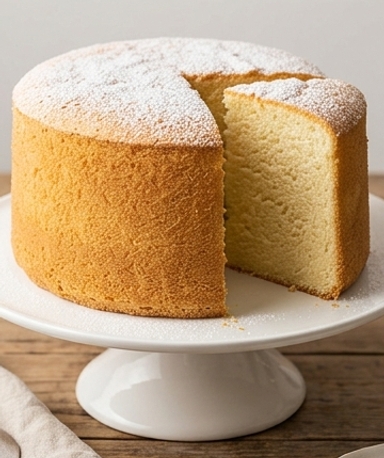
Very Tall and Ultra-Moist Sponge Cake
French
Dessert
A light sponge cake flavored with vanilla and lemon, with a flexible and well-risen crumb. Perfect plain or as a base for all your filled cakes.
Ingredients
- 5 eggs at room temperature
- 250g granulated sugar
- 250g flour (T45 or T55), sifted
- 8g baking powder
- 1 pinch salt
- 50ml water
- 25ml mild olive oil
- 1 tsp. vanilla extract
- 1 yellow lemon (zested)
- q.s. butter or non-stick spray for the mold
Instructions
- 1Preheat the oven to 170°C (fan oven). Generously grease a tall round mold (20-22cm) and lightly flour the sides.
- 2Crack the eggs into a large bowl. Add the sugar and whisk with an electric mixer for 8 to 10 minutes, until you obtain a pale, very voluminous mixture that falls back in a thick ribbon.
- 3Add the vanilla extract, grated lemon zest, water, and olive oil. Fold in delicately with a spatula so as not to break the volume.
- 4Sift together the flour, baking powder, and salt. Add them in 3 additions to the mixture, folding in with a spatula using slow movements from bottom to top. Stop as soon as the flour is incorporated.
- 5Pour the batter into the mold and lightly smooth the surface. Bake for 55 minutes without opening the oven during the first 40 minutes.
- 6Check the doneness with the tip of a knife — it should come out clean and dry. Let cool for 15 minutes in the mold, then unmold onto a wire rack and let cool completely.
Notes
• Storage: wrapped in plastic wrap at room temperature, the cake keeps for 3 days. It can also be frozen in separate discs for up to 3 months.
• For a layer cake: cut the completely cold cake into 2 or 3 discs with a bread knife. Fills perfectly with firm whipped cream, pastry cream, or jam.
• Variations: replace the lemon zest with orange zest, or substitute 30g of flour with 30g of sifted cocoa for a chocolate version.
Nutrition Facts (per serving, estimated)
| 310 kcalCalories | 7gProtein | 57gCarbs | 6gFat |