📌 Used baking sheets: 10 practical transformations to avoid waste (magnetic boards, serving trays and more)
Posted 23 February 2026 by: Admin
Baking Sheets With A Second Life: The Sustainable Alternative
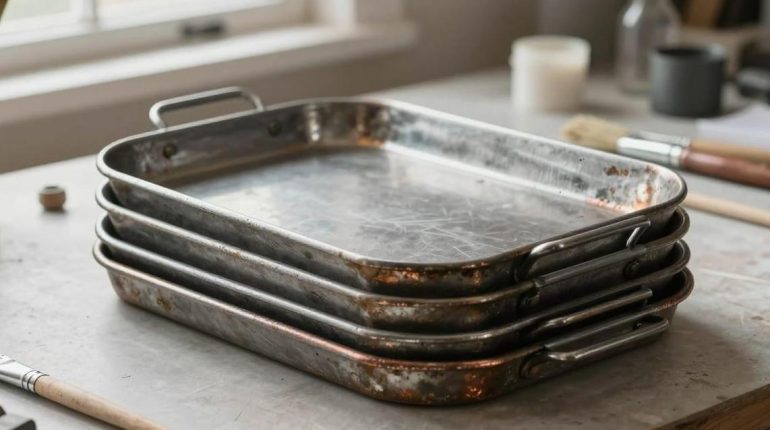
Used baking sheets usually end up in the trash. Warped by heat, scratched by utensils, stained by years of service, they seem to have exhausted their usefulness. Yet, throwing away these metal objects constitutes considerable waste in an era where waste reduction is becoming a priority.
The intelligent reuse of these utensils offers a double victory: economic and ecological. Rather than buying new decorative or organizational objects, transforming what already exists reduces expenses while limiting the environmental footprint. This approach is part of responsible consumption that prioritizes durability over disposability.
The true potential of these metal sheets remains largely unknown. Beyond their primary culinary function, they possess exploitable physical properties: a flat surface, structural resistance, and magnetic compatibility. These technical characteristics open up unsuspected creative possibilities, from storage to decoration.
The satisfaction of transforming an object destined for the landfill into a functional creation goes beyond the simple practical aspect. This transformation materializes a philosophy of life that values ingenuity over overconsumption. Each salvaged sheet represents a victory against planned obsolescence, proving that wear and tear does not equate to uselessness.
Ten methods allow these metal surfaces to be brought back to life, revealing that they remain as precious out of the oven as they were for baking.
Transformation Into Rustic Serving Trays: The Decor Metamorphosis
The first metamorphosis exploits the aesthetic potential of used sheets. The transformation begins with meticulous cleaning, followed by an essential anti-rust treatment to guarantee durability. The application of a food-safe sealant then makes the surface perfectly safe for presenting food.
Finishing options determine the character of the final tray. Chalk paint creates a matte country aesthetic, ideal for farmhouse-style interiors. Conversely, a metallic spray paint gives a contemporary and sleek look, fitting into modern decors. This stylistic flexibility allows each creation to be adapted to its environment.
The addition of handles is the final touch that transforms the sheet into a real accessory. Antique cabinet pulls bring vintage charm, while modern hardware offers minimalist lines. These salvaged elements reinforce the ecological dimension of the project while ensuring a comfortable grip.
The final result goes far beyond simple salvage. These trays serve equally well for presenting cocktails at receptions or arranging appetizers for an aperitif. Their flat surface and edges also make them decorative centerpieces, supporting candles, succulents, or floral arrangements. A few basic supplies are enough to obtain a handcrafted object with a professional finish.
This decorative transformation does not exhaust the possibilities. The magnetic properties of the metal open up totally different organizational perspectives.
Magnetic Command Centers: Organization Reinvented
The natural magnetic properties of the metal transform these sheets into domestic organizational solutions. Unlike traditional bulletin boards, the metal surface spontaneously holds magnets, creating a modular system without perforations or thumbtacks. This intrinsic characteristic offers a flexibility of arrangement impossible with classic supports.
Personalization determines the final aesthetic of these command centers. The application of a primer followed by chalkboard paint transforms the sheet into an erasable surface where notes and lists are written in chalk. This option is particularly suitable for family kitchens and planning spaces. In contrast, keeping the raw metal finish produces a contemporary industrial style, valuing traces of use as authentic aesthetic elements.
Wall installation requires no specialized skills. Command adhesive strips allow for fixing without drilling, preserving the integrity of walls in rentals. For permanent anchoring, two nails are sufficient. This simplicity makes the project accessible even to DIY novices.
Functionality goes far beyond simple decorative display. Urgent bills, souvenir photos, weekly schedules, and grocery lists find their place thanks to colored magnets that facilitate visual sorting. Frequently consulted recipes remain accessible without cluttering worktops, while medical reminders remain constantly visible. This minimalist organizational solution frees up space while centralizing essential information.
Yet, these two transformations represent only a glimpse of the possibilities.
Eight Other Ingenious Reuses To Discover
Beyond these decorative and organizational transformations, the potential of used sheets extends to unexpected areas. The two applications detailed so far—rustic trays and magnetic centers—are only an introduction to the possibilities of reuse. The source article reveals eight additional methods exploiting these metal surfaces in radically different contexts.
This diversity proves that kitchen and decoration represent only a fraction of the conceivable uses. Some applications target gardening, others the workshop or children’s creative space. Each method takes advantage of the specific properties of the metal—resistance, flat surface, raised edges—to solve practical daily problems.
Creativity in reuse transcends traditional categories of use. A scratched baking sheet becomes a multi-functional tool whose utility varies according to the household’s needs. This adaptability explains why ten distinct uses emerge from a single apparently obsolete object.
The life cycle of a sheet does not end with its warping. Every scratch and burn mark bears witness to years of service, but these imperfections become assets in their new function. The transition from a worn culinary tool to a reinvented object concretely illustrates the principles of the domestic circular economy.
These eight remaining applications demonstrate that a fresh look at familiar objects reveals unsuspected solutions to daily challenges.