📌 Ultra-soft cookies: the double chocolate technique that transforms a classic recipe into a chef’s pastry
Posted 10 February 2026 by: Admin
The Sensory Promise Of The Perfect Cookie
A true cookie is not measured only by its recipe, but by the experience it provides from the very first second. Even before tasting, it is that intoxicating scent of caramelized butter, vanilla, and melted chocolate that fills the kitchen and announces the comfort to come. This olfactory alchemy creates an almost unbearable expectation, a promise of immediate pleasure.
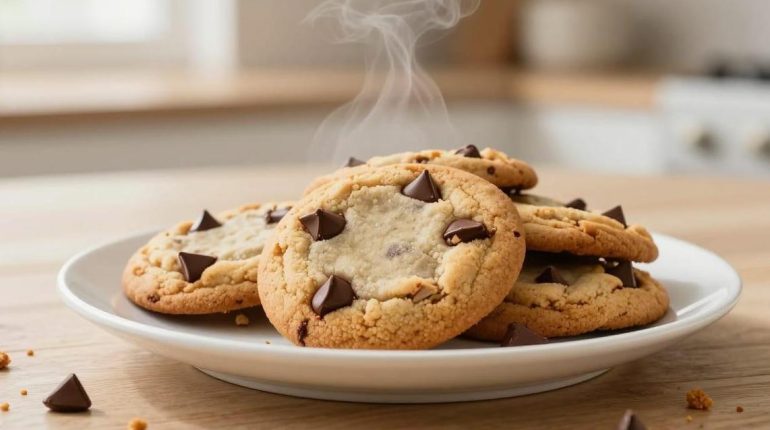
The magic truly happens at the first bite. The contrast between delicately crispy edges and a heart of absolute tenderness transforms each cookie into a small marvel of balance. The chocolate chips, strategically distributed, melt under the tooth and create those gourmet pockets that make every bite different, every experience unique.
This versatility is the strength of these cookies. Whether they accompany a mid-afternoon coffee, crown a meal, or provide comfort during a well-deserved break, they adapt to every moment without ever disappointing. Their apparent simplicity hides a perfectly mastered execution, where every detail counts to achieve this result worthy of a professional pastry shop.
This sensory promise rests, however, on very concrete foundations: a millimeter-precise dosage of carefully selected ingredients.
The Perfect Balance Of Ingredients
Behind every successful batch lies a mathematical precision that few recipes dare to reveal. The secret begins with the sugar duo: 100g of white sugar for structure, 80g of brown sugar for depth. This association is not accidental. White sugar brings lightness and the crispness of the edges, while brown sugar, moister and rich in molasses, guarantees that incomparable softness in the center while developing subtle caramelized notes.
The butter-to-flour ratio (120g to 220g) constitutes the other pillar of this success. Too much butter, and the cookies spread excessively, losing their shape. Not enough, and they become dry and brittle. This precise dosage ensures a melting texture without sacrificing structure.
But the true generosity lies in the chocolate: 150g of chips generously distributed in the dough, to which are added extra chunks placed on top. This double dose transforms each cookie into a concentration of indulgence, where every bite reveals melting chips.
Time efficiency completes the argument: 27 minutes flat are enough to get 12 cookies worthy of a pastry shop. Fifteen minutes of preparation, twelve of baking. This speed of execution in no way harms the quality, provided you master the technical gestures that tip a recipe from good to exceptional.
The Technical Gestures That Make The Difference
This architecture of ingredients only reveals its potential through rigorous execution. The first decisive gesture occurs during the initial whisking: vigorously beat the softened butter with the sugars until a “smooth, pale, and slightly airy” texture is obtained. This step, far from being cosmetic, incorporates tiny air bubbles that will directly determine the final tenderness. Insufficient whisking produces dense and compact cookies.
The incorporation of dry ingredients requires a radically opposite approach. Mix gently, without overworking the dough, to preserve that previously created airy structure. Overworking the flour develops gluten, transforming soft cookies into elastic and hard discs. The spatula replaces the whisk here; movements become delicate.
The detail that visually and tastefully sublimates the recipe lies in a simple gesture: strategically placing large chunks of chocolate on top of each ball before baking. These fragments soak up the heat, create spectacular melting hearts, and offer that immediately recognizable pastry look.
The final baking requires surgical precision: 180°C for exactly 12 minutes. At this temperature, the edges brown and crisp while the center remains intentionally soft. A few degrees more dry everything out; a few extra minutes destroy this contrast of textures. This perfect synchronization between temperature and duration separates the amateur from the connoisseur, but two final tips allow for even further refinement of this result.
Insider Tips For An Irresistible Result
Beyond pure technique, two pastry chef secrets radically transform the final result. The first occurs even before baking: place the shaped dough in the refrigerator for 20 minutes. This thermal rest sets the butter, slows spreading in the heat, and guarantees thicker cookies with an impeccably controlled shape. Without this break, the balls flatten excessively and lose their gourmet relief.
The second secret concerns the timing of removal from the oven. Contrary to intuition, you must remove the cookies while they still appear slightly soft in the center. This deceptive appearance hides a perfectly calibrated bake: out of the oven, they continue their transformation for ten additional minutes. This residual baking completes the process while preserving that characteristic melting heart. Waiting until they seem fully baked in the oven produces dry and crumbly biscuits.
During these ten crucial minutes of rest, the internal structure gradually stabilizes. The edges firm up, acquiring their final crispness, while the center retains that absolutely irresistible soft texture. One last technical detail deserves attention: the generous spacing between the balls on the tray anticipates their natural spreading during baking, preventing them from merging into a shapeless mass.
These meticulous adjustments, passed down in professional kitchens, definitively separate the acceptable cookie from the exceptional cookie. Mastering these subtleties transforms a simple recipe into a memorable taste experience, one that fully justifies those twenty-seven minutes invested.