The aroma that fills the kitchen when this cake is baking — warm lemon, sweet vanilla, softly rising batter — is exactly why we love it so much. No need for scales, no need for complex techniques. Just a yogurt pot, a few ingredients you almost always have on hand, and an hour later you have something that truly impresses.
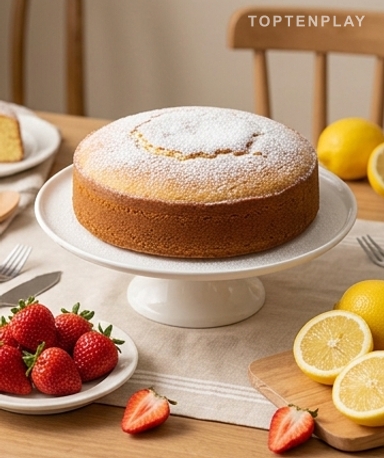
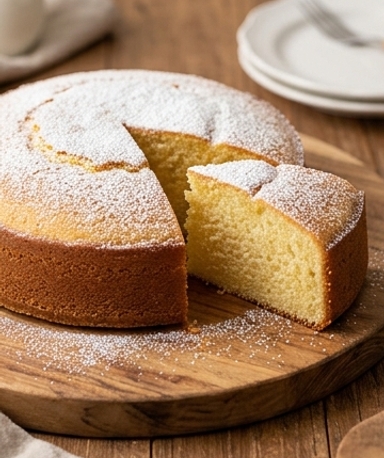
Look at this slice. The crumb is a very soft pale yellow, almost creamy, with well-distributed tiny air bubbles that reveal a perfectly risen cake. The top crust is thin, slightly crisp under the fork — perfectly contrasting with the interior that almost melts on the tongue. With the powdered sugar on the surface barely disappearing upon contact with the still-warm cake, it smells of lemon, vanilla, and that indefinable something that homemade cakes have and you can’t find anywhere else.
Why you’ll love this recipe
Ingredient Notes
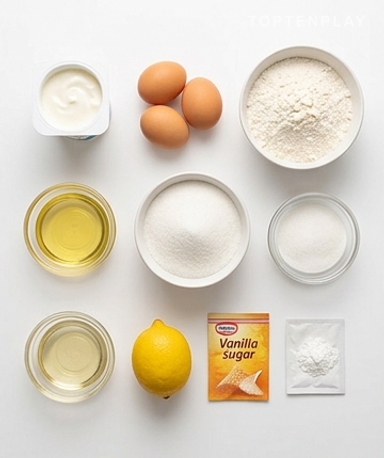
Everything needed for this cake fits into a yogurt pot: it actually serves as the measure.
- Plain yogurt : This is what gives it that particular texture — moist without being dense, airy without being fragile. A classic whole milk yogurt, the 125 g kind found everywhere. Avoid low-fat versions: they contain more water and the texture suffers. Plain or Greek, both work very well.
- Vegetable oil or melted butter : Oil provides a moisture that lasts longer — the cake remains tender even the next day. Melted butter brings more flavor, a slightly nutty taste. If you have guests the same day, go for butter. If you’re preparing the day before, use oil.
- Lemon : Get an organic lemon if you can — you’re using the zest, and on a non-organic lemon, it’s better to avoid it. Zest first, juice second. The zest concentrates most of the fragrance, while the juice adds the acidity that balances the sugar. Don’t skimp: a generous zest makes all the difference between a cake that really smells of lemon and one that just looks like it.
- Eggs : Take them out of the fridge when you preheat the oven. A cold egg incorporated into a batter cools it down and prevents ingredients from bonding properly. It changes the final texture — the crumb is more even with room-temperature eggs.
- Baking powder : A whole sachet is the standard dose for this amount of flour. Check the expiration date — stale baking powder results in a flat, compact cake. To test if yours is still active: pour a pinch into hot water; if it foams, it’s good.
Take your ingredients out of the fridge an hour before starting
Eggs, yogurt, butter if using butter — everything at room temperature. It seems like a detail, but it’s what makes a batter smooth rather than lumpy. While the ingredients are tempering, preheat the oven to 180°C and prepare your mold: grease it generously, flour it lightly, and tap to remove the excess. Choose a round pan if you want something regular and easy to cut into equal portions, or a loaf pan if you prefer slicing it like gingerbread.

Mix until smooth — and not a second longer
Pour the yogurt into a large mixing bowl, keep the empty pot — it’s your measure for everything else. Whisk the eggs and sugar with the yogurt until the mixture whitens slightly and forms small bubbles on the surface: this takes about a minute by hand, thirty seconds with an electric whisk. Then add the flour, baking powder, and salt, incorporating them gently without overbeating — just mix until the lumps disappear. Add the oil or melted butter, the generous lemon zest, and its juice. The batter should flow easily from the spatula, supple and smooth, with that light citrus scent already starting to emerge.
Don’t touch a thing for 35 minutes
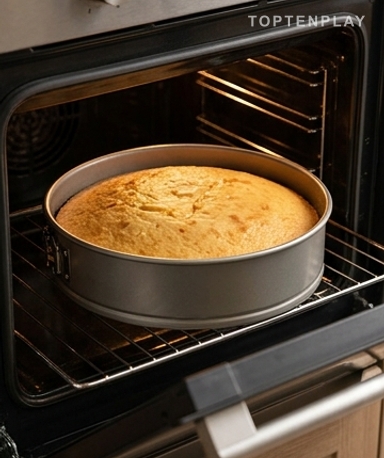
Pour the batter into the mold, smooth the surface with the back of a spoon, and bake. Now: close the oven and don’t touch it. During the first 30 minutes, the temptation to open is strong — don’t do it. A cold draft at this stage causes the center to collapse, leaving you with a crater instead of a beautiful dome. From 30 minutes onwards, a smell of baked, warm, slightly caramelized lemon starts to fill the room: that’s a good sign. Wait another 5 minutes, then test with the tip of a knife in the center. It should come out dry. The surface should show a light caramel golden color — no darker.
Let it cool before touching it
Remove the mold from the oven, place it on a wire rack and let it cool for 10 to 15 minutes before attempting to unmold. A hot cake is fragile: the internal structure is still unstable, and if you rush, it might break in half. Once flipped onto a plate, let it cool for another twenty minutes before dusting with powdered sugar — on a still-hot cake, it melts immediately and disappears. Serve plain, with fresh raspberries, or a few orange slices to stay in the citrus theme.
Tips & Tricks
- Use the empty yogurt pot as a measuring cup for everything: it’s calibrated for this recipe, and you won’t risk getting the proportions wrong if you stick to it from start to finish.
- Zest the lemon before cutting it in half to juice it — it’s ten times easier on a whole fruit, and you’ll collect twice as much zest.
- If your cake is well-baked on the outside but the knife comes out wet, cover it with a piece of aluminum foil and put it back in the oven for 5 minutes: this cooks the center without burning the surface.

Can I use a flavored yogurt instead of plain yogurt?
Yes, but with caution. A lemon yogurt enhances the flavor of the recipe, making it a good option. Avoid very sugary yogurts or fruit yogurts with chunks — they add extra moisture and can make the batter too heavy. Plain Greek yogurt works very well and provides an even meltier texture.
How long does this yogurt cake keep?
Three to four days at room temperature in an airtight container or under a cake dome. In the refrigerator, up to five days, but take it out 20 minutes before serving — the cold firms up the texture. It freezes very well for up to one month: wrap each slice individually and thaw at room temperature.
What is the difference between using oil or butter?
Vegetable oil makes for a cake that stays moist longer, ideal if preparing in advance. Melted butter adds a richer taste and a slight nutty note — best on the day of. If you’re unsure, sunflower oil is a safe bet: it is neutral in taste and guarantees a melting texture until the next day.
My cake rose and then collapsed in the center — what happened?
The most frequent cause: the oven was opened too early. The thermal shock makes the batter drop before it has time to set its structure. Another possibility: too much baking powder, or the batter was overmixed after adding the flour, which develops gluten and prevents the cake from rising properly. Always wait at least 30 minutes before opening the oven.
Can I make this cake without lemon?
Absolutely. Replace the lemon zest and juice with 1 teaspoon of vanilla extract for a classic version. You can also use a whole orange (zest + juice) for a softer, rounder flavor. Without citrus, double the dose of vanilla sugar so the cake isn’t bland.
Can I prepare the batter the night before?
No, it is not recommended. Baking powder starts to act as soon as it comes into contact with wet ingredients — if you wait too long, the cake will rise less during baking. Prepare the batter and bake immediately. However, the baked cake keeps very well and can certainly be made the day before serving.
Ultra-Moist Lemon Yogurt Cake
French
Dessert
The timeless classic of home baking: an incredibly tender texture, a delicate lemon scent, and a preparation that requires neither scales nor special technique.
Ingredients
- 125g (1 pot) plain whole-milk yogurt
- 225g (3 pots) all-purpose flour
- 200g (2 pots) granulated sugar
- 60ml (½ pot) neutral vegetable oil (or 100g melted butter)
- 3 eggs at room temperature
- 1 sachet (11g) baking powder
- 1 sachet (8g) vanilla sugar
- 1 organic lemon — whole zest + juice of half
- 1 pinch salt
- to taste powdered sugar for finishing (optional)
Instructions
- 1Preheat the oven to 180°C. Grease and flour a round mold (22-24 cm) or a loaf pan.
- 2Pour the yogurt into a large bowl and save the empty pot — it will serve as the measure for the following ingredients.
- 3Add the 3 eggs, sugar, and vanilla sugar. Whisk until smooth and slightly frothy.
- 4Gradually incorporate the flour, baking powder, and salt, mixing gently — just enough to remove lumps, no more.
- 5Add the oil (or cooled melted butter), lemon zest, and lemon juice. Mix until you have a smooth and supple batter.
- 6Pour the batter into the prepared mold and lightly smooth the surface.
- 7Bake for 35 minutes without opening the oven before 30 minutes. Test with a knife tip — it should come out dry.
- 8Let cool for 15 minutes in the mold before unmolding onto a wire rack. Dust with powdered sugar once completely cooled.
Notes
• Storage: 3-4 days at room temperature under a dome, up to 5 days in the fridge (take out 20 min before serving). Freezes for up to 1 month.
• Variations: replace the lemon with a whole orange for a gentler version; add 80g of dark chocolate chips or 40g of shredded coconut directly into the batter.
• For optimal results, use room-temperature ingredients and do not overwork the batter after adding the flour.
Nutrition Facts (per serving, estimated)
| 280 kcalCalories | 5gProtein | 45gCarbs | 9gFat |