It starts with a scent. A blend of garlic gently sizzling in hot oil, thyme beginning to release its essential oils, and meat browning in the pot. Lamb shanks are the ultimate weekend dish — the kind you start in the morning and find meltingly tender, confit, and coated in a glossy sauce by lunchtime.
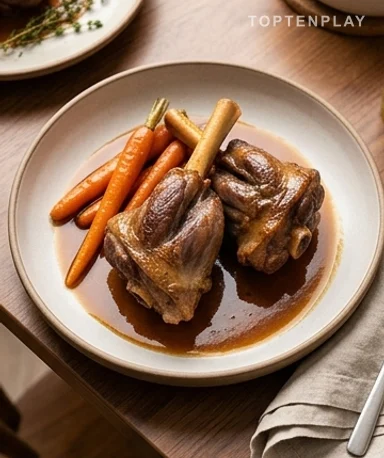
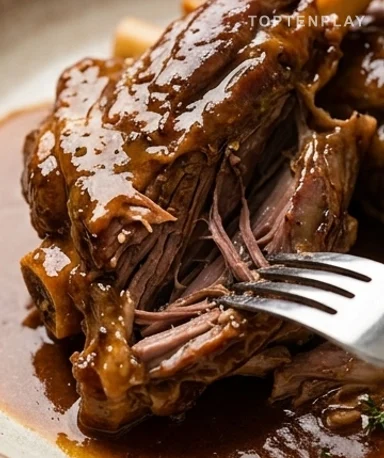
Before you, two thick, mahogany-brown pieces, with the meat already starting to pull away slightly from the bone — a sign that the cooking has done its job. The sauce, reduced and shiny like a restaurant-style roasted jus, coats the bottom of the dish in a thick layer. When you sink your fork in, the meat offers no resistance. It falls away into long, melting strands, moist and soaked in juices fragrant with bay leaf and thyme.
Why you’ll love this recipe
Ingredient Notes
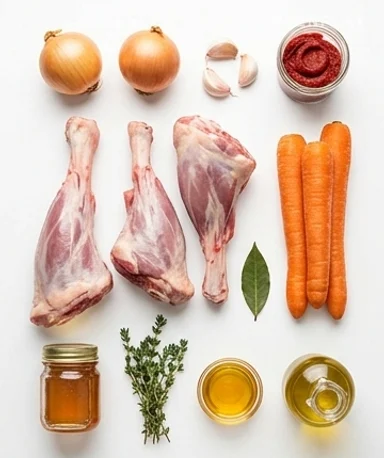
Everything you need to successfully make melting and fragrant lamb shanks.
- Lamb shanks : Choose them meaty, with the skin still in place — it will melt during cooking and naturally enrich the sauce. Around 300 to 400g each is a nice individual portion. If you can get them from a butcher rather than a supermarket, the difference in quality shows during cooking.
- The stock : Beef stock for more depth, vegetable stock if you want something lighter. Avoid overly salty cubes that mask the natural aromas of the meat. Homemade or a good store-bought brand in a carton is ideal — not the bottom of a packet from 2022.
- Tomato paste : Not there to give a tomato taste, but for color and structure. Sauté it for one to two minutes in the hot pot before adding liquids — this caramelizes it slightly, the smell becomes almost toasted, and it changes everything about the final richness of the sauce.
- Honey : Optional on paper, essential in practice. A teaspoon is enough. It balances the acidity of the tomato paste and gives the sauce that slightly lacquered shine seen in good restaurants. Wildflower, acacia — whatever you have on hand.
- Thyme and bay leaf : Don’t skimp. A nice sprig of fresh thyme is different from the dried powdered thyme lingering at the back of the cupboard. The bay leaf brings a slightly peppery and camphorated note that balances the richness of the sauce without you being able to quite put your finger on it.
The part everyone misses: the browning
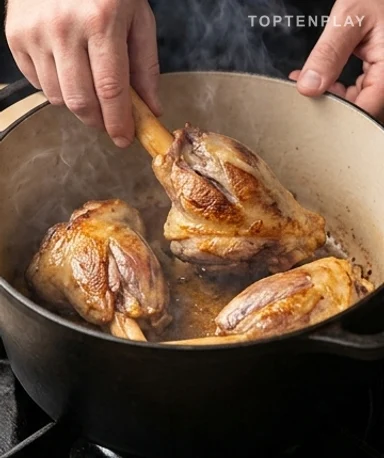
This is where it all begins, and where most people rush. The pot must be truly hot before placing the shanks inside — if you put a drop of water in, it should evaporate in a second. Place the shanks and don’t touch them. No curiosity, no premature lifting. Let the Maillard reaction do its work: the meat must color to a deep caramel brown, almost reddish, on all sides. This takes eight to ten minutes in total. This browning is the foundation of your sauce — it cannot be made up for later.
The aromatic base: take your time here too
Once the shanks are set aside, lower the heat and work in the same pot — whatever you do, don’t rinse it. The sliced onions will pick up all the juices stuck to the bottom; you’ll hear them sizzle gently, and soon the smell changes: sweeter, rounder. When they become translucent and slightly golden, add the minced garlic and sliced carrots. Two minutes. Then the tomato paste, which you sauté for a minute while stirring well. Now it’s time to deglaze with the stock, scraping the bottom well to recover everything that stuck. That stuck residue is pure flavor.
Simmering: forget your pot and come back in two hours
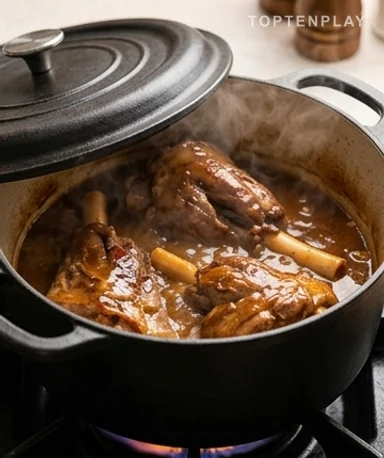
Put the shanks back in the pot, cover, and set the heat to the lowest possible setting. The surface of the liquid should barely simmer — not boil, just simmer. A few slow bubbles rising now and then. Two hours is the minimum. Two and a half hours is even better. After one hour, if you lift the lid, the smell is already powerful, warm, one of those smells that brings back childhood Sundays. Flip the shanks once halfway through. That’s all you’ll have to do.
The sauce: don’t skip this final step
When the meat is cooked — it should fall away from the bone with light finger pressure, no forcing — remove the shanks and set them aside on a plate covered with foil. Crank up the heat under the uncovered pot. The sauce will reduce, turning from a light brown liquid into something coating and glossy. This takes ten to fifteen minutes. It’s ready when it coats the back of a spoon without running off. Taste at this point, adjust the salt. Put the shanks back in, let it rest for five minutes. That’s when the flavors truly come together.
Tips & Tricks
- Don’t cover the pot completely if you want a well-reduced sauce — leave the lid slightly ajar to let excess steam escape without drying out the meat.
- If you prepare this dish the day before, let it cool completely before putting it in the fridge. The next day, you can easily remove the layer of fat solidified on the surface — the sauce will be even cleaner and the flavors deeper.
- Serve with homemade mashed potatoes or steamed potatoes: you need something to soak up the sauce. That’s the essential part.
Can I cook the lamb shanks in the oven instead of in a pot on the stove?
Yes, it’s actually an excellent option. Cover the pot and bake at 160°C for 2h30. The result is almost identical, with the advantage of even more consistent heat. Just make sure your pot is oven-safe.
Can I prepare this dish the day before?
It is highly recommended. Let it cool completely, then refrigerate overnight. The next day, remove the solidified fat layer from the surface before reheating over low heat. The sauce is cleaner and the flavors even more developed.
Why is my meat still firm after 2 hours of cooking?
It’s almost always a question of too high a temperature. If it boils hard, the meat toughens instead of becoming confit. The liquid should barely simmer. Lower the heat, put the lid back on, and give it another 30 to 45 minutes — it always melts eventually.
What should I serve with lamb shanks?
Homemade mashed potatoes are the ideal accompaniment — you need something to soak up the sauce. Steamed potatoes or mashed chickpeas also work very well. Avoid rice, which doesn’t absorb the sauce as well.
Can I use a pressure cooker to go faster?
Yes, 45 to 50 minutes under pressure is enough. The meat will be very tender, but the sauce will be more liquid — you’ll need to reduce it separately afterward. The result is slightly less confit than traditional long cooking.
How do I store and reheat leftovers?
In the fridge for up to 3 days in the sauce. To reheat, use low heat covered with a splash of stock if the sauce has thickened too much. Avoid the microwave which dries out the meat — a good saucepan over low heat for 10 minutes is perfect.
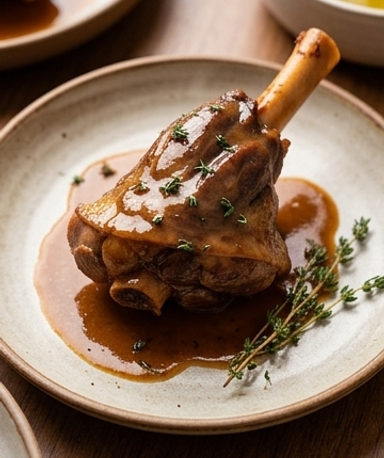
Ultra-melting lamb shanks in sauce
French
Main Course
Lamb shanks slow-simmered in a fragrant thyme and bay leaf broth until the meat falls off the bone. A glossy and slightly syrupy sauce that does all the work.
Ingredients
- 4 lamb shanks (300-400g each)
- 2 onions, sliced
- 3 cloves garlic, minced
- 2 carrots, sliced into rounds
- 2 tbsp olive oil (30ml)
- 1 tbsp tomato paste (20g)
- 600ml beef stock (or vegetable)
- 1 sprig fresh thyme
- 1 bay leaf
- 1 tsp honey (optional)
- salt and black pepper
Instructions
- 1Take the lamb shanks out of the refrigerator 20 minutes before cooking. Salt and pepper all sides generously.
- 2Heat the olive oil in a large pot over high heat. Sear the shanks on all sides until they reach a deep caramel brown color (8 to 10 minutes). Set aside on a plate.
- 3Lower the heat to medium. In the same pot, sauté the sliced onions for 5 minutes until translucent.
- 4Add the minced garlic and sliced carrots, cook for 2 minutes while stirring.
- 5Add the tomato paste and sauté 1 to 2 minutes while stirring until lightly caramelized.
- 6Pour in the stock and scrape the bottom of the pot to release the juices. Add the thyme, bay leaf, and honey. Stir.
- 7Put the shanks back into the pot. Cover, leaving the lid slightly ajar. Cook over very low heat for 2h to 2h30, turning the shanks once halfway through.
- 8Check for doneness: the meat should fall away from the bone without forcing. Remove the shanks and keep covered under aluminum foil.
- 9Reduce the sauce over medium heat, uncovered, for 10 to 15 minutes until it reaches a coating, glossy consistency. Taste and adjust seasoning.
- 10Return the shanks to the sauce, let rest for 5 minutes with the heat off. Serve hot with a generous coating of sauce.
Notes
• Make-ahead: this dish is even better prepared the day before. Refrigerate overnight, remove the solidified fat from the surface before reheating over low heat.
• Storage: keeps for 3 days in the refrigerator. Reheat covered over low heat with a little stock if the sauce has thickened too much.
• Oven: can be cooked at 160°C covered for 2h30, with a final reduction of the sauce on the stove after taking it out of the oven.
Nutrition Facts (per serving, estimated)
| 620 kcalCalories | 44gProtein | 10gCarbs | 38gFat |