You know that moment when you want something that looks impressive, but the desire to spend an hour in the kitchen is close to zero? This Tuscan salmon is made for that. A creamy Parmesan sauce with tomatoes and spinach, all in one pan, ready in 30 minutes.
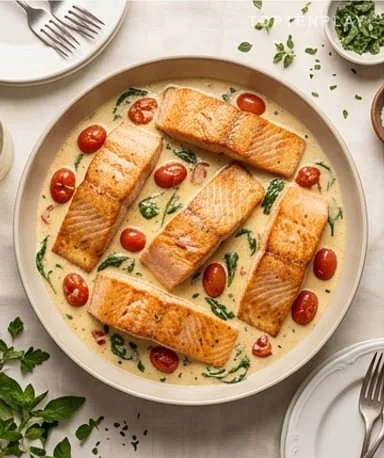
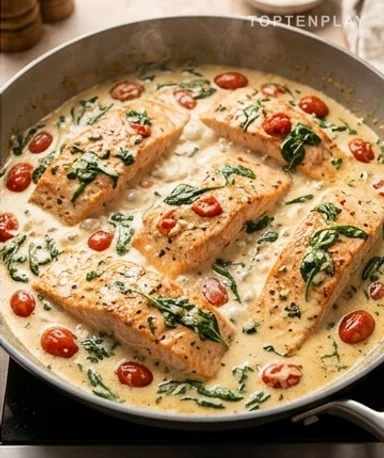
The sauce has this coating consistency—dense, slightly shiny, with little melted tomato pieces in it. The smell rising from the pan when the garlic and Italian herbs heat up in the butter is hard to ignore. The salmon finishes cooking nestled in this creamy liquid, keeping it tender to the core. It’s the kind of dish that makes you feel like you’ve put in effort without really having done so.
Why you’ll love this recipe
Ingredient Notes
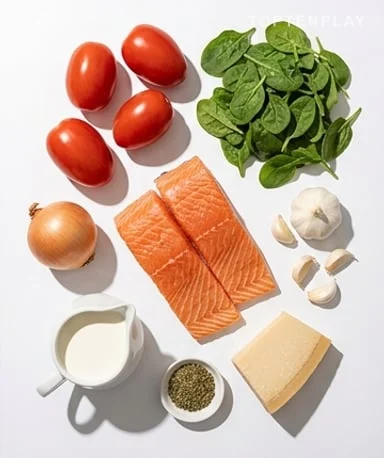
All the elements of a good Tuscan sauce: Roma tomatoes, spinach, Parmesan, cream, and Italian herbs. Simple and effective.
- Skinless Atlantic salmon : Fattier than wild varieties like sockeye, Atlantic salmon tolerates cooking better. Without skin, it absorbs more sauce and stays tender.
- Heavy cream : It holds up to heat better than light cream or milk, and won’t curdle if you keep the heat moderate. Take it out of the fridge at the same time as the salmon—cold cream in a very hot pan is the top risk for a ruined sauce.
- Grated Parmesan : It melts directly into the sauce and gives it body, that slightly salty, nutty note that defines a true Tuscan sauce.
- Roma tomatoes : Meatier and less watery than regular tomatoes. They hold up in cooking and provide a gentle acidity that balances the richness of the cream.
- Frozen spinach : The advantage over fresh spinach: it’s already drained and won’t release water into the sauce. Squeeze it really well with your hands before adding.
- Vegetable broth : It’s used to deglaze the pan juices left from the salmon, and to thin the base before adding the cream. A diluted cube works perfectly.
Sear Without Rushing
Take the salmon out of the refrigerator about twenty minutes before starting. Fish at room temperature sears more evenly. Rub the fillets with olive oil, season with salt and freshly ground black pepper. The pan must be very hot before contact—you should hear a confident sizzle as soon as the salmon hits the oil. Two to four minutes per side is enough: you’re looking for a golden crust on both sides, not full cooking. The center can still be slightly translucent. Set the fillets aside on a plate; they’ll finish in the sauce.
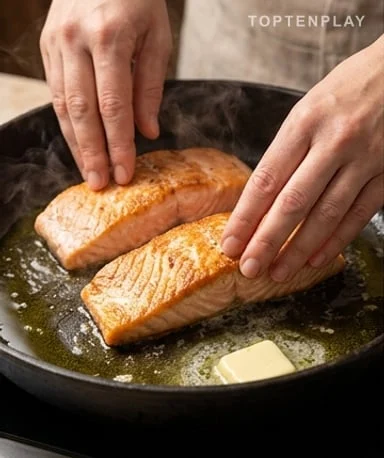
Build the Aromatic Base
Without washing the pan, melt the butter with the remaining oil over medium-high heat. Add the diced onions, Italian herbs, and dried basil. Let soften for five minutes, stirring occasionally—the onions should become translucent, with slightly golden edges and a sweet smell starting to develop. Add the garlic and crushed tomatoes, sauté for two minutes. Garlic flavors quickly; don’t let it brown. Pour in the vegetable broth and scrape the bottom of the pan well with a spatula to lift the caramelized salmon juices—that’s where a lot of the final flavor concentrates.
Cream and Parmesan
Reduce heat to medium. Incorporate the well-squeezed spinach, then pour in the cream in a steady stream. Let it simmer gently for two to three minutes, never letting it boil—boiling will curdle the cream and give a lumpy texture that’s hard to fix. Add the grated Parmesan while stirring. The sauce will gradually thicken and take on an ivory cream color, slightly shiny on the surface, with a scent that blends warm milk and melted cheese.
Return the Salmon, Finish Cooking
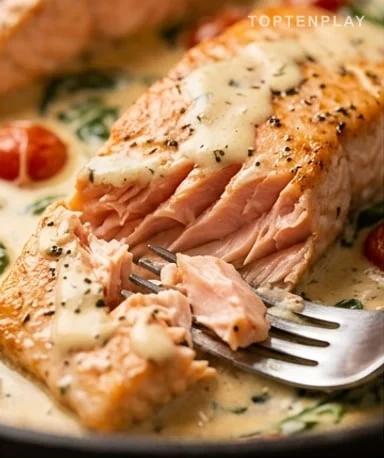
Place the salmon fillets in the hot sauce without submerging them—they should be nestled, not drowned. Cover and heat on low for two to three minutes. The salmon is ready when it flakes easily under light pressure and the flesh is opaque all the way through. Sprinkle with fresh chopped parsley just before serving. The bright green of the parsley on the cream sauce is also a signal to people at the table that the dish is coming.
Tips & Tricks
- If you buy salmon with skin, remove it before cooking: it won’t get crispy with this method and will soften in the sauce, becoming gelatinous.
- Never boil the sauce once the cream has been added. A barely visible simmer is enough—this is the golden rule for all cream sauces.
- Leftovers reheat very well on very low heat with a splash of broth added to the pan. The sauce thickens as it cools, that’s normal—a little liquid loosens it immediately.
- This sauce also works on short pasta or basmati rice if you want to use it as a base for another weekday meal.
Can I use frozen salmon?
Yes, absolutely. Thaw the fillets completely in the refrigerator overnight, then pat them dry with paper towels before searing. A fillet that is too wet on the surface will release water in the pan and prevent a golden crust from forming.
Can I replace heavy cream with something lighter?
Light cream or half-and-half works, but the sauce will be less thick and more likely to curdle when heated. If you want to reduce fat, use 15% light cream and keep the heat very low—never let it boil.
How do I know when the salmon is cooked perfectly?
Press a fillet lightly with your finger: it should flake easily and the flesh should be opaque all the way through. For more precision, the internal temperature should reach 63°C. Atlantic salmon stays tender even slightly above that temperature, unlike leaner wild varieties.
What should I serve with this Tuscan salmon?
Basmati rice perfectly absorbs the creamy sauce. Short pasta like penne or rigatoni also works very well. For something lighter, cauliflower mash or simply crusty bread for dipping does the job.
Can I prepare this dish in advance?
The sauce can be prepared up to 24 hours in advance and stored in the refrigerator. Reheat it over low heat with a little broth, then sear and finish the salmon at the last moment. Reheated cooked salmon tends to dry out—better not to cook it ahead.
Can I replace the Parmesan?
Pecorino Romano gives a slightly saltier and more pronounced sauce—reduce the amount of salt accordingly. Grana Padano is milder and works just as well. Avoid soft cheeses that don’t melt the same way in a hot sauce.
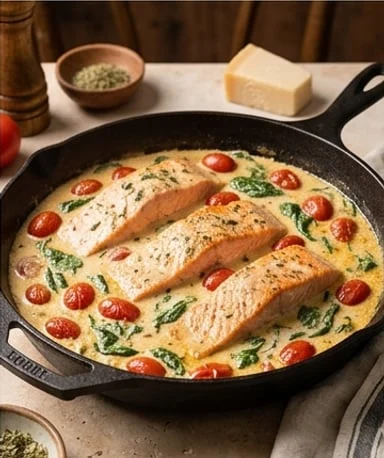
Tuscan Pan-Seared Salmon with Creamy Parmesan Sauce
Italian
Main Course
Golden seared salmon fillets finished in a creamy Parmesan sauce with Roma tomatoes, spinach, and Italian herbs. All done in one pan, in 30 minutes.
Ingredients
- 540g skinless Atlantic salmon fillets
- 15ml olive oil (divided)
- ¼ tsp fine salt
- ⅛ tsp freshly ground black pepper
- 30g salted butter
- 1 medium onion, finely diced (~170g)
- 1½ tsp dried Italian herb blend
- 1 tsp dried basil
- 2 garlic cloves, minced
- 3 Roma tomatoes, seeded and diced (~300g)
- 240ml vegetable broth
- 60g frozen spinach, well squeezed
- 180ml heavy cream, at room temperature
- ¼ tsp salt (for the sauce)
- ⅛ tsp black pepper (for the sauce)
- 60g finely grated Parmesan
- 1 tbsp fresh chopped parsley
Instructions
- 1Take the salmon out of the refrigerator 20 minutes before starting. Cut into 5 equal portions of about 110g. Rub each fillet with half of the olive oil, then season with salt and pepper.
- 2Heat a large pan over high heat until very hot. Place the fillets and sear for 2 to 4 minutes per side depending on thickness, until a golden crust forms. The center can remain slightly translucent. Set aside on a plate.
- 3Without washing the pan, reduce heat to medium-high. Add the butter and remaining oil. Sauté the onion with Italian herbs and basil for 5 minutes, stirring, until translucent and slightly golden on the edges.
- 4Add the minced garlic and diced tomatoes. Sauté for 2 minutes, stirring—the garlic should be fragrant but not colored.
- 5Pour in the vegetable broth and scrape the bottom of the pan with a spatula to lift all the caramelized cooking juices.
- 6Incorporate the well-squeezed spinach. Pour in the cream in a steady stream, then season with salt and pepper. Simmer gently over low heat for 2 to 3 minutes, never letting it boil.
- 7Add the grated Parmesan and stir until completely melted and the sauce coats the back of a spoon.
- 8Place the salmon fillets in the sauce, cover, and heat over low heat for 2 to 3 minutes, until the salmon is opaque throughout and flakes easily under light pressure.
- 9Sprinkle with fresh chopped parsley and serve immediately, with basmati rice or short pasta.
Notes
• The cream must be at room temperature before going into the pan. Cold cream in a hot pan increases the risk of a curdled sauce.
• Never boil the sauce after adding the cream. A gentle simmer is enough to thicken it and allow the Parmesan to melt properly.
• To remove skin from a skin-on fillet: place it skin-side down on the board, hold one end with a paper towel and slide a sharp knife between the skin and the flesh.
• Leftovers keep up to 2 days in the refrigerator. Reheat over very low heat with 2-3 tablespoons of broth to loosen the sauce.
Nutrition Facts (per serving, estimated)
| 450 kcalCalories | 31gProtein | 7gCarbs | 32gFat |