📌 Turmeric, Bay Leaf & Coriander Seed Infusion
Posted 2 April 2026 by: Admin
Wellness infusions are often imagined as grandmotherly remedies with a medicinal taste. The reality of this one is quite different: it smells of mild curry, colors the water a deep amber yellow, and has something terribly comforting about it. You don’t need to be a naturopath to adopt it — just a pot and ten minutes.
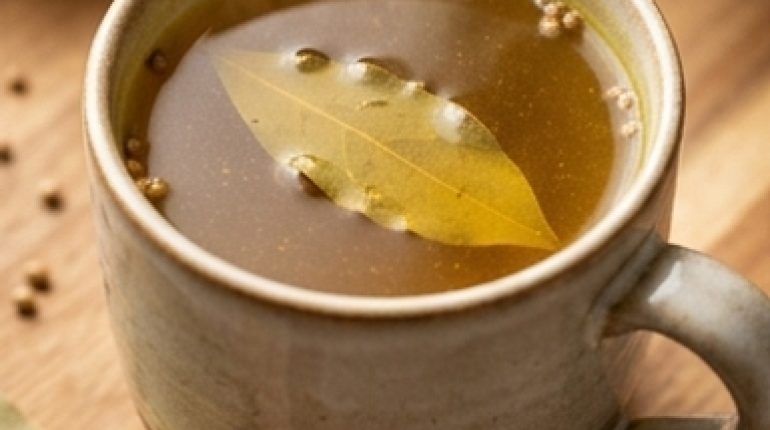
In the cup, the color is bold. An ochre yellow leaning towards saffron, with those little coriander seeds floating on the surface before gently sinking to the bottom. The first steam that rises smells of fresh turmeric — a warm, slightly earthy scent, with that floral background that bay leaves discreetly provide. And when you wrap both hands around the cup, you understand why some people have been drinking it every morning for years.
Why you’ll love this recipe
Ingredient Notes
Three simple ingredients, ancient flavors: turmeric, bay leaf, and coriander.
- Turmeric : This is what gives it the color and most of the character. In powder form, it’s easier to dose — a well-packed teaspoon for two cups is perfect. If you have fresh turmeric root (it looks like ginger but smaller and more yellow), grate a piece about two centimeters long: the taste is sharper, less earthy, with an almost citrusy note. Warning: it stains everything it touches, including fingers.
- Bay leaves : Two or three dried leaves are enough. The bay leaf doesn’t dominate — it’s there in the background, rounding off the edges of the turmeric and bringing a light camphor note that makes the whole blend more complex. Avoid leaves that have been hanging around in your cupboard for three years and no longer smell like anything when rubbed between your fingers: dried bay leaves should be replaced.
- Coriander seeds : Not the fresh leaves — dried seeds are very different. They smell of lemon and flowers, much more subtle than the leaves. Use a whole teaspoon. If you crush them slightly between your palms before throwing them into the water, you’ll hear that little dry crack and release twice as much aroma. Optional, but really worth the gesture.
- Honey : Optional, but honestly, it changes everything for those who find turmeric a little too direct. A neutral honey like acacia so as not to overwhelm the spices, or a wildflower honey if you want a more fragrant version. Absolute rule: always add it after straining the infusion, never during cooking — heat destroys some of its aromas and that would be a shame.
Why I never start my morning without it
There’s something about starting the day with a warm cup that smells of spices. Not coffee, not tea — something else. The smell of heating turmeric is recognizable among a thousand: warm, slightly powdery, with that oriental touch that spreads through the kitchen in minutes. It’s a simple, almost meditative routine. You heat the water, toss in the spices, and for ten minutes you have nothing else to do but wait for it to gently simmer. This infusion doesn’t replace breakfast — it prepares for it. It gently wakes up the stomach before the day picks up pace.
The part that everyone misses
Most people making this infusion for the first time make the same mistake: they don’t let it simmer long enough. Ten minutes of gentle simmering is the minimum. Less than that, and the coriander seeds haven’t had time to truly open — you get yellow water without much character. Fifteen minutes is the perfect balance. The water takes on a deep ochre-amber hue, like a slightly glowing light caramel, the aromas blend together, and the bay leaves have had time to give what they have to give. The heat must stay low: bubbles rising lazily to the surface, not a rolling boil that evaporates everything.
Black pepper: the detail almost no one mentions
A pinch of freshly ground black pepper in the cup. It seems trivial. It’s not just a matter of taste — the piperine in pepper helps the body better absorb the curcumin in turmeric, and it’s well-documented. In practice, it also changes the flavor profile of the infusion: a little heat that hits the back of the throat, a slight pungency that cuts through the sweetness of the honey. No need to overdo it. A pinch is enough. You can also add it directly during simmering if you prefer a more integrated, less frontal version.
How to make it truly good, not just useful
A wellness infusion can remain a chore or become a true pleasure. The difference often lies in the small finishing details. A nice mug that you take the time to pre-warm with hot water. A splash of freshly squeezed lemon at serving time — not bottled juice, the real stuff, with that tangy fragrance that contrasts with the warmth of the turmeric. If you want a gentler version for the evening, a pinch of cinnamon in the pot while simmering transforms everything: the filtered infusion then takes on a warm copper hue, the smell vaguely recalls Christmas spices, and you move from a functional drink to something you actually want to hold in your hands.
Tips & Tricks
- Prepare enough for two or three days at once in a glass bottle in the fridge. Flavors meld better after a cold night — it’s better reheated the next day than when first made.
- If using fresh grated turmeric, wear gloves or accept that your fingers will be sun-colored for forty-eight hours. Turmeric stains permanently; soap alone won’t do it.
- Always add honey after filtering, never during cooking. In a boiling pot, its aromas evaporate in seconds — it’s a waste.
How long can this infusion be kept in the refrigerator?
The infusion keeps for up to 3 days in an airtight glass bottle in the refrigerator. Just reheat the desired amount in a small saucepan or microwave — do not boil it again, just warm it to the desired temperature to preserve the aromas.
Can I use fresh turmeric instead of turmeric powder?
Yes, and it’s even recommended if you can find it. Use about 2 cm of grated fresh root to replace one teaspoon of powder. Fresh turmeric gives a brighter, slightly more citrusy taste. Warning: it stains everything it touches, including fingers and countertops.
How often can I drink this infusion?
One to two cups per day is a reasonable frequency for most people. In the morning on an empty stomach or after meals are the two most common times. If you are taking blood thinners or regular treatments, consult your doctor before making it a daily habit — high doses of turmeric can interact with certain medications.
I don’t have coriander seeds. What can I replace them with?
You can simply leave them out — the infusion remains very good with just turmeric and bay leaf. Alternatively, a small pinch of ginger powder or a few crushed cardamom pods bring similar complexity. Fennel seeds also work well if you like anise notes.
Can I drink this infusion cold?
Absolutely. Let it cool to room temperature after filtering, then refrigerate. Served over ice with a squeeze of lemon and a little honey, it makes a very pleasant refreshing drink in summer. The turmeric may settle slightly at the bottom — a quick stir is enough to bring it back into suspension.
Why add black pepper to an infusion?
Black pepper contains piperine, a compound that significantly increases the body’s absorption of curcumin — the main active ingredient in turmeric. A simple pinch is enough; you barely feel it in the infusion but it’s where it needs to be. It’s the classic duo in Indian Ayurvedic cooking for centuries.
Turmeric, Bay Leaf & Coriander Seed Infusion
Asian
Beverage
A golden mild-spice infusion, ready in under 20 minutes. Comforting in the morning, soothing in the evening — personalize with honey and lemon as desired.
Ingredients
- 500 ml water
- 1 tsp turmeric powder (or 2 cm grated fresh root)
- 2-3 dried bay leaves
- 1 tsp coriander seeds
- 1 pinch freshly ground black pepper (highly recommended)
- 1-2 tsp honey (optional)
- 1/2 squeezed lemon (optional)
Instructions
- 1Pour 500 ml of water into a small saucepan and bring to a boil over medium heat.
- 2Add the turmeric, bay leaves, and coriander seeds to the boiling water.
- 3Reduce heat to minimum and let simmer gently for 10 to 15 minutes, uncovered.
- 4Strain the infusion through a fine mesh sieve directly into cups.
- 5Add a pinch of black pepper, then honey and lemon to taste. Serve hot.
Notes
• Storage: prepare a double batch and keep the strained infusion in an airtight glass bottle in the fridge for up to 3 days. Reheat over low heat before serving.
• Cold variation: let cool to room temperature, then refrigerate. Serve on ice with an extra squeeze of lemon for a summer version.
• Intensity: for a bolder and more colorful infusion, extend simmering up to 20 minutes and double the amount of turmeric.
Nutrition Facts (per serving, estimated)
| 25 kcalCalories | 0 gProtein | 6 gCarbs | 0 gFat |