📌 Tuna pasta bake: the al dente technique and simmered sauce that transform a classic family dish into a guaranteed success
Posted 9 February 2026 by: Admin
The DNA Of A Family Classic That Spans Generations
Some dishes stand the test of time not out of nostalgia, but because they satisfy a rare equation: simplicity of execution and guaranteed gustatory satisfaction. Tuna and tomato pasta bake fits precisely into this category of reliable home cooking staples—the kind that never disappoints and adapts to all circumstances.
Its strength lies in total accessibility. No hard-to-find exotic ingredients, no techniques reserved for the initiated. Pasta, canned tuna, tomatoes, cream, and cheese: that is all this classic requires to deploy its Mediterranean flavors. This apparent modesty hides a generous result, capable of gathering people around the table with the same effectiveness as a sunny Sunday.
This bake transcends occasions. An improvised family lunch, a convivial dinner with friends, or meal prep for the week: it delivers without requiring complex adjustments. Its economical profile does not diminish its ability to nourish substantially, while its comforting character works from the very first bite. No gastronomic pretension, just a promise kept every time: that of a dish that “checks all the boxes” without ever faltering.
This permanence in kitchens is no accident. It testifies to a popular culinary intelligence that prioritizes efficiency over spectacle, and shared pleasure over unnecessary complications.
The Foundations Of Success: Ingredients And Mastered Proportions
This culinary efficiency relies on a precise balance. 400 grams of short pasta — rigatoni, penne, or macaroni — form the base for six people, a proportion that guarantees generosity without heaviness. The choice of these shapes is not trivial: their cavities trap the sauce, transforming every bite into a concentration of flavors.
The strategic alliance is built around three complementary pillars. 300 grams of canned tuna provide texture and protein, 400 grams of crushed tomatoes deliver Mediterranean acidity, while 20 centiliters of heavy cream unify the whole in a measured creaminess. This tuna-tomato-cream trilogy forms the heart of the dish, with each ingredient calibrated to never overpower the others.
The aromatic trio of onion-garlic-herbes de Provence works behind the scenes. One chopped onion, two minced garlic cloves, and a teaspoon of herbs are enough to build aromatic depth without overdoing it. No overkill: just enough to wake up the taste buds without monopolizing attention.
The crowning touch comes with 100 grams of shredded mozzarella, a volume sufficient to create that characteristic golden crust without turning the dish into a calorie bomb. These precise weights explain why the preparation takes 25 minutes and the cooking just as long: every quantity has been designed for maximum efficiency.
The Step-By-Step Technique That Makes All The Difference
These mastered proportions are only valuable if the execution follows. First absolute rule: cook the pasta al dente in generously salted water, then drain without rinsing. This step preserves the surface starch, a natural binder that allows the sauce to adhere perfectly. Rinsing would sabotage this alchemy.
The sauce is built in successive layers. The chopped onion is sautéed for three to four minutes until completely translucent — a sign that its natural sugars have begun their light caramelization. The garlic joins the pan for only a few seconds, just long enough to release its volatile aromatic compounds without burning. Then come the crushed tomatoes, the paste, and the herbes de Provence. Simmering for ten minutes is non-negotiable: it is what “thickens the sauce and develops all its aromatic richness,” transforming a simple base into a complex gustatory foundation.
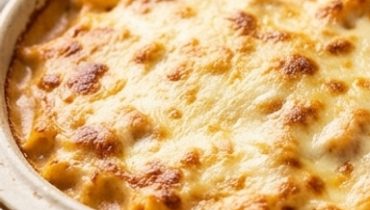
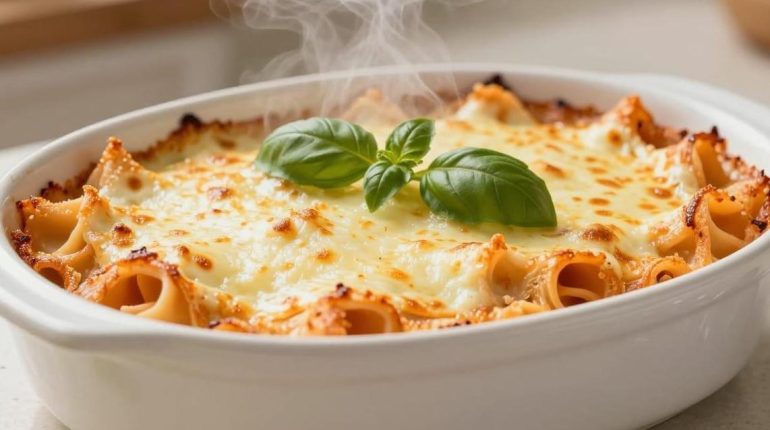
The final emulsion marries the flaked tuna with the heavy cream in this reduced sauce. The mixing must remain delicate to preserve the fish flakes, creating that characteristic creamy texture. Assembly in the oiled dish precedes the sprinkling of mozzarella and baking at 200°C (400°F) in a convection oven.
The often-overlooked detail: these five minutes of post-cooking rest allow the temperatures to harmonize and the structure to stabilize. The bake then cuts cleanly without collapsing on the plate. A technical gesture that separates the amateur from the connoisseur.
Optimizations And Variations To Elevate The Classic
Once this technical mastery is acquired, there is room for personalization. Adding cherry tomatoes cut in half before baking brings pockets of acidic freshness that contrast with the creamy smoothness. Their juice concentrates in the heat, creating small gustatory explosions scattered throughout the bake.
Storage is an overlooked strategic asset: this dish “keeps very well and can be reheated the next day without losing flavor.” On the contrary, the extended rest allows the aromas to intermingle further. An airtight cover in the refrigerator (3-4 days maximum) and gentle reheating in the oven at 160°C (320°F) restore the texture without drying out the whole.
For a spectacular crispy top, mix golden breadcrumbs and finely grated Parmesan (2:1 ratio) before the final bake. This golden crust offers a sophisticated textural contrast to the melting heart, transforming a family bake into a bistro-style creation.
The fresh basil finish is not decorative: its aniseed and peppery notes “strengthen the Mediterranean scent” and bring an herbaceous dimension that balances the richness of the cheese. Chopping the leaves at the last moment preserves their volatile essential oils.
These targeted adjustments reveal the true nature of this classic: not a frozen recipe, but an adaptable canvas that absorbs personal preferences while keeping its identity. “Simple, generous, and always appreciated” — three qualities that summarize why this bake remains a safe haven of contemporary home cooking.