📌 Tuna and Golden Cheese Penne Bake
Posted 1 April 2026 by: Admin
Tuna pasta bake—everyone has eaten it at some point, thinking of it as just a quick survival meal. And that reputation sticks. Except that when it’s done right—truly well done—it’s frankly delicious, not just acceptable.
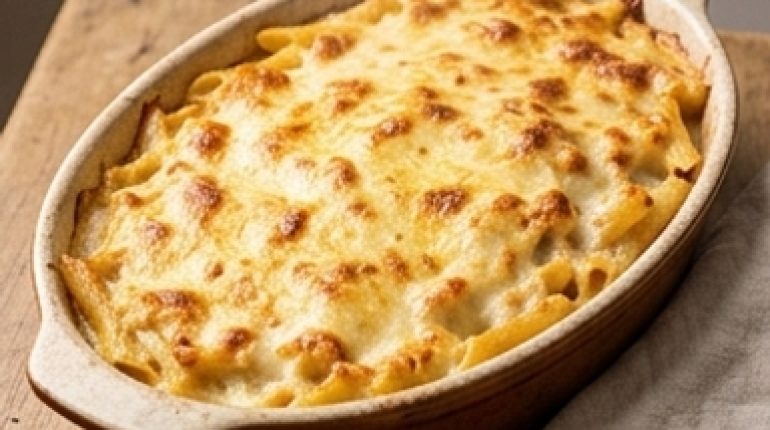
When you pull this gratin out of the oven, the cheese crust is a golden brown like light caramel, still wobbling in the center, with a few bubbles popping around the edges. The aroma that rises is mustard melted into cream—warm, rounded, slightly tangy. Beneath that crust, the penne are drowned in a sauce that has thickened and clung to every ridge. It’s heavy in the best way possible.
Why you’ll love this recipe
Ingredient Notes
Everything you need for a pantry bake: penne, tuna, cream, and grated cheese.
- Penne rigate : The ‘rigate’—with the ridges—is not just a detail. These grooves hold the creamy sauce much better than smooth penne. If you only have smooth ones, it works, but rigate truly change the final texture.
- Canned tuna in water : In water, not in oil. Tuna in oil will make the sauce greasy and unbalanced. Drain it thoroughly in a sieve by pressing with the back of a spoon—excess water is the enemy of a sauce that sets well.
- Full-fat crème fraîche : Thick, at least 30% fat. Liquid cream will make the pasta soggy and the sauce won’t set. Avoid low-fat cream too—it curdles during cooking and gives a grainy result.
- Dijon mustard : One tablespoon. You won’t taste it directly in the finished dish, but without it, the sauce is bland. It’s what provides that slightly sharp background that makes people go back for seconds.
- Grated cheese : Emmental for flavor, mozzarella for the stretch—ideally both. Avoid parmesan alone: too dry, it burns before melting and creates a bitter crust.
Why most pasta bakes are disappointing
The main reason: overcooked pasta even before it goes into the oven. If you cook the penne fully as indicated on the package, you’ll end up with mush after 30 minutes of additional baking. You must stop them well before—still firm in the center, almost crunchy to the bite. They will finish cooking in the oven while absorbing the sauce. That’s the difference between a gratin that holds its shape on the plate and one that collapses.
The sauce—don’t complicate it
A pan over medium heat, a drizzle of olive oil, finely chopped onion. Let it soften until translucent—about 5 minutes; you’ll hear the soft hiss of the pan change tone as the moisture begins to evaporate. Flake the tuna over it and mix for 2 minutes. Then the crème fraîche and mustard go in together, and you stir until smooth. The sauce should coat lightly. If it runs like water, your cream was too thin—a spoonful of cream cheese like St Môret can fix that easily.
The assembly—the part everyone rushes
Mix the penne directly into the sauce so every tube is well coated. Then pour into the baking dish and pack it down slightly with the back of a spoon—no air pockets. Now the cheese: be truly generous. A thin layer will burn in a few spots without forming a real continuous crust. You need at least 5 mm of thickness to get that slab of gratin cheese that lifts off in one piece when you serve. Bake at 180°C, fan-assisted if your oven allows.
The exact moment to take it out
Not when the top is ‘a little golden.’ Wait until the crust is an even amber brown, with bubbles rising up on the sides of the dish. If you lightly tap the side of the dish, you should feel a slight resistance—the center no longer wobbles. Aim for 28 to 32 minutes depending on your oven. And let it rest for 5 minutes out of the oven before serving: the sauce thickens a notch, the slices hold together better, and you won’t burn everyone’s palate.
Tips & Tricks
- Don’t salt the pasta water too heavily—canned tuna already provides salt, and so does the cheese. Taste the sauce before seasoning; you’ll often be surprised how little you need to add.
- Half a teaspoon of smoked paprika in the sauce really changes the profile of the dish. It gives an orange hue and a slightly smoky background that makes it seem like you worked much longer on it.
- To freeze, divide the gratin into individual portions before freezing. Thaw in the fridge the night before and reheat for 15 minutes at 160°C covered with aluminum foil—the crust stays crispy and the pasta doesn’t dry out.
Can I prepare this bake in advance?
Yes, and it’s even recommended. You can assemble the gratin (pasta + sauce + cheese) up to 24 hours in advance and keep it covered in the refrigerator. Bake it straight from the fridge, adding 5 to 10 minutes to the total cooking time.
How do I store and reheat leftovers?
In the refrigerator in an airtight container, it keeps for 2 to 3 days. To reheat, cover the dish with aluminum foil and bake for 15 minutes at 160°C—the pasta stays moist and the crust won’t burn. The microwave also works but softens the gratin cheese.
Can I replace the full-fat crème fraîche?
With full-fat Greek yogurt or thick sour cream (0% risk of curdling if you mix well before baking). The Greek yogurt version is lighter but slightly less creamy. Avoid UHT liquid cream; it will make the pasta soggy.
What pasta shape should I use if I don’t have penne?
Rigatoni or fusilli work very well—always choose hollow or ridged pasta that catches the sauce. Spaghetti or tagliatelle should be avoided: they don’t suit the bake format and form an unappetizing compact block.
How do I prevent the bake from being too dry?
Two critical points: don’t overcook the pasta before baking, and don’t skimp on the sauce. If your crème fraîche is very thick, thin the sauce with 2 to 3 tablespoons of pasta cooking water before mixing. Covering the dish with foil for the first 15 minutes of baking also helps retain moisture.
Can I add vegetables to this bake?
Very easily. Small diced zucchini (sautéed for 3 minutes first), thawed and well-squeezed frozen spinach, or halved cherry tomatoes added directly to the mix. The important thing: remove excess water from vegetables before assembly so you don’t water down the sauce.
Tuna and Golden Cheese Penne Bake
French
Main course
Penne rigate coated in a creamy mustard and tuna sauce, baked under a thick layer of melted cheese. The ultimate comforting pantry meal.
Ingredients
- 300g penne rigate
- 140g canned tuna in water, drained
- 100g full-fat crème fraîche (min 30% fat)
- 1 tablespoon Dijon mustard
- 1 medium yellow onion, finely chopped
- 100g grated cheese (emmental or emmental/mozzarella mix)
- 1 tablespoon olive oil
- To taste salt and black pepper
Instructions
- 1Bring a large pot of salted water to a boil. Cook the penne 2 minutes less than the time indicated on the package (they must remain very firm). Drain and set aside.
- 2Heat the olive oil in a pan over medium heat. Sauté the chopped onion for 5 minutes until translucent.
- 3Add the drained and flaked tuna. Mix and cook for 2 minutes.
- 4Stir in the crème fraîche and mustard. Mix until a smooth sauce is obtained. Season with salt and pepper. Let simmer for 2 minutes.
- 5Preheat the oven to 180°C (fan assisted). Mix the penne with the sauce in the pan or a bowl.
- 6Pour into a lightly oiled baking dish. Pack down slightly. Spread the grated cheese in a generous layer over the entire surface.
- 7Bake for 28 to 32 minutes, until the crust is an even amber brown and the edges are bubbling. Let rest for 5 minutes before serving.
Notes
• Make ahead: the bake can be assembled up to 24h before cooking and kept covered in the fridge. Add 5-10 minutes of cooking time if starting from cold.
• Storage: 2 to 3 days in the refrigerator. Reheat at 160°C for 15 minutes, covered with foil. Freezes for up to 1 month in individual portions.
• Variations: add sautéed diced zucchini, well-squeezed spinach, or a pinch of smoked paprika to the sauce for more depth.
Nutrition Facts (per serving, estimated)
| 520 kcalCalories | 26gProtein | 56gCarbs | 21gFat |