Tuna-stuffed tomatoes are one of the most underrated summer recipes. They’ve been too long relegated to impromptu buffets and diet meals — wrongly so. No cooking, almost no prep, yet the result is satisfying enough to proudly feature on a lunch table.
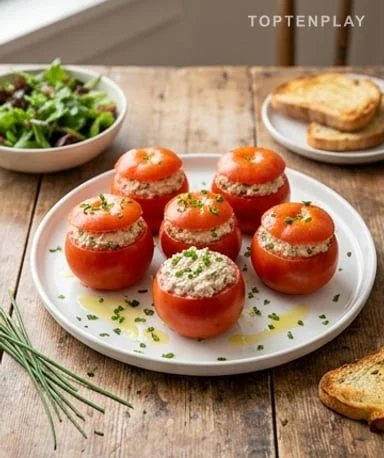
Taken out of the fridge after their half-hour rest, the tomatoes are cold to the touch, their skin slightly taut. The filling has had time to firm up, achieving that dense and creamy consistency that holds well on the spoon. A slightly tangy aroma rises from the dish — first lemon, then tuna, and underneath the fresh green scent of chives. In the mouth, the tomato crunches lightly before giving way, juicy, against the melting filling.
Why you’ll love this recipe
Ingredient Notes

The basic trio: well-drained canned tuna, creamy fresh cheese, and firm, thick-fleshed tomatoes.
- Canned tuna in water (200 g) : This is what structures the filling and gives it character. Tuna in water, not oil, is the right choice here — less fatty, it will flake more finely and blend better with the fresh cheese without making the preparation heavy. Drain it really well: press with a fork against the edge of the can, otherwise the filling will release water into the tomato and lose its structure.
- Fresh cheese (150 g) : It acts as a binder and provides the creaminess that makes the difference between a dry filling and one you want to lick off the spoon. Saint Môret or Philadelphia work perfectly. Avoid low-fat versions with less than 15% fat — they become grainy when mixed and release water. Take it out of the fridge ten minutes before using, it will mix much more easily.
- Tomatoes (6 large) : Choose firm tomatoes with thick flesh. Beefsteak or large round salad tomatoes are ideal. An overripe tomato will collapse as soon as it’s hollowed out and won’t hold the filling. The test is simple: it should resist slightly when pressed. If it gives, save it for a sauce.
- Lemon juice (1 tbsp) : Its role is twofold: it provides acidity that cuts through the fat of the fresh cheese, and it prevents the filling from aging too quickly in the fridge. Without it, the preparation seems flat, a bit heavy. Do not substitute with vinegar — the acidity would be too aggressive and overpower the rest.
- Shallot (1 small, optional) : It adds a slight sharpness and depth without dominating. Mince it very finely — a coarse chop and it will assert itself in every bite. If you don’t have one on hand, an extra amount of chives works just fine.
- Fresh herbs (parsley or chives) : They bring the fresh vegetal note that lightens the whole dish. Chives are more delicate, parsley more forthright — both work. Dried herbs are not suitable here: they lack the necessary fragrance and give a slightly powdery texture to the filling.
Prepare the tomatoes
Start by cutting the top off each tomato — a slice about one centimeter thick, enough for a nice presentation but not so much that it encroaches on the filling space. Hollow out the inside with a spoon, scraping the walls well without piercing them: we want an even thickness all around. Lightly salt the inside, then turn the tomatoes upside down on paper towels for about ten minutes. This is the step many skip, and that’s often where the filling ends up drowned — the tomato releases a surprising amount of water, and if you don’t eliminate it now, it soaks everything else. The removed flesh? Keep it for a quick soup or basic tomato sauce.

Make the filling
In a bowl, finely flake the drained tuna with a fork — we’re looking for thin strands, not large chunks that would create lumps. Add the fresh cheese all at once and mix immediately in wide circles: the texture will change from uneven to creamy and homogeneous in less than a minute. It’s at this point that you add the lemon juice, the shallot if using, salt, and pepper. Taste before adding the herbs — the tuna is already salted, and it would be easy to end up with an over-seasoned filling. Finally, incorporate the chopped chives or parsley: they should remain visible in the preparation, not disappear into it.
Stuff and let rest
Fill each tomato with a spoon, pressing lightly to avoid air pockets, then form a generous dome above the rim. Replace the tops at a slightly tilted angle rather than mechanically flat — it looks more natural on the plate. Cover the dish and refrigerate for at least thirty minutes, an hour is better. The cold has two concrete effects: it firms up the filling, making it easier to hold on a spoon, and it allows the flavors to meld. A filling made at the last minute is okay. The same filling after a night in the fridge is noticeably better.
Serve
Arrange the tomatoes on a slightly chilled plate, never on a room-temperature one that would make the flesh sweat. A few green salad leaves underneath to prevent sliding, a drizzle of olive oil on top, two or three chive sprigs laid across, and a lemon wedge on the side. That’s all you need. Serve them straight from the fridge, still very cold — the temperature contrast between the juicy tomato and the creamy filling is a large part of the dish’s pleasure.

Tips & Tricks
- Don’t skip salting and draining the tomatoes upside down on paper towels: without this step, the vegetable water ends up in the filling within twenty minutes and turns your creamy preparation into a tepid puddle.
- Take the fresh cheese out ten minutes before working: at cold temperature it remains a compact block and requires more effort to incorporate, risking crushing the tuna rather than creating a homogeneous filling.
- Taste and adjust seasoning before stuffing, never after: once inside the tomato, it’s impossible to adjust properly. The filling should seem slightly too tangy and well-seasoned at this stage — the tomato will mellow everything.
- Make double the filling if you have leftover hollowed-out flesh: blended with a little olive oil and basil, it makes a quick cold sauce for pasta or a base for bruschetta.

Can I prepare stuffed tomatoes the day before?
Yes, and it’s even recommended. A night in the fridge allows the flavors to meld and the filling to become firmer and more pleasant. Cover the dish tightly and consume within 24 hours to keep the tomato firm and the filling fresh.
Can I use tuna in oil instead of tuna in water?
Technically yes, but the filling will be noticeably greasier and less light in the mouth, especially combined with fresh cheese. If you only have tuna in oil, drain it very thoroughly on paper towels and omit the drizzle of olive oil at serving to rebalance.
Why is my filling too runny?
There are two common causes: insufficiently drained tuna releasing water into the preparation, and tomatoes not salted and turned upside down before stuffing. These two steps together make all the difference. If your filling is already too runny, add an extra spoonful of fresh cheese to tighten it.
Can I replace fresh cheese with something else?
Ricotta works very well and provides a slightly grainier texture, pleasant in the end. Crumbled feta also works for a saltier, more Mediterranean version — in that case, omit the added salt entirely. Avoid heavy cream alone, too runny to hold inside a tomato.
How do I prevent tomatoes from releasing too much water on the plate?
The key step is to lightly salt the hollowed interior and turn the tomatoes upside down on paper towels for at least ten minutes before stuffing. This operation extracts excess vegetable water before it ends up in your filling or on the plate when serving.
Can stuffed tomatoes be served warm or hot?
This is not recommended for this version based on fresh cheese and raw tuna — heat would melt the filling and make the texture unappetizing. This recipe is designed to be served cold, straight from the fridge: that’s where the temperature difference between the juicy tomato and the creamy filling gives the dish its full appeal.
Tuna and Fresh Cheese Stuffed Tomatoes
Mediterranean
Starter / Light Meal
A fresh, no-cook recipe that can be made ahead. The creamy filling of tuna and fresh cheese, enhanced with lemon and fresh herbs, pairs perfectly with the juicy tomato flesh. Ideal as a summer starter, light lunch, or picnic item.
Ingredients
- 6 large firm tomatoes (beefsteak or round salad tomatoes)
- 200g canned tuna in water, well drained
- 150g fresh cheese (Saint Môret, Philadelphia, or ricotta)
- 1 tbsp fresh lemon juice
- 1 small shallot, finely minced (optional)
- 1 bunch fresh chives or parsley, chopped
- 1 drizzle extra virgin olive oil (for serving)
- salt and freshly ground black pepper
Instructions
- 1Wash the tomatoes and cut a cap about 1 cm thick from the top of each. Reserve the caps.
- 2Hollow out the inside of each tomato with a spoon, scraping the walls without piercing them. Reserve the flesh for another use.
- 3Lightly salt the inside of each tomato, then turn them upside down on paper towels for 10 minutes to remove excess water.
- 4In a bowl, finely flake the drained tuna with a fork.
- 5Add the fresh cheese and mix vigorously until creamy and homogeneous.
- 6Stir in the lemon juice, minced shallot, salt, and pepper. Taste and adjust seasoning.
- 7Add the chopped chives or parsley and mix gently.
- 8Generously stuff each tomato with the filling, forming a slightly domed top. Replace the caps at a slight angle.
- 9Cover and refrigerate for at least 30 minutes before serving. One hour is ideal.
- 10When serving, arrange on a bed of green salad, drizzle with olive oil, and garnish with a few chive sprigs.
Notes
• Storage: maximum 24 hours in the refrigerator, tightly covered. Beyond that, the tomato softens and the filling loses freshness.
• For a Mediterranean version: add 40g pitted and chopped black olives + 50g crumbled feta to the filling, omitting the added salt.
• For a spicier version: add a pinch of smoked paprika and a few drops of Tabasco to the filling.
• The hollowed tomato flesh can be easily blended with a little garlic and basil for a quick sauce or cold soup base.
Nutrition Facts (per serving, estimated)
| 195 kcalCalories | 17gProtein | 8gCarbs | 11gFat |