Store-bought ‘detox’ juices are nine times out of ten just colored water with a vague promise on the label. This one is different — three raw ingredients, no gimmicks, and a result that actually delivers. And when you serve it to guests in beautiful glasses, no one will guess it took you only ten minutes.
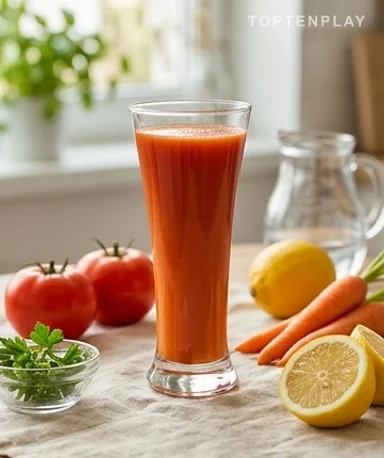
In the glass, the color wavers between the deep orange of a ripe tangerine and the brick red of a sun-drenched tomato. It smells fresh and vegetal, slightly tangy, with that earthy carrot undertone that reminds you of a kitchen garden in summer. On the first sip, it’s velvety — not watery, not stringy. The lemon arrives at the finish, clean and bracing, like a gentle wake-up call.
Why you’ll love this recipe
Ingredient Notes
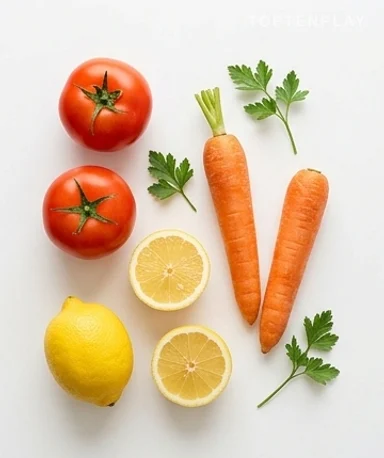
Three simple ingredients: a ripe tomato, a crunchy carrot, and a juicy lemon — all you need.
- Tomatoes : Get very ripe tomatoes, preferably beefsteak or roma. Not cherry tomatoes — too little flesh, too much water. They should be soft under the thumb, almost on the edge of being overripe. That’s when the flavor is most rounded and nutrients are most concentrated.
- Carrots : Classic market carrots work perfectly. Just make sure they are firm — a withered carrot produces a bland, bitter juice. Sand-grown carrots often have more natural sugar, balancing the lemon’s acidity well.
- Lemon : An untreated yellow lemon if you can find one, because you can grate a little zest into the mix for a more intense note. Otherwise, the juice alone is plenty. Avoid bottled lemon juice — the acidity is different, less vibrant, less sharp.
- Ginger (optional) : A 2-3 cm piece is enough. It brings warmth without dominating the rest. If serving to guests wary of ginger, skip it — the juice stands up very well without it.
Choose your tomatoes as if they were the only thing that mattered
And in fact, they are. The tomato accounts for 60% of the final taste of this juice. A bland tomato makes a bland juice. Look for those with that deep red color, almost burgundy in places, with skin that is starting to slightly loosen. At the market, ask the grower for the ones they keep for themselves — they’ll understand. Cut them into large wedges without worrying about seeding; the seeds pass through the blender without issue. The smell when you cut them should be sharp, vegetal, with that little sweet edge that tickles the nose.
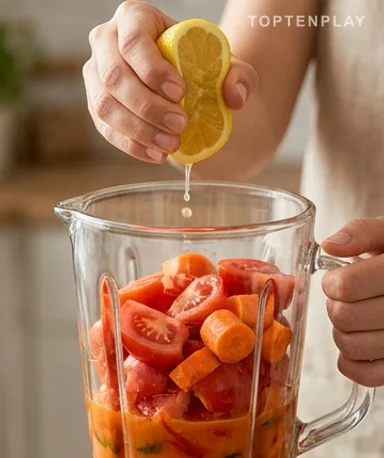
Blend for a full minute — not thirty seconds
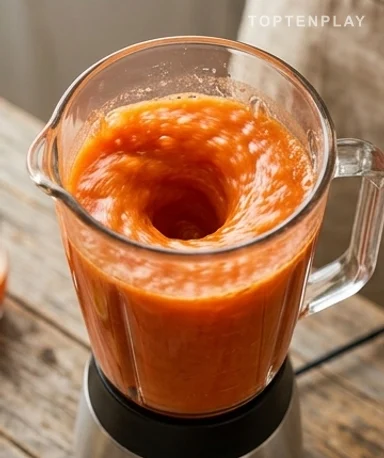
Put the tomato wedges, thick-sliced carrots, and lemon juice in the blender. Always hold the lid down with your hand — even the best blenders can give you a surprise at startup. Run at full power and let it spin for a full minute. You’ll hear the sound change after thirty seconds, when the mixture becomes homogeneous and the carrot fibers truly break down. This is the moment that creates the velvety texture. If you stop too early, chunks remain, resulting in a coarse finish that isn’t up to par.
Filter if you have guests, keep the pulp if it’s just for you
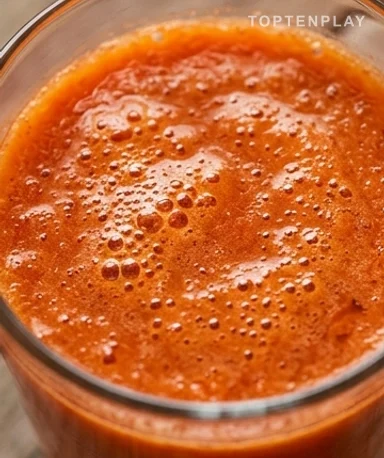
The pulp contains the fiber. If you keep it, the juice is thicker, almost like a light smoothie. For guests, pass the mixture through a fine sieve — it yields a more elegant result, with that slightly cloudy transparency typical of artisanal pressed juices. No special equipment needed: a classic sieve and a ladle to press it through work just fine. Taste before serving and adjust the lemon to your palate.
Serve immediately in your finest glasses
Tomato juice oxidizes. Not in seconds, but after an hour it loses its vibrancy and the color starts to dull. Prepare it at the last moment. Pour into tall glasses or clear coupes — the color is the main attraction. A lemon slice on the rim is enough for decoration. A few ice cubes if your guests like very cold drinks, nothing more.
Tips & Tricks
- Add a pinch of black pepper to the blender — it sounds strange, but black pepper activates the body’s absorption of lycopene from the tomato. You won’t taste it in the glass; it does its work silently.
- If preparing the night before for a brunch, keep it in the fridge in an airtight jar and shake well before serving. A night’s rest does it good — the flavors meld better.
- For a version that pleases every palate without exception, add half an apple to the blender. It rounds out the acidity and brings a bit of natural sugar without turning the juice into something else.
Can this juice be prepared in advance?
Yes, but not too far in advance. Tomato juice oxidizes and loses its vibrancy after 12 hours. Prepare it no more than the night before, store it in an airtight jar in the fridge, and shake well before serving.
Is a blender mandatory, or does a juicer work too?
Both work, but the result is different. A juicer produces a smoother, more translucent juice but removes the fiber. A blender keeps the pulp, providing more fiber and a thicker texture — the choice recommended by doctors for gut health.
Do I need to peel the carrots and tomatoes?
Carrots: yes, a quick peel is enough. Tomatoes: no, the skin blends easily. If you filter it through a fine sieve later, the skins will stay in the mesh anyway.
Can I add other fruits or vegetables to vary it?
Yes, and it’s recommended to make the recipe your own. Half an apple rounds out the acidity, a piece of beet intensifies the color, and cucumber lightens the overall feel. Avoid too much citrus — it unbalances the taste and can be harsh on an empty stomach.
What time of day should I drink this juice?
In the morning on an empty stomach is the time recommended by traditional Chinese medicine to maximize the effect on the liver. That said, nothing stops you from drinking it at any time — it is ultimately a fresh vegetable juice, not a medicine with a strict schedule.
Is this juice suitable for children?
Absolutely, as long as you use ginger sparingly or omit it. Add half an apple to soften the lemon’s acidity — children accept this version much better.
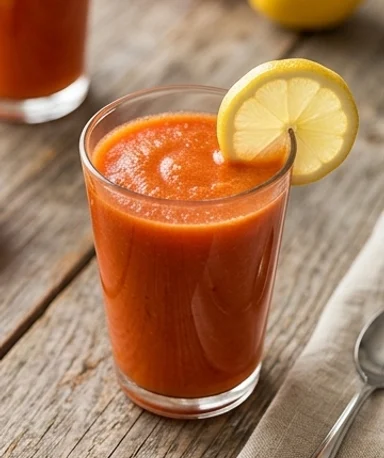
Tomato-Carrot-Lemon Juice from the 95-year-old Doctor
Asian
Beverage
A three-ingredient fresh vegetable juice inspired by traditional Chinese medicine. Ready in ten minutes, no cooking required.
Ingredients
- 300g ripe tomatoes (about 2 medium tomatoes, roma or beefsteak type)
- 200g carrots (about 2 medium carrots)
- 1 yellow lemon (juice only, about 50ml)
- 2 cm fresh ginger, peeled (optional)
- 1 pinch ground black pepper (optional)
- some ice cubes for serving
Instructions
- 1Wash the tomatoes and carrots. Cut tomatoes into wedges and carrots into thick slices of about 1 cm.
- 2Squeeze the lemon and collect the juice. Peel the piece of ginger if using.
- 3Place tomatoes, carrots, lemon juice, and ginger in the blender. Blend at full power for 1 full minute.
- 4Filter through a fine sieve by pressing the pulp with the back of a spoon, or leave as is to keep the fiber.
- 5Taste and adjust lemon if necessary. Pour into two glasses with ice cubes and serve immediately.
Notes
• Storage: ideally consume within one hour of preparation. Keeps up to 12h in the refrigerator in an airtight jar — shake well before serving.
• Sweet variation: add half an apple (about 80g) to the blender to soften the acidity. Ideal for children or sensitive stomachs.
• Without a blender: a centrifugal juicer works great and gives a smoother juice. You will lose the fiber, but the taste remains the same.
Nutrition Facts (per serving, estimated)
| 75 kcalCalories | 2gProtein | 15gCarbs | 1gFat |